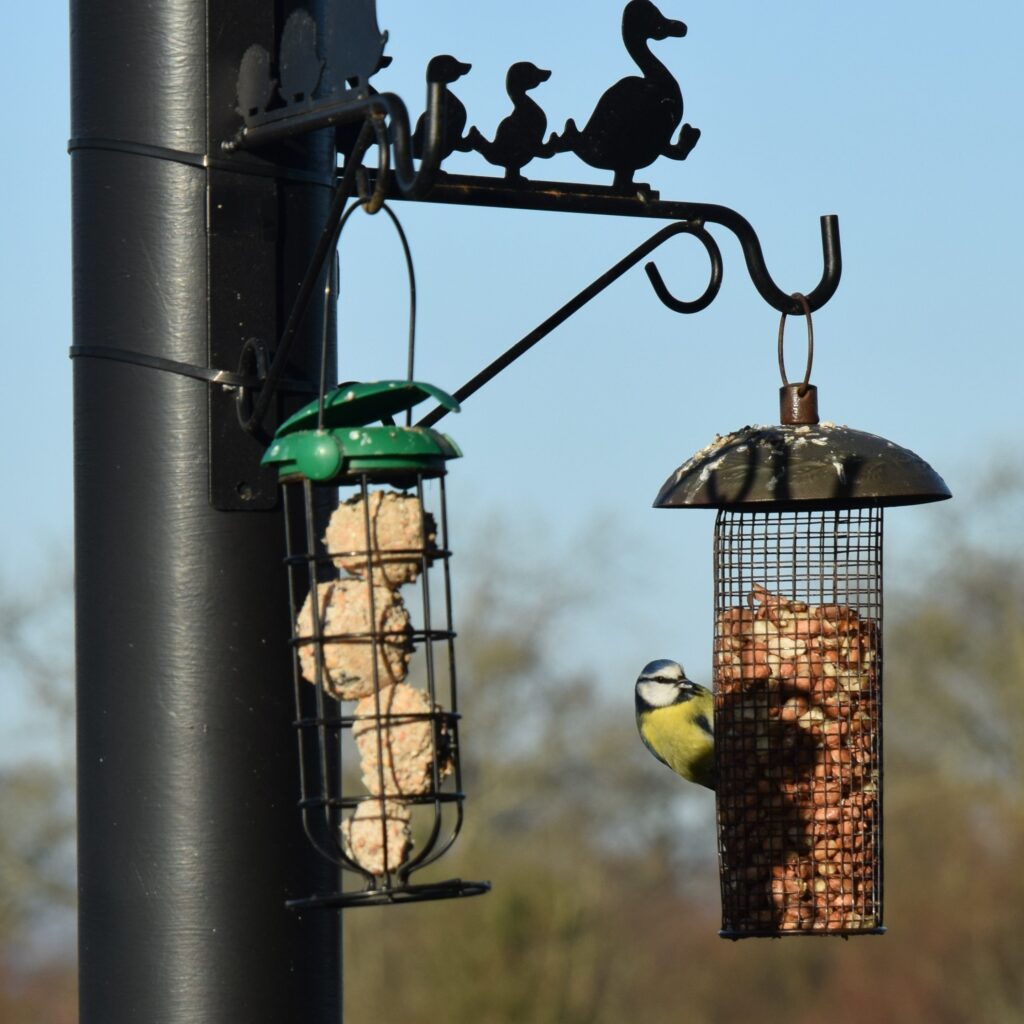
It may cost a bit more than ‘tuppence a bag’ but everyone loves to feed the birds. Supplementary feeding of our garden birds is beneficial all year round but especially important in cold periods in winter.
Every little helps and soon after you put up your first feeder you will find the local birds coming to visit. What comes to your feeders will depend on the local bird population, the kinds of feeders you use and the food you put out. Different birds like different foods and ways to feed.
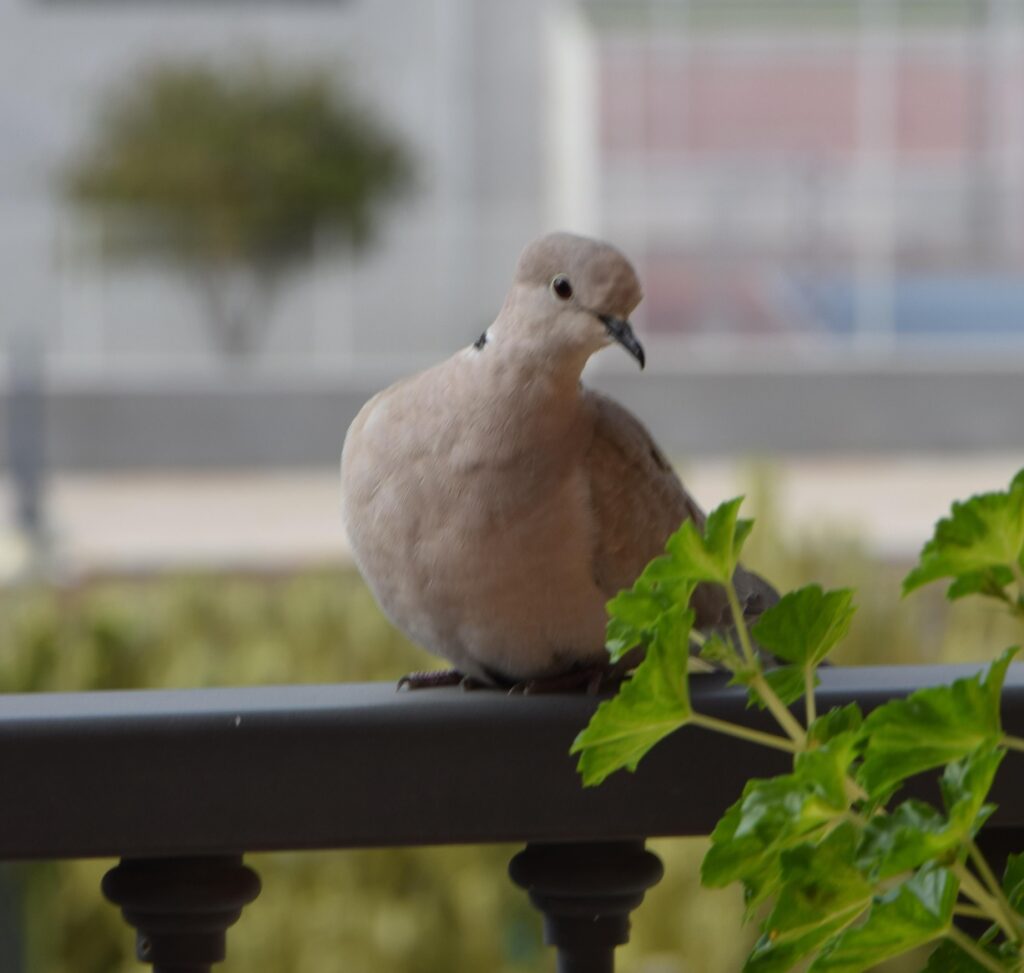
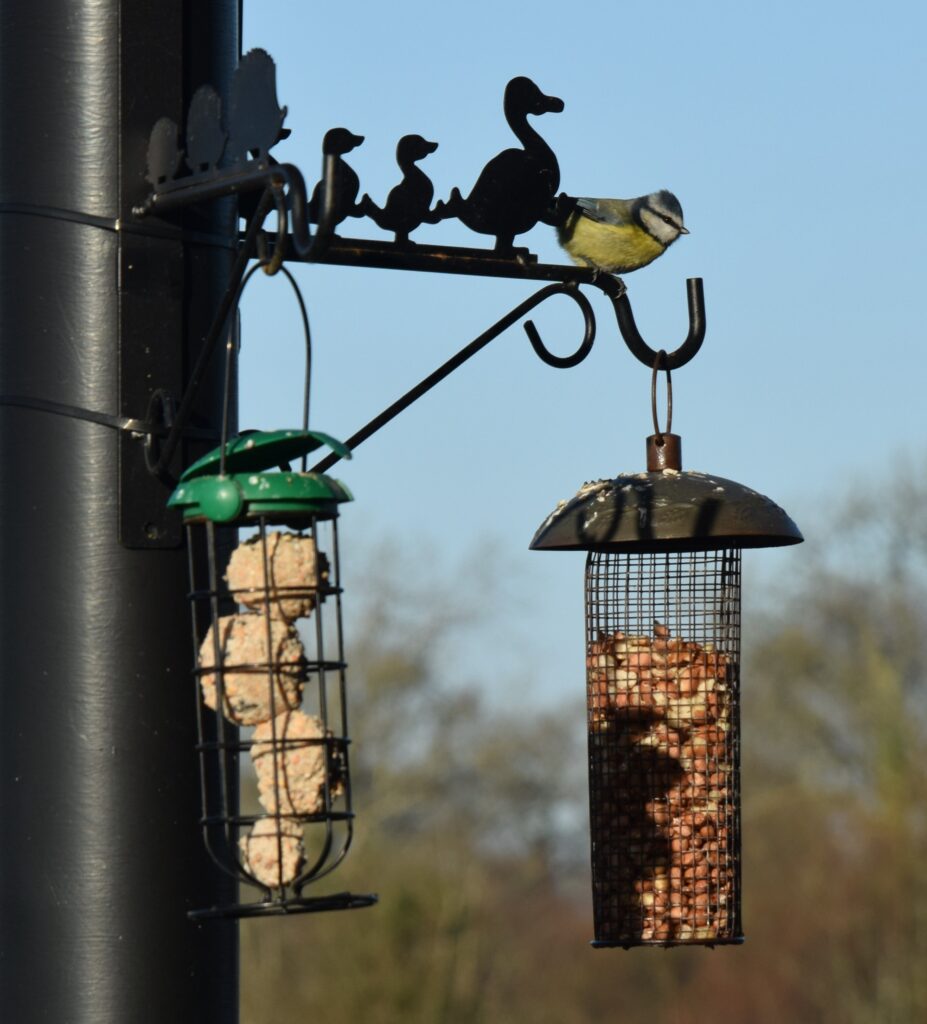
Hanging feeders are frequented by tits and finches which are remarkably acrobatic. Bird tables attract a wider range of birds including robins, starlings and collared doves. Ground tables attract robins and blackbirds, starlings and thrushes.
It will take a while to find the perfect place for your feeders. Ideally it should be an open spot so that cats cannot lay in wait, but near a tree or shrub so the birds can fly from that to the feeders. In my own garden I have moved the feeders many times. In an open spot in the middle of the lawn rooks and crows attacked the feeders, knocking them to the ground and emptying them in minutes. A spot closer to the house discouraged them. It is still worth feeding in several areas of the garden. The odd sparrow hawk is a distressing nuisance here, attracted by the congregation of birds feeding. Fortunately I do not have squirrels but if you do, invest in feeders that prevent them stealing the food.
Seedlings under the feeders can be a problem but if you buy ‘high quality’ feed that is not full of wheat there will be less wastage and no seedlings. Cheap feeds with lots of wheat will not attract the songbirds you want and the waste that drops to the ground can attract rodents – this is much less of an issue with peanuts, sunflower kernels and ‘no-grow’ blends.
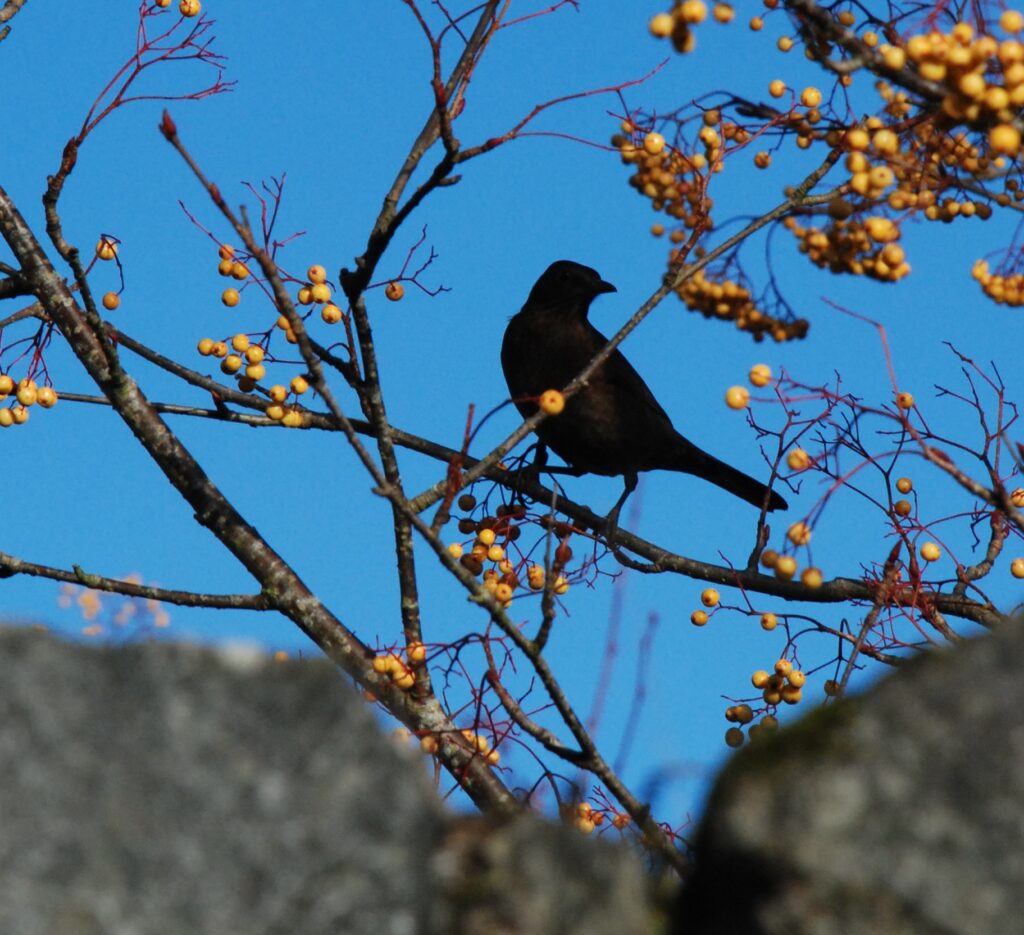
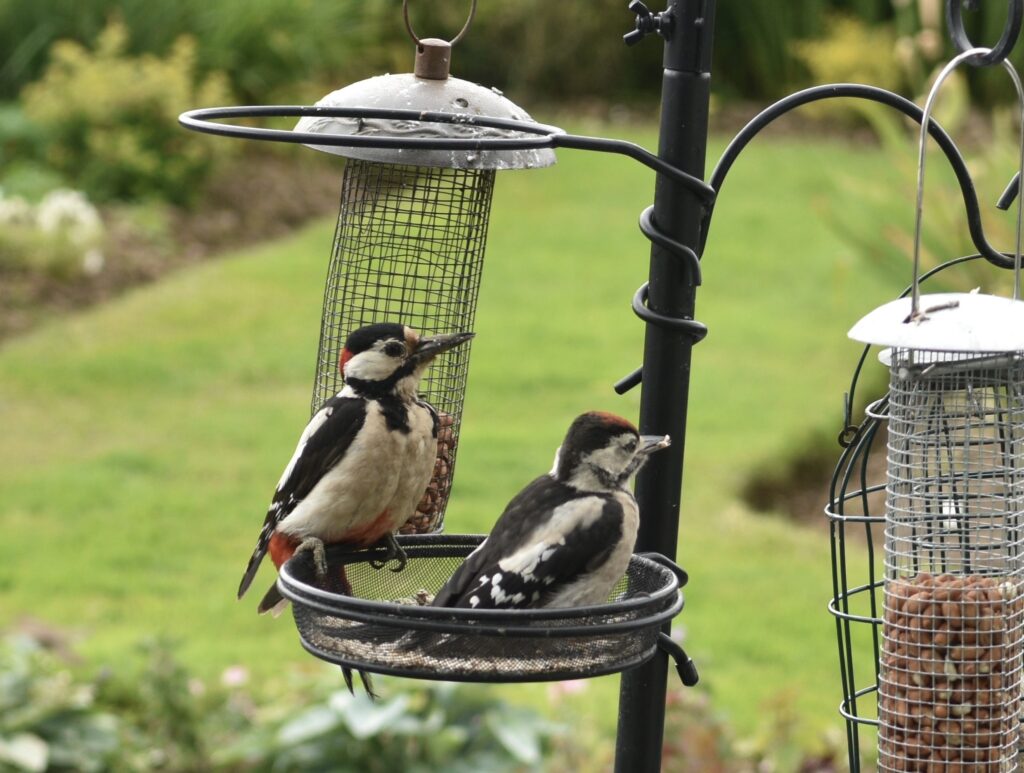
I tend to provide fatballs in winter (never put out faballs in plastic netting which can trap birds) but peanuts and sunflower seeds are my main, regular contribution. In my garden these attract blue tits, great tits, gold finches, green finches, sparrows, wood peckers, collared doves, robins, chaffinches and blackbirds with a few others now and then. Nothing gets wasted. I sometimes add some mealworms for the robins but I am sure the starlings hoover them up. To keep the blackbirds happy when I don’t have fruit ripening in summer I provide stored apples for them and wrinkled fruit from the fruit bowl will nourish them.
Some kitchen scraps are fine for birds including old, grated cheese but avoid salty foods. Bread is acceptable but does not provide much nutrition. I tend to buy granary or seeded bread and I am sure that, despite the advice that bread is not a good food for birds, the ends of the loaf are not that bad. I also raid the oatmeal in the cupboard from time to time when I am running low on bird seeds.
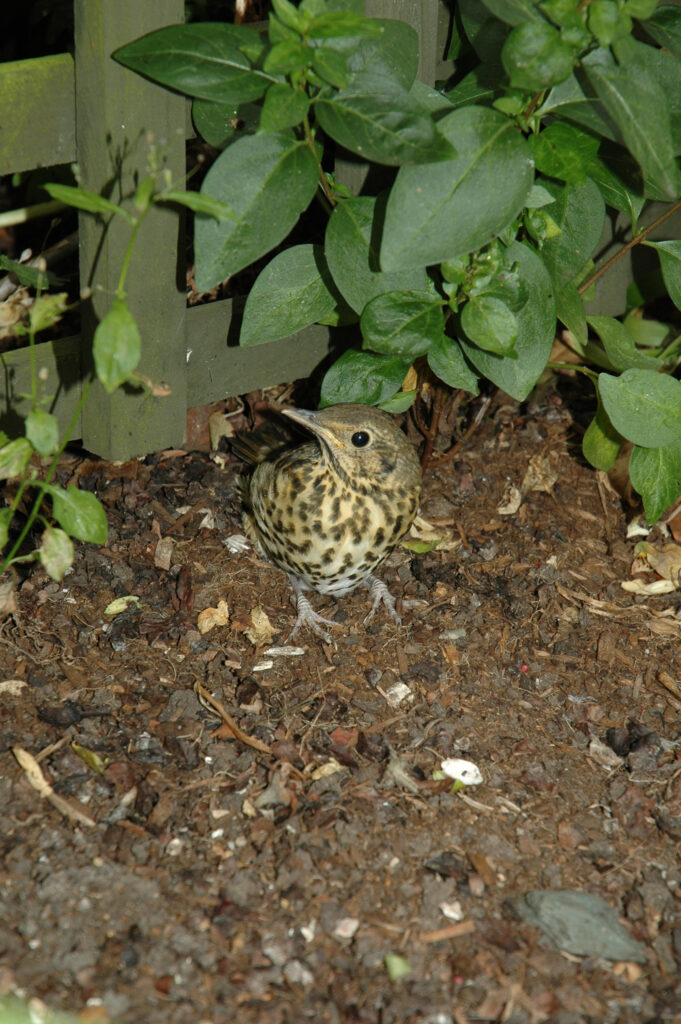
I have a stray cat that has adopted us and he gets fed outside. When the thrushes and blackbirds are not busy rummaging in the undergrowth, flicking fallen leaves, they cheekily hop to his feeding place for extra nourishment. They even scuttle in through the back door from time to time to help themselves to the cat food in summer.
In addition to feeding, make sure you supply some drinking water too. And keep the feeders clean, washing them every few weeks in hot, soapy (detergent) water. And clean out the old peanuts from the base of ‘cage’ feeders from time to time.
Feeding my garden birds is one of the great joys of having a garden and it is always fascinating to watch the different species. The goldfinches are always squabbling while the various tits seem to get on fine, flying to the bird table, grabbing a sunflower seed and flying off. I can always tell when the starlings have arrived by the excited squawking while the collared doves approach more cautiously and peck away at the seeds for several minutes before leaving.
Of course you can plants shrubs and flowers to encourage birds too. My blue tits repay me for their supper by constantly picking over the hazels and plum trees looking for aphids. And robins are constant companions when I am weeding and digging, getting a fat leather jacket of other grub for their attention.
Nags Hall have an extensive range of bird food and feeders to help you to help wild birds get through the winter.
There is a lot more information on how to feed birds online including here.