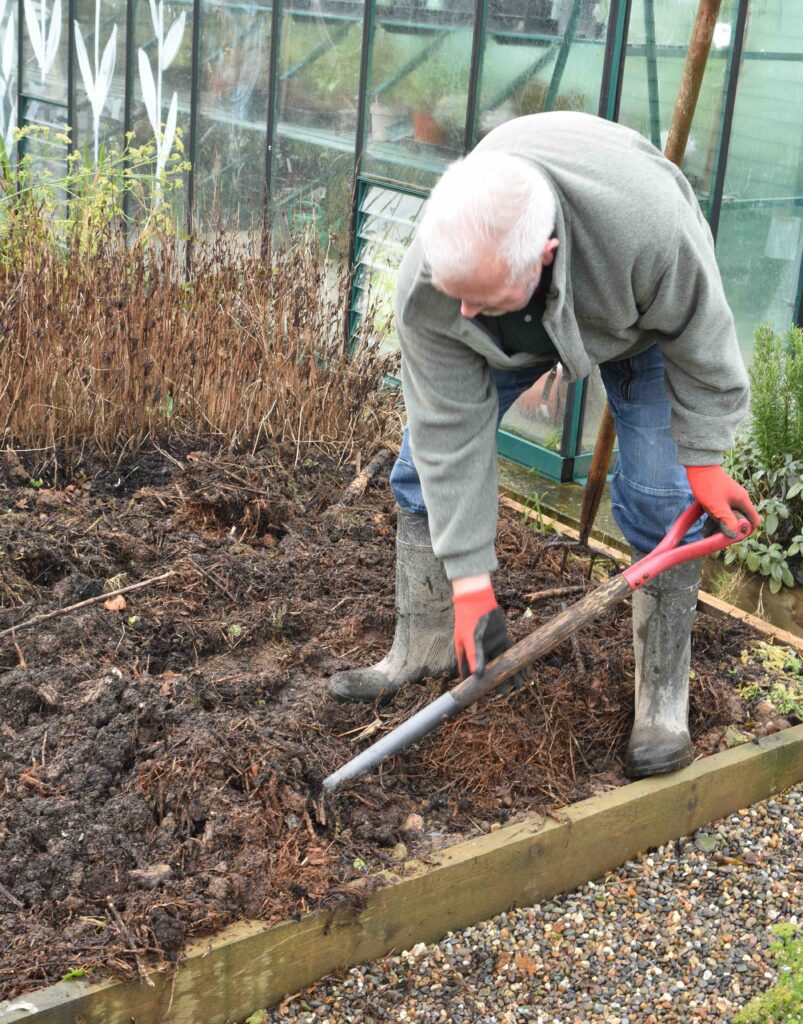
When there is little else you can do in the garden, digging over bare areas and veg beds is a useful way to keep warm and to improve your soil. It is part of the traditional garden calendar. My own soil is too wet to dig at the moment – I will have to wait till it is drier. When I was in Oxted I gardened on clay that was even worse than the soil I have now. Common advice is to dig from boards laid across the soil but that is really only suitable if you are desperate – slipping around on wet clay will only destroy the soil and not improve it. It is better to mulch the bare soil with compost to protect it from damage from heavy rain and to dig that in later.
Now I know that there are those that do not hold with digging and suggest that you can garden without turning over the soil but, in my experience, the advantages of digging outweigh any disadvantages. But if you are a non-digger, perhaps I will convince you or I will see you again next week to talk about snowdrops!
I accept that you can, if you have light, fertile soil, cover it with cardboard and compost and plant through this but I will stick with traditional techniques.
My main reason is that, in the many gardens I have worked in, including the grey, sticky clay over chalk in Oxted, I have only once had soil that was ‘workable’ without digging, and that was in the Cambridge ‘Fens’. So, acknowledging that digging can damage the surface layer of fungi and bacteria, expose some soil organisms to drying out and being eaten and that, theoretically, aerating the organic matter in the soil by digging can lead to oxidation and loss of carbon from the soil, here we go!
On the plus side, when you dig your plot you can incorporate organic matter, locking up carbon! This takes it lower into the soil than worms alone could do. It improves fertility since, in light soils especially, the organic matter will help retain nutrients (and water). It will improve drainage and, although that can increase the rate of decomposition of the organic matter, it results in greater fertility. The organic matter itself will vary.
Your own garden compost is free and readily to hand. It will contain some nutrients. If you can get farmyard manure it will also vary in age, structure and nutrient content. Leafmould is also valuable if you can get it. Try to avoid digging in bark or wood of any kind and especially sawdust. Manure that contains a lot of wood chips or sawdust should be left to decompose for at least a year.
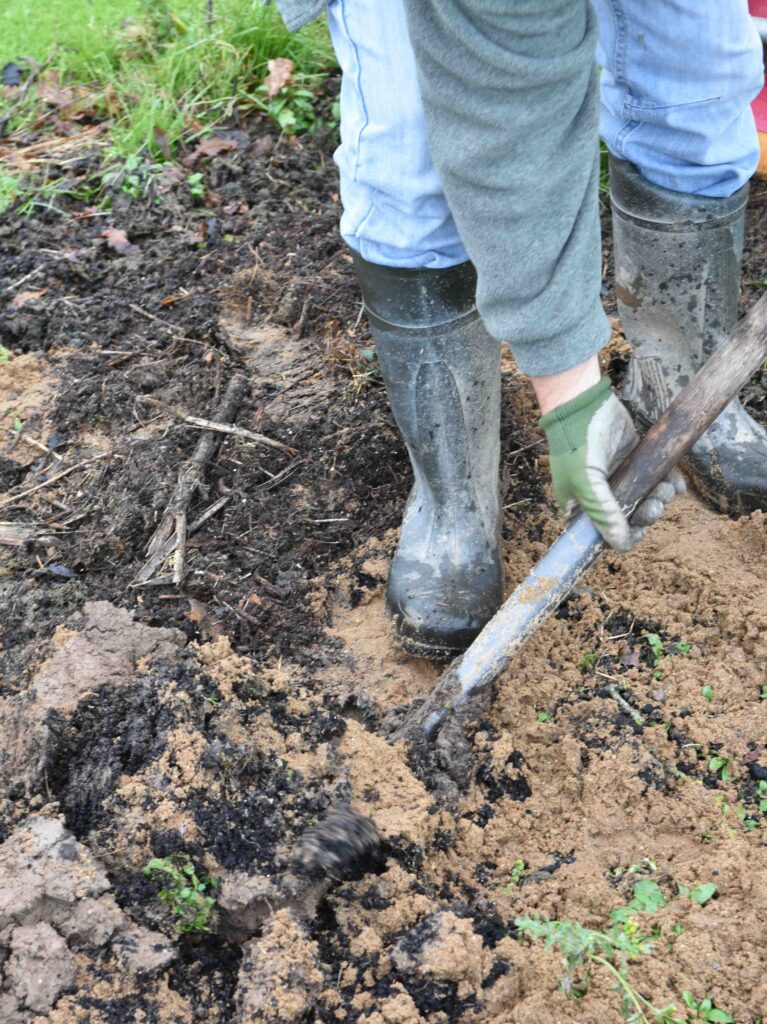
If your soil is heavy clay it is also an advantage to dig in sand. Improving the structure of your soil cannot be done in one season and annual digging and adding organic matter will gradually ‘tame’ clay soil and make it easier to work. The simplest way is to spread the compost or organic matter on the soil and just dig it in, turning over the soil.
In most cases we dig about 20cm deep – the depth of a spade, often called a ‘spit’. A traditional way to prepare new beds in previously uncultivated soil is to ‘double dig’ also called, poetically, ‘bastard trenching’. This is easiest when digging a rectangular bed.
Using a barrow, dig out a trench, a spit deep and about 30cm wide, along the shortest edge at one end of the bed. Barrow this soil to the far end of the bed. Then add compost into the trench – as much as you like- and fork it into the soil at the base of the trench. Then turn over the soil next to the trench to fill the trench and make a new trench. Add compost, fork over and repeat.
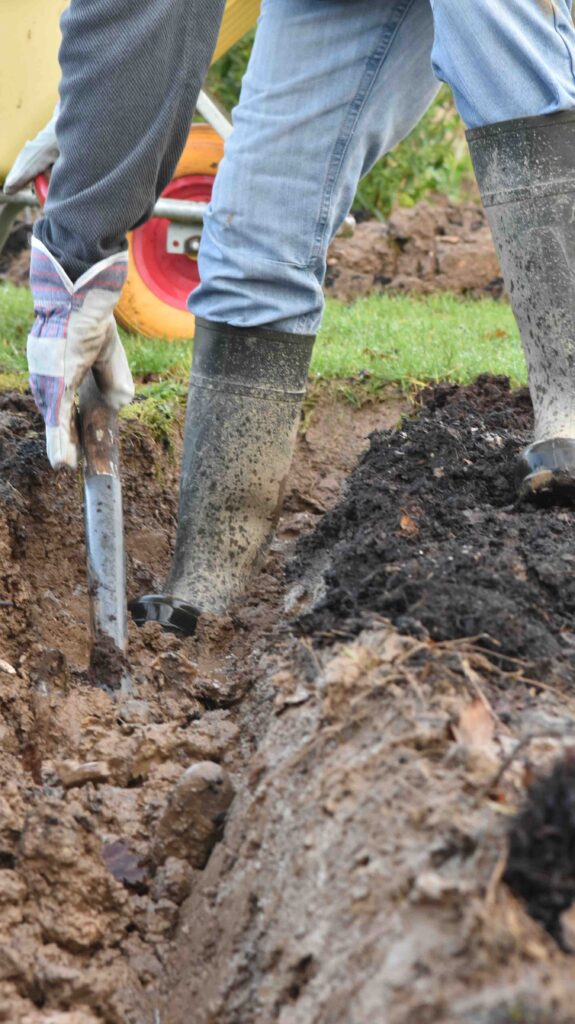
The basis of this technique is that it adds organic matter to the lower levels of soil, increasing the depth of ‘topsoil’ without bringing any subsoil to the surface.
When you dig your plot you should see a colour difference in the upper soil, that contains organic matter and is suitable for plant growth, and the subsoil which is not good for your plants. That is why you should not bring (much) subsoil to the surface when digging. By increasing the depth of the subsoil you improve the soil and plant growth. You do not need to double-dig very often and maybe it is not necessary at all. But it is useful as a way to increase organic matter in the soil and I use it now and then for runner beans and squashes and for new beds because my soil is heavy and lacking in fertility.
So dig your veg beds and areas that will be planted in spring. Keep off soil when it very wet, especially if the soil is heavy clay. And you do not have to dig thoroughly every year.
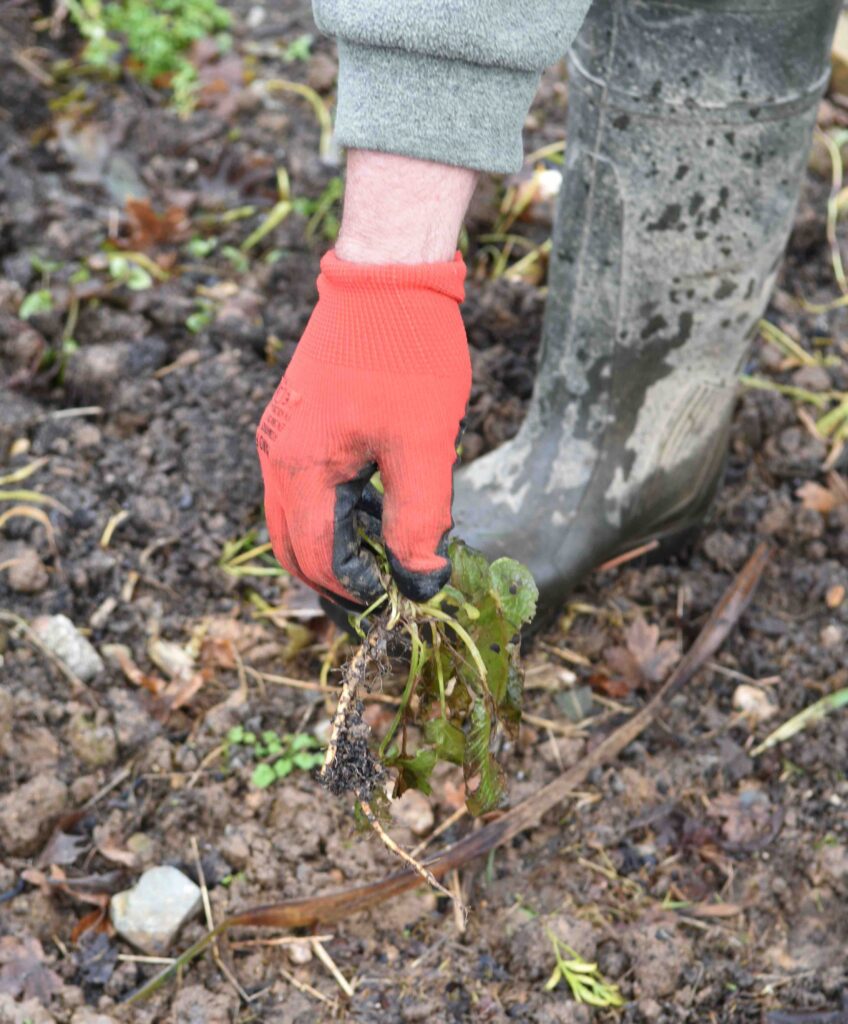
Digging is also a good way to start to eradicate perennial weeds and if you turn over the soil you can bury annual weeds which will slowly die. Frost will ‘break down’ large clumps and you can then rake the soil ready for planting and sowing in spring.
Reminders
It is time to buy your seed potatoes. Early potatoes are the simplest to grow. More on growing potatoes in a few weeks.
You can buy lilies and plant them now.
If you are desperate to start sowing, onions are a good one to start with if you want large onions in autumn.