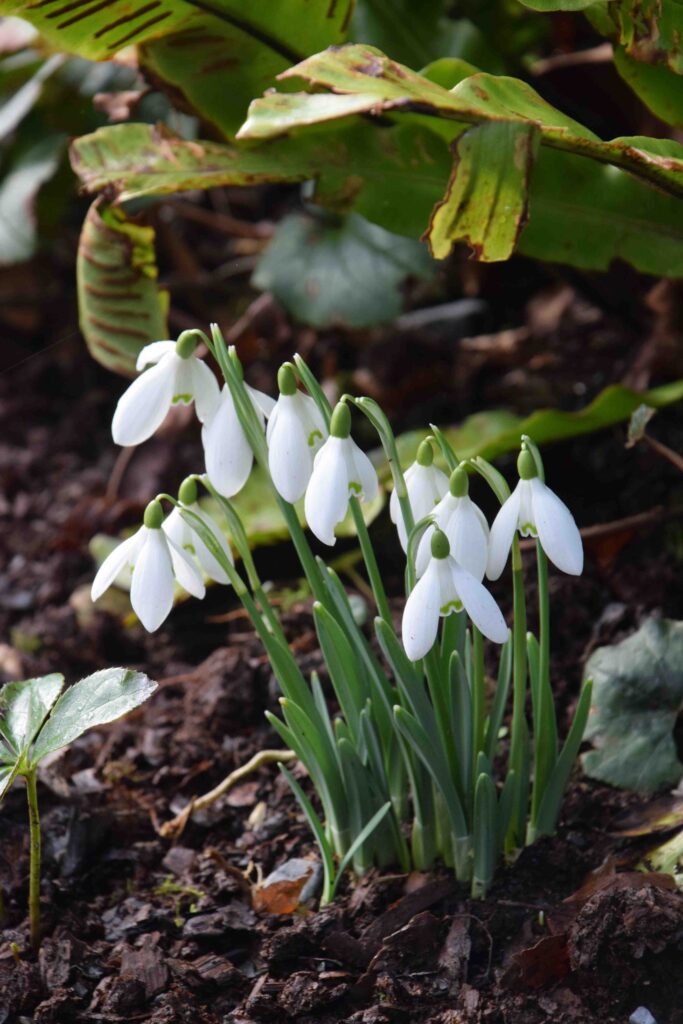
As January slips gently into February and the first hints of spring mercifully reveal themselves, snowdrops (galanthus) and other early bulbs take centre stage. Snowdrops are often the first flowers to open in spring and they are widely available and easy to grow.
Of course, not all snowdrops are equal and I am talking about the easiest and cheapest snowdrops, mostly Galanthus nivalis, the common and possibly native snowdrop and various varieties. If you get hooked on snowdrops (and become a galanthophile) you will discover a whole world of subtle variations and tiny plants with huge prices. And some snowdrops bloom in autumn. If you are a galanthophile you will have had snowdrops in bloom every day since October. But, for most gardeners, snowdrops are flowers for February.
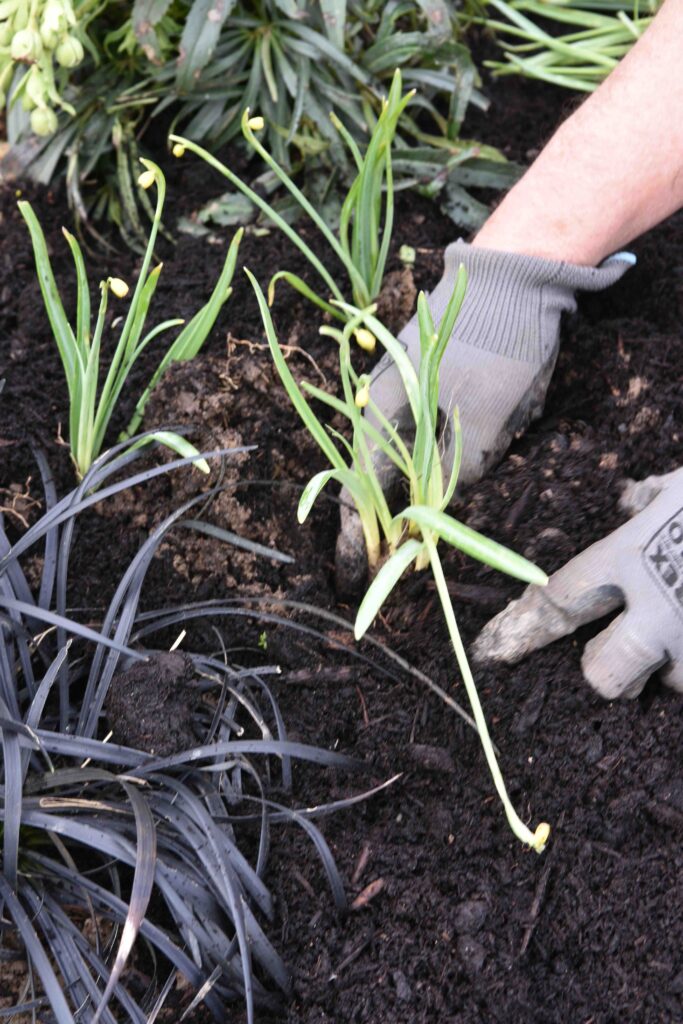
The best way to start is to plant them while they are growing, or better still, as they are starting to die down, in March. They do not grow well from dried bulbs. So it is best to plant them while they are still in leaf, ‘in the green’ in March or to buy them in pots now. Most snowdrops grow best in moist soil in part shade. But they will grow well under deciduous trees and shrubs where it is shady in summer and they will also grow in full sun. They do not mind clay soil and are not fussy about soil pH.
If you have a friend with congested clumps they may let you have some of theirs. It will help theirs if they are thinned out and replanted and you may be able to plant generously in your own garden. The more you divide them, the more they will increase.
If you want large drifts it is a good idea to lift and divide them every few years. If your snowdrops are thriving and increasing well they tend to push small bulbs to the surface and these roll away and spread. So lift them after flowering and pull them into small clumps of three to five bulbs and replant these about 15cm apart to create large drifts. Unless you are growing the expensive kinds where little details count, snowdrops look best en masse.
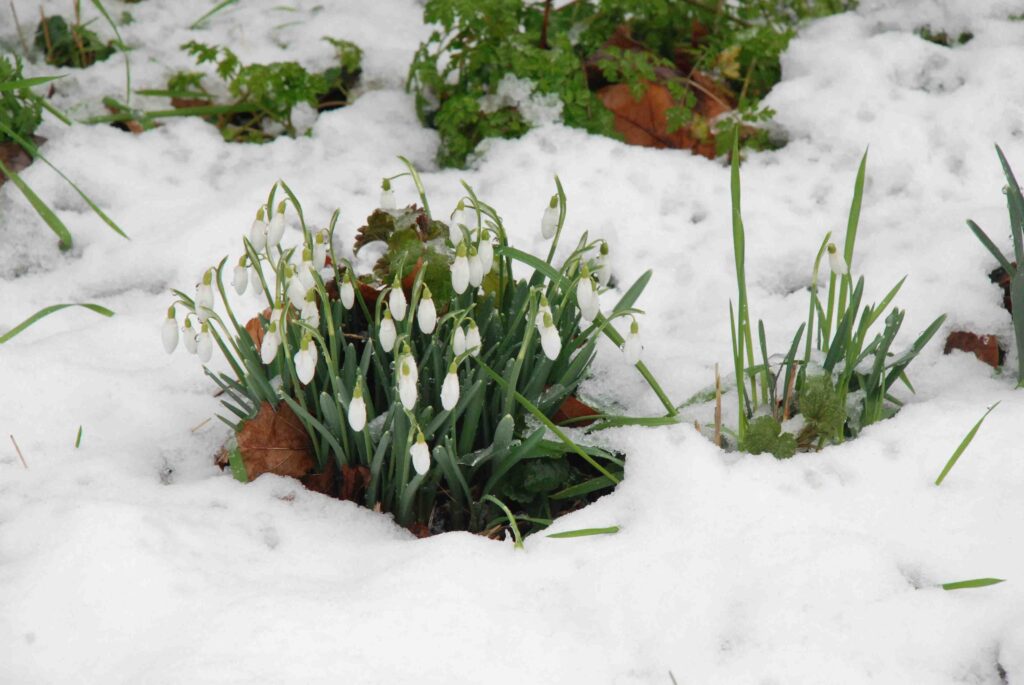
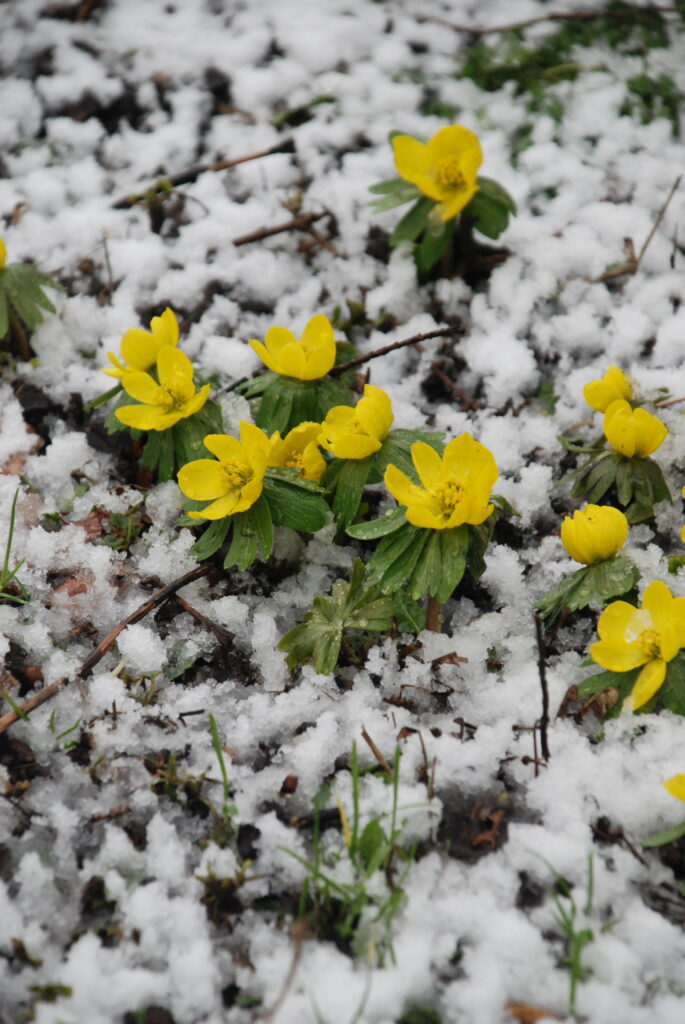
Snowdrops look good when piercing through fallen leaves (or snow) or a cover of ajuga or other low plants. A classic companion is winter aconite with cheerful yellow flowers. These are best divided and planted after flowering too and you can buy these and other plants, in pots, at Nags Hall now.
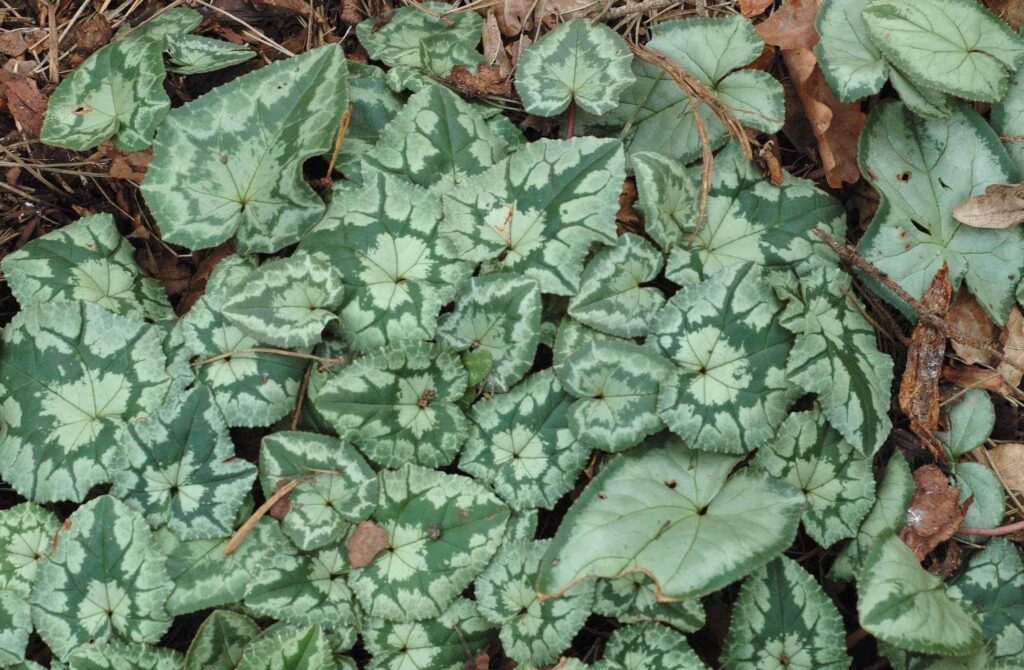
Another perfect companion is Cyclamen coum, the diminutive, winter blooming hardy cyclamen with flowers in various, bright shades of pink. You can plant them in shade through a ground cover of ivy. Ordinary green ivy is good but, if you want something more vibrant you could use variegated ivy.
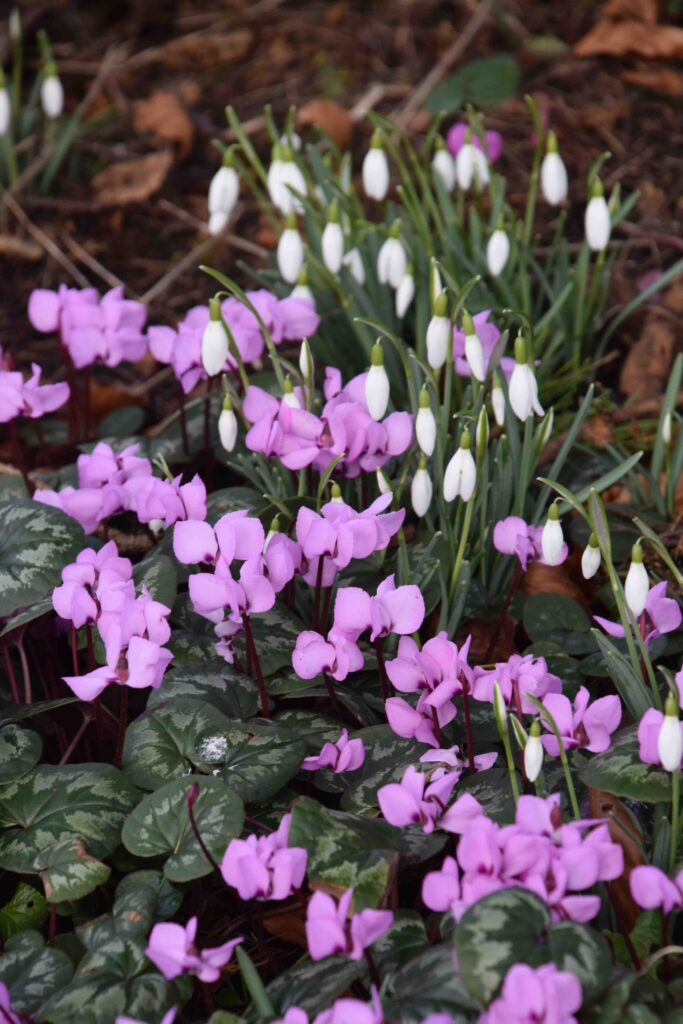
Autumn-blooming Cyclamen hederifolium is also a perfect plant to combine with snowdrops. The flowers appear in August and the foliage is present all winter, marking where the snowdrops are planted so you do not accidentally disturb the bulbs.