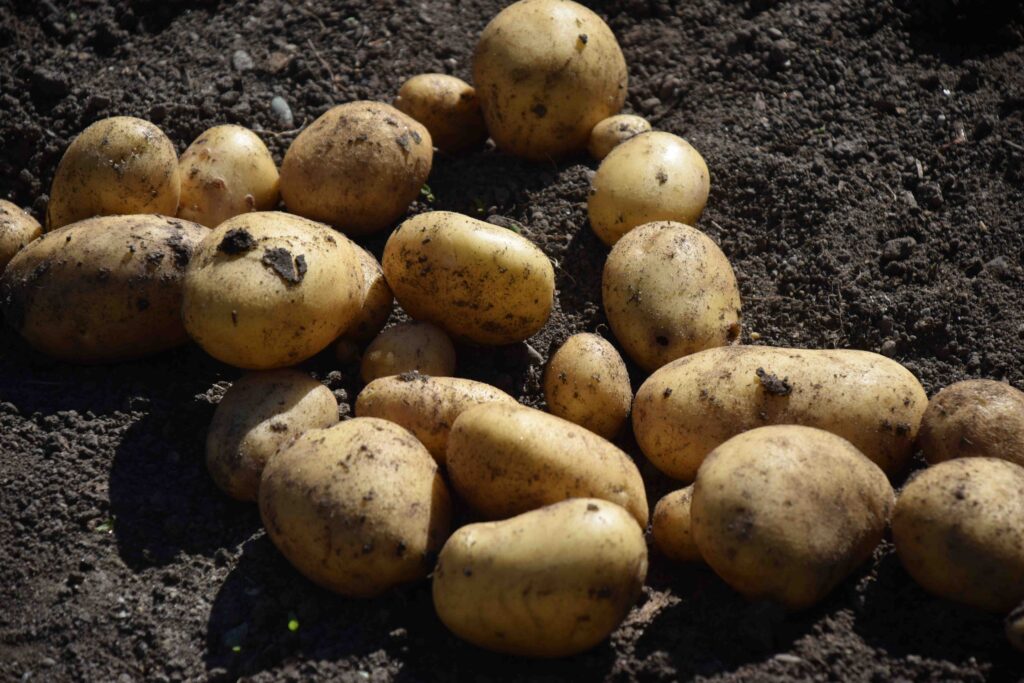
When you pop into Nags Hall this week you will be able to buy seed potatoes. This is the perfect time to buy some and get ready for a tasty crop this summer. Although we cannot usually plant them in the garden until March or April, depending on the weather, we need to make a start now. This is because it is usual practice to ‘chit’ or sprout the tubers before planting.
But first, some basics. Potatoes are grown from seed potatoes which are not seeds as such but are small tubers that have been specially grown and are guaranteed to be free of pests and diseases. Never use old sprouted tubers in the cupboard which may be diseased – though fine to eat.
You can grow potatoes in soil, raised beds, pots or bags. So although potatoes are traditionally a crop that takes up a lot of space, you can easily grow some on the patio in pots or bags. It makes sense to grow ‘earlies’ or salad potatoes – those that cost the most to buy in supermarkets – in your pots. At Nags Hall there will be large bags of the more common kinds and also packs with about six to ten tubers of the more unusual kinds – these are perfect if you are growing some in pots or if you only have a small area to plant.
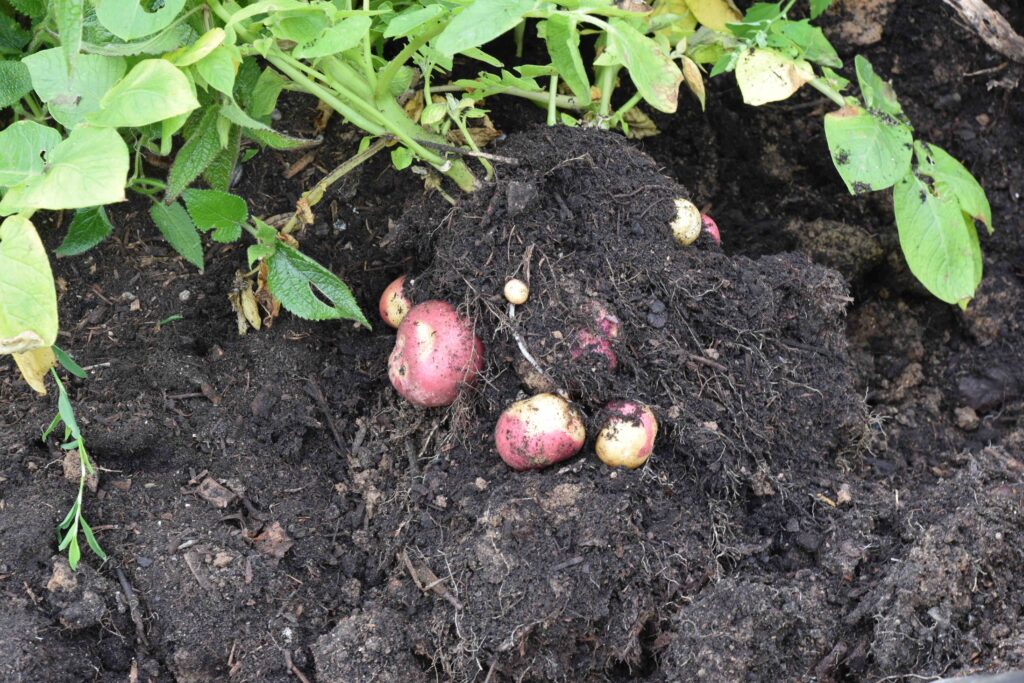
Potatoes are grouped into various types. You can buy ‘early’, ‘second early’ and ‘maincrop’ (or late) varieties. All are planted at about the same time but earlies are the first to mature. If planted in late March they are ready to harvest in early July – usually when the plants are in bloom. Maincrops are usually left till September to harvest.
A bit about planting time
Traditionally potatoes are planted on ‘Good Friday‘ but, of course, that varies each year. In Ireland the planting date is St Patrick’s day which, at least, is constant – March 17. Mid-March to mid-April is fine, depending on the weather. Do not plant in cold, frosty weather. If you plant early there is a risk that the shoots will be killed by frost in April, which is why we ‘earth up’ the plants – more below. You can plant earlier in a poly tunnel or in pots, where you can protect the shoots from spring frosts.
You can get potatoes with various coloured skins and also purple-fleshed potatoes. And then some are floury and others are waxy and sometimes called ‘salad potatoes’.
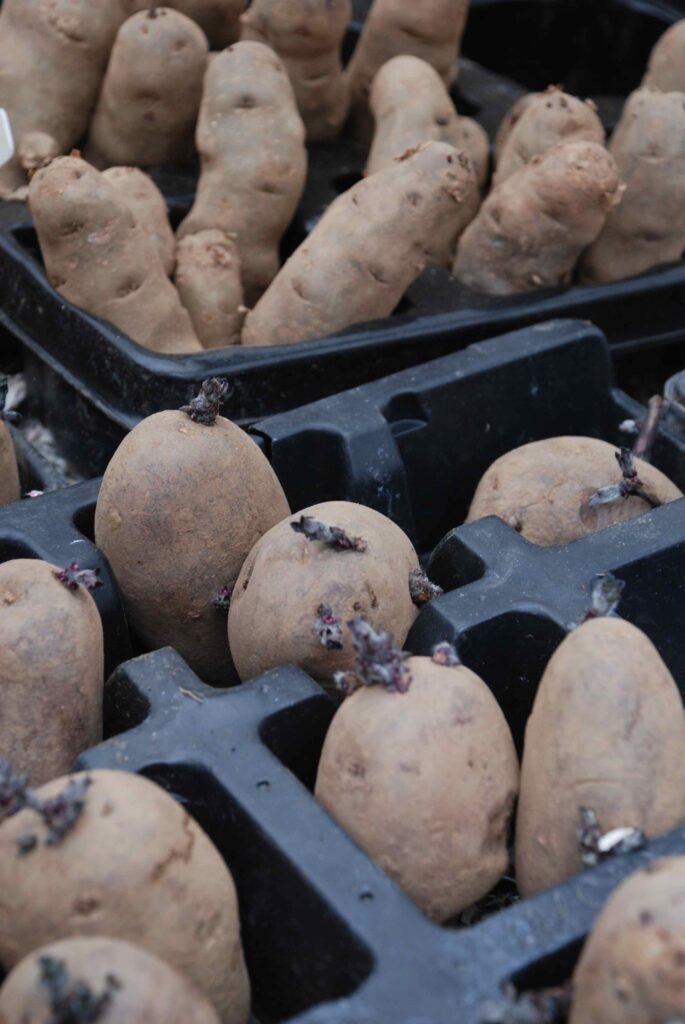
In all cases you need to chit them, to encourage the tubers to form short, stubby shoots before planting. This encourages heavier and earlier crops. Take your potato and you will see one end is where it was attached to the stem and the opposite end has the most ‘eyes’. This is the ‘rose’ end and you place the tubers, rose-end-up, in a tray or egg box and put them in light, in a cool but frost-free spot to sprout. After a month or so, they should be sprouted and ready to plant.
If planting outside in the ground, plant them about 10-15cm deep. Plant early potatoes about 40cm apart in rows 45 cm apart. Plant main crop potatoes about 45 cm apart in rows 70cm apart. This is because most main crops are much leafier and larger plants and need more room to grow.
The biggest problem with potatoes is ‘early blight’ which kills the foliage and can ruin the tubers. It tends to strike in stormy weather in August. Early potatoes tend to be harvested before it strikes so they are easier for beginners.
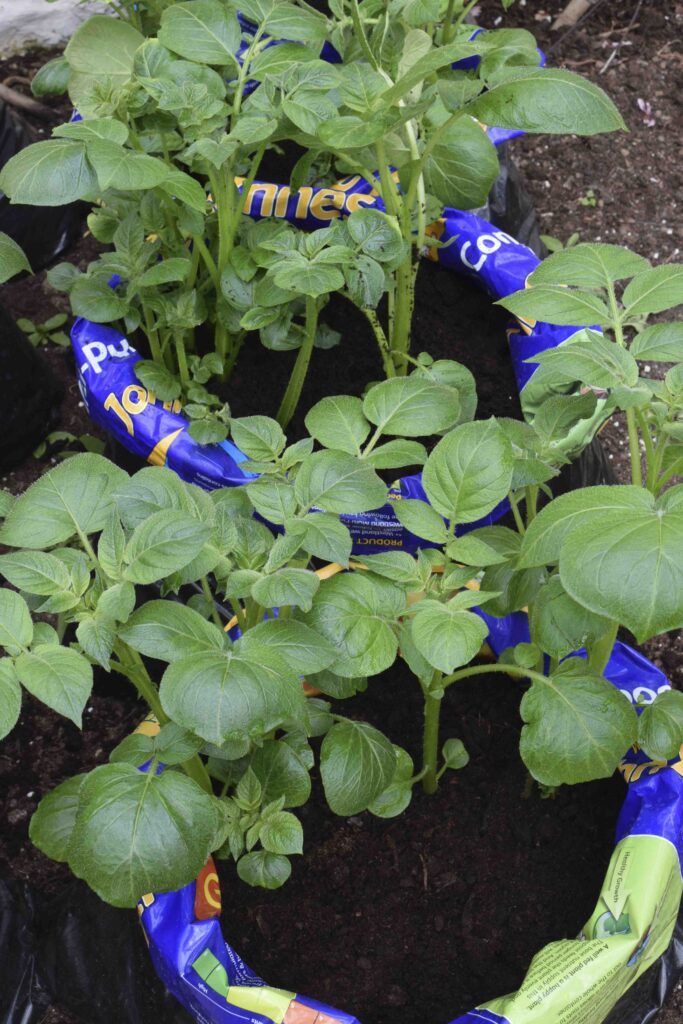
All potatoes can be grown in bags or pots but I would recommend Earlies for this. Roll down an old compost bag to make a container about 20cm high – and make some drainage holes in the base with a knife. Add some compost to about 10cm deep. Put two chitted potatoes on the compost and lightly cover with compost. As the shoots grow through, roll up the bag and add more compost. In this way you keep covering the shoots so get a good crop from a small area. The tubers will also be clean and free from slugs. And you can plant them early and keep the bags in a greenhouse at first to protect them from frost and get an extra-early crop. You will need to buy compost to grow them but you can re-use it in pots later. As the weather warms up you can put the bags outside. I do this, placing the potato bags on the beds that will be planted with tomatoes in late April when the potato bags are put outside.
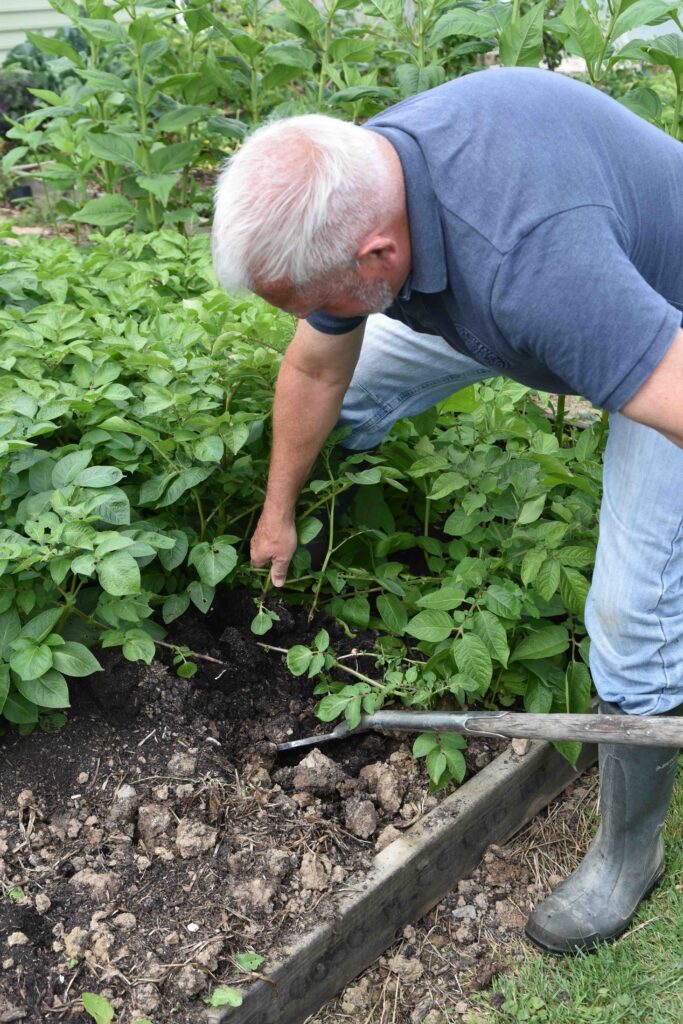
Frost kills potato foliage so, in the garden, when the shoots start to push through the soil, rake soil over them. This protects them from frost and also increases the depth of soil over the plants which increases the crop (the tubers form on the stems and not on the roots) and also covers developing tubers from light, to prevent them turning green.
So however you plan to grow your potatoes or if you have never tried before, now is the time to get started. If you have never grown them before I suggest you start small and grow a few in pots or bags – they are simple to grow and the tubers will be easy to clean and harvest. Get your seed potatoes now before the unusual varieties sell out – and get chitting!