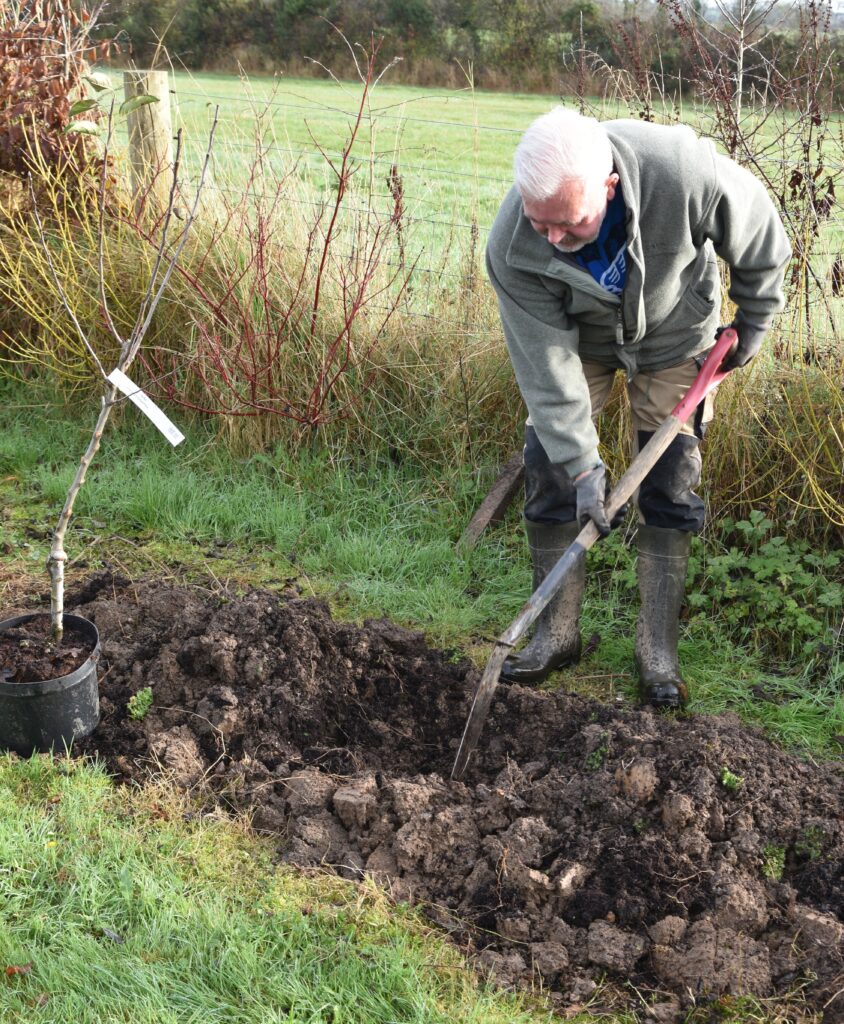
Winter may not be over, with a colder snap forecast for next week, but spring is more than just a distant dream, it is the perfect time to plant trees and deciduous shrubs. They will soon be starting to sprout and the roots pushing into the new soil. And there is still time to buy bare-root trees and shrubs. The advantage of these is that they are grown in fields, rather than pots, which is cheaper and less labour-intensive so the plants may be less expensive than pot grown plants. Often plants are field-grown but then potted for sale because a potted plant can be sold all year round while a bare-root tree must be planted when it is dormant, from November to early March.
I have many trees in my garden but if you only have room for one I think an apple tree is a good choice. It is good for wildlife, will provide perching and nesting places for birds, the flowers are attractive to pollinators and the fruits, as well as being good for us, are loved by blackbirds in winter. So you have an all purpose tree. Apples also tolerate pruning well and they are hardy. They are the easiest of the tree fruits to please and will grow in most soils including clay and chalky soils. And you can choose your preferred apple variety.
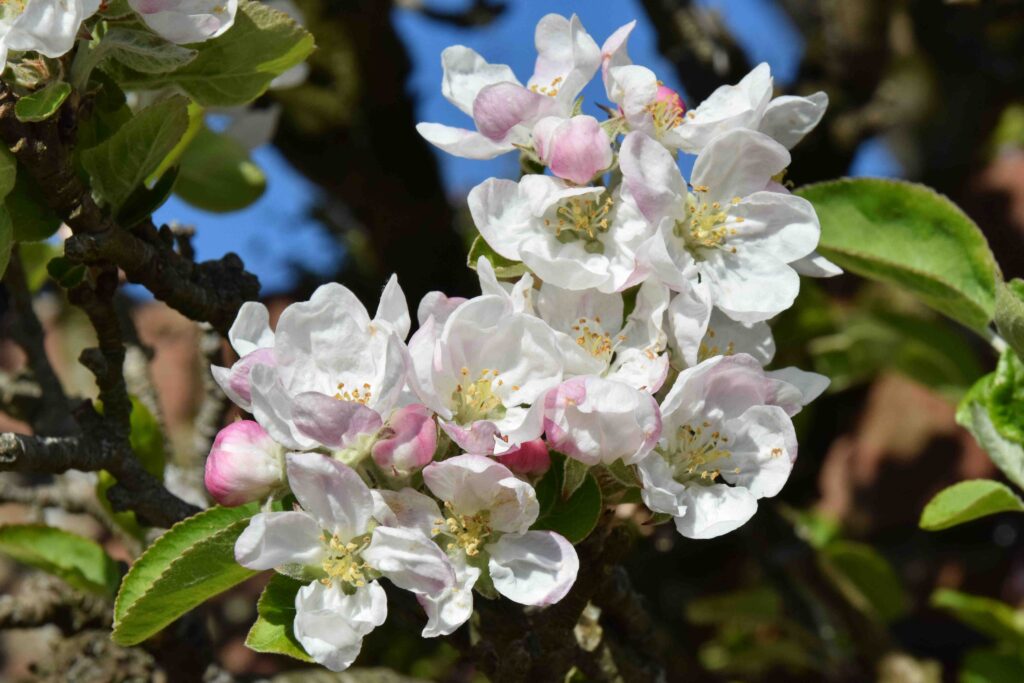
Of course, apple flowers need a ‘pollinator’ to produce a crop – another variety that flowers at the same time. If you live in an area with neighbours there is a good chance there is a suitable apple tree a few doors down so do not give up if you only have room for one tree. The trees do not have to be next to each other – the bees will fly from tree to tree. And crab apples also fertilise eating apples.
But you need to think about where you are putting your tree – it should live and grow, and get bigger, for several decades. And good soil preparation is important. As well as your tree you will also need a short stake and a tie, some compost – which can be homemade garden compost or planting compost – and some RootGrow if you like.
First, dig over the ground. It is usually said that the hole needs to be twice the size of the root ball. But you should really do better than that and dig over the soil about 1m wide and the depth of the spade. You can go deeper if you like. Never plant a tree or shrub in a pocket of just compost. The compost is there to ‘improve’ the soil so the new roots can easily grow into it. So dig it in and mix it well. And then you can take out a planting hole.
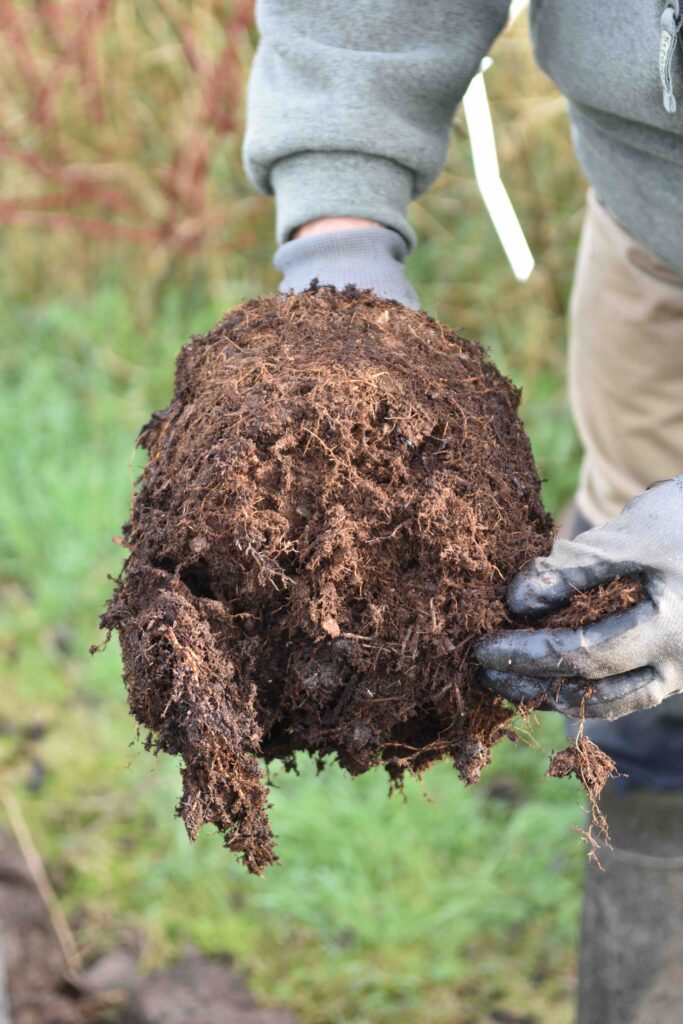
If the tree is in a pot it can be beneficial to gently tease out the roots at the sides and base of the pot. This is not a good idea in summer because you will damage all the young roots and cause wilting, but in winter it will help to prevent the roots going round and round and help the tree establish.
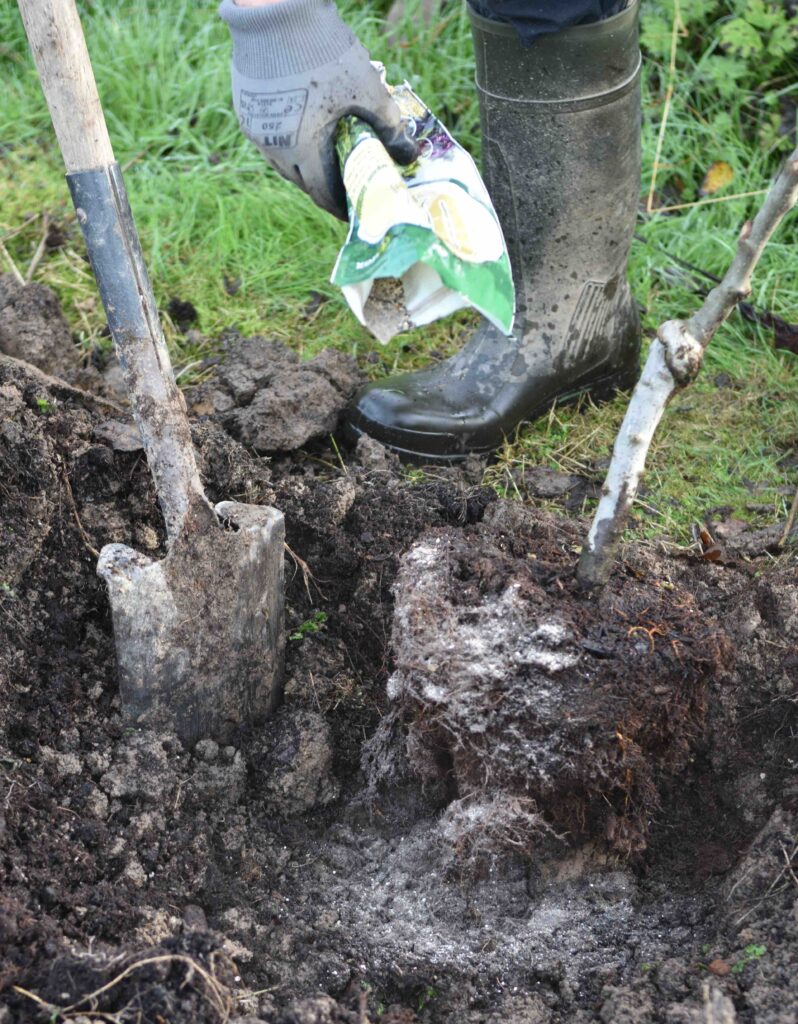
At this stage I sprinkle the roots with RootGrow which is a blend of fungi that help the tree establish. It is not essential but is proven to be useful on poor soils, aiding nutrient uptake, and I use it on all trees and roses.
Then plant the tree with the excavated soil, gently firming as the soil is replaced. Make sure the depth is correct.
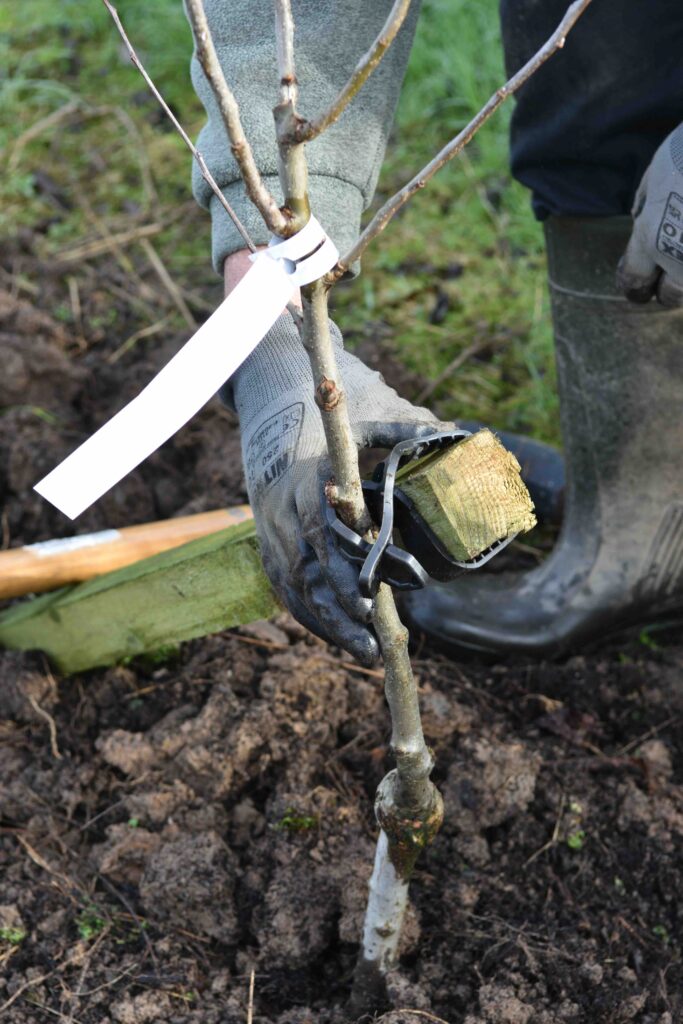
You then need to stake the tree to prevent it moving as the new roots start to grow. A short stake inserted at 45 degrees will hold the roots steady but allow the trunk to flex which is the best way to support a tree.
Then water the plant well. The purpose is to make sure the roots are in contact with the soil rather than actually supply water, at this stage. But as spring progresses you will need to water periodically and definitely in dry spells, to prevent wilting and ensure strong growth.
Growing your own Fruit and Veg
I am delighted to be back at ‘Knights’ the first week in March to present a talk on growing your own fruit and veg.
The event includes tea and cakes and then the talk. You can find details here