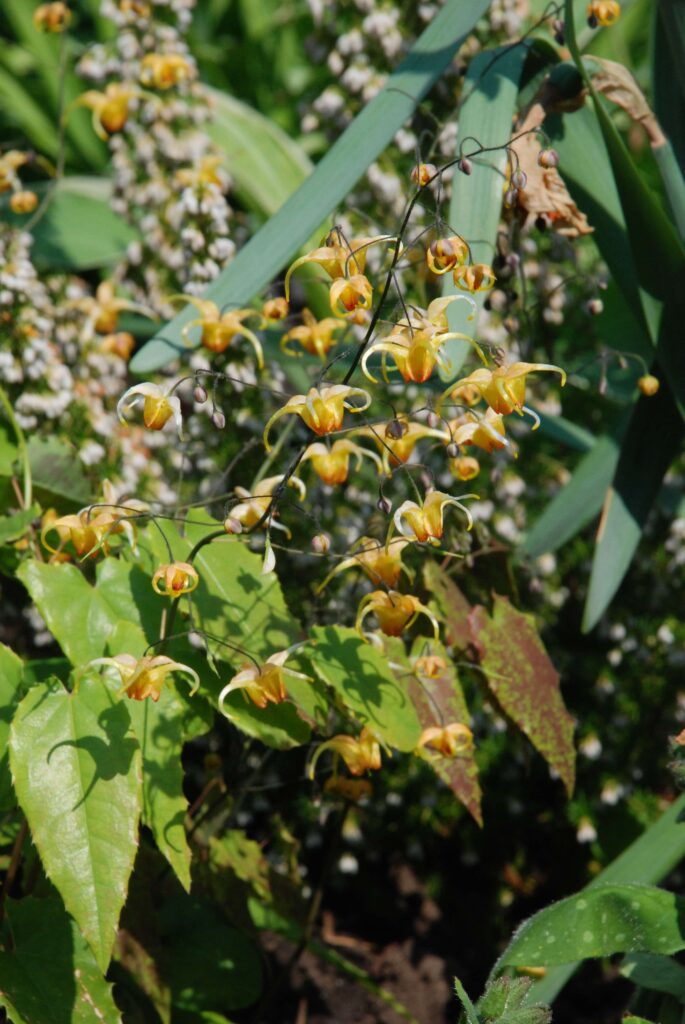
Well, we finally saw some sun! Unfortunately we woke up to a wet morning. So here are some plants that can cope with anything the weather can throw at them.
Epimediums are probably unknown to most gardeners, though enthusiasts appreciate how useful and beautiful these perennials are. They are among the first ground cover plants I knew, as they grew happily in our old, rather wild, garden in Lingfield where they had been battling, and winning against, ground elder for decades.
Epimediums are evergreen or deciduous perennials native to Europe and Asia (in America there are the related Vancouverias). They are in the same family as berberis and mahonias, which is not really very obvious. They have woody, creeping stems at about soil level that either form dense clumps or tough mats of growth. The leaves and flower stems grow directly from these creeping stems and are very tough and wiry. The leaves are divided into leaflets that are often beautifully speckled and patterned when young and are tough and leathery when mature. Branching stems carry delicate flowers in spring and it is usual practice to shear off the old leaves in early spring to expose the flowers and new foliage to best effect. You can also scatter in some compost to refresh the clump at the same time.
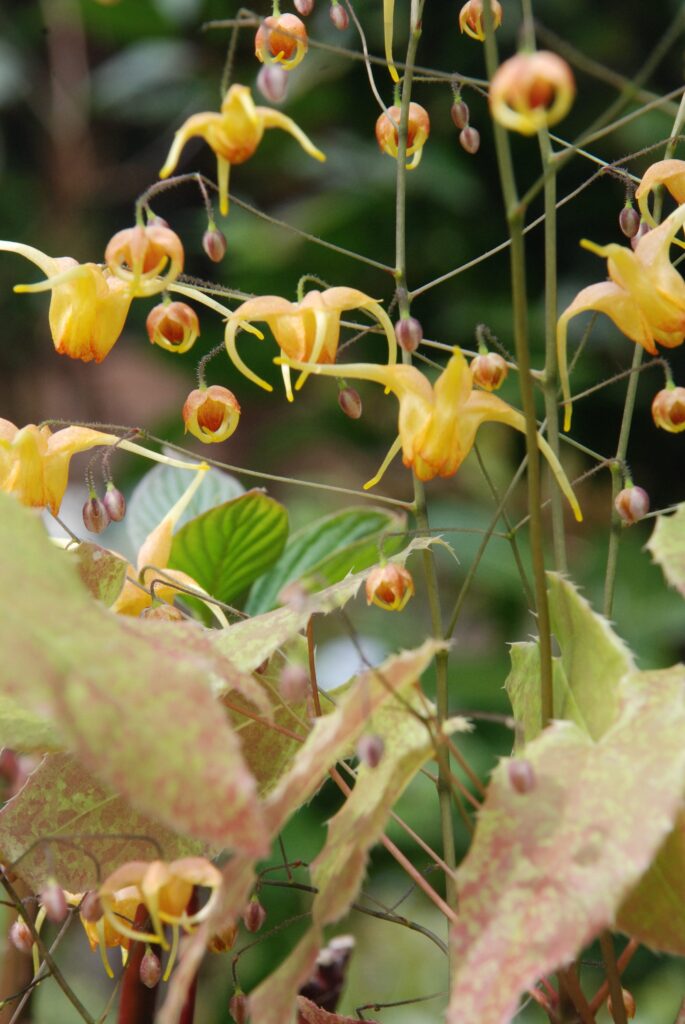
The most common and easiest types are of European origin and include the yellow-flowered E. perralderianum and E. x perralchicum. These are tough plants that will grow in the dry shade of trees and are great ground cover. Epimedium grandiflorum is a Japanese species that is more delicate and forms small clumps but with showy, pink, cherry red or white flowers. It deserves a good position in light shade and soil that is enhanced with organic matter.
The same is true of the myriad of new hybrids that have been produced in recent years following the introduction of new species from China at the end of the last century. None are difficult but they are not as foolproof as the older kinds and they need, and deserve, decent soil and they do not like wet, claggy clay. If I had to choose one, it would be ‘Amber Queen’ which has proved an easy and reliable plant even in my heavy soil. It has lovely new foliage and showy but dainty apricot flowers for many months from April to June. The pictures above show how desirable it is. My best clumps grow under a crab apple where it gets light shade and quite dry in summer.
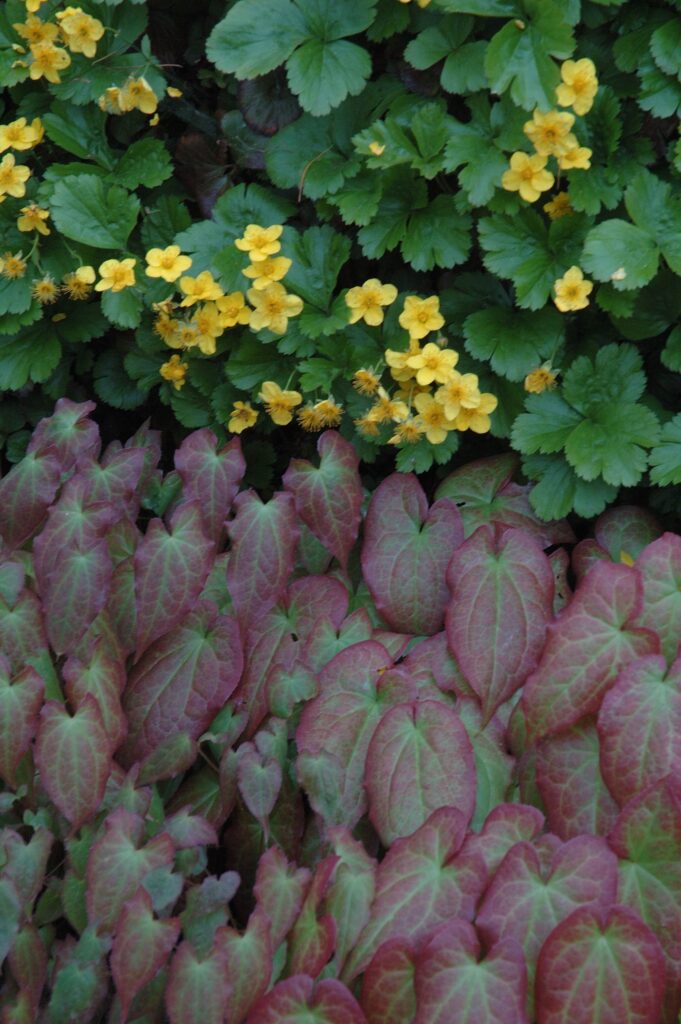
Epimediums have a variety of other names and the one I like most is the ‘unofficial’ happy medium. They are also known as barren-worts which seems strange, bishop’s hat or fairy wings because of the shape of the blooms. Epimedium grandiflorum is the source of the supplement ‘horny goat weed’ which needs little explanation.
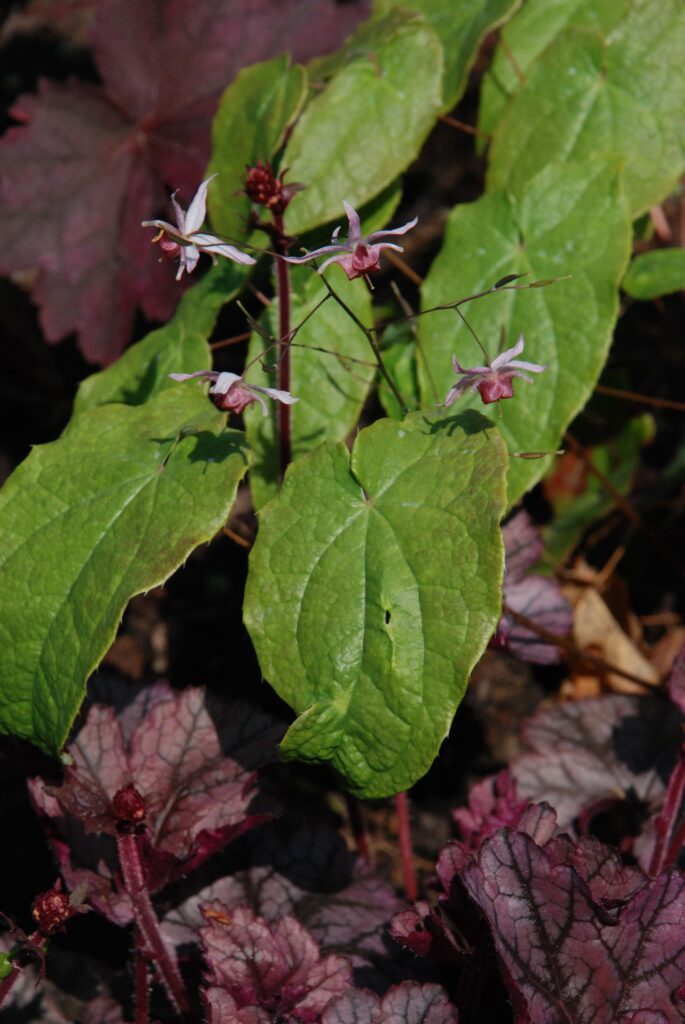
If you have some plants already you can trim them back and divide them now, though autumn is the optimal time because they come into growth so early in spring. But now is the perfect time for planting new epimediums. They are pretty, useful and long-lasting.
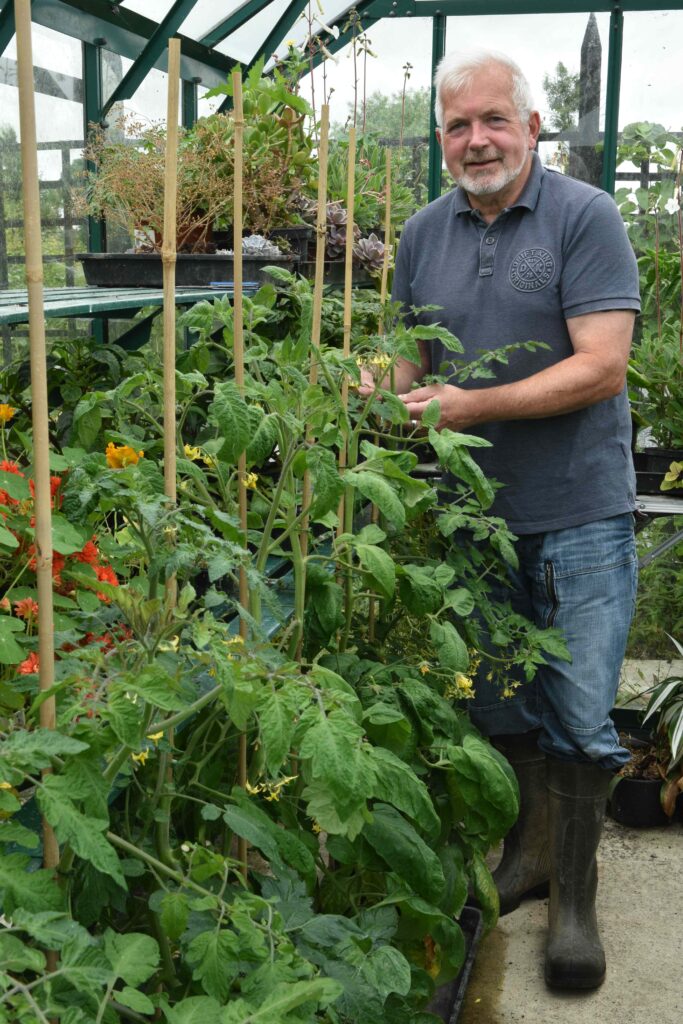
Growing your own Fruit and Veg
I am delighted to be back at ‘Knights’ the first week in March to present a talk on growing your own fruit and veg.
The event includes tea and cakes and then the talk. You can find details here