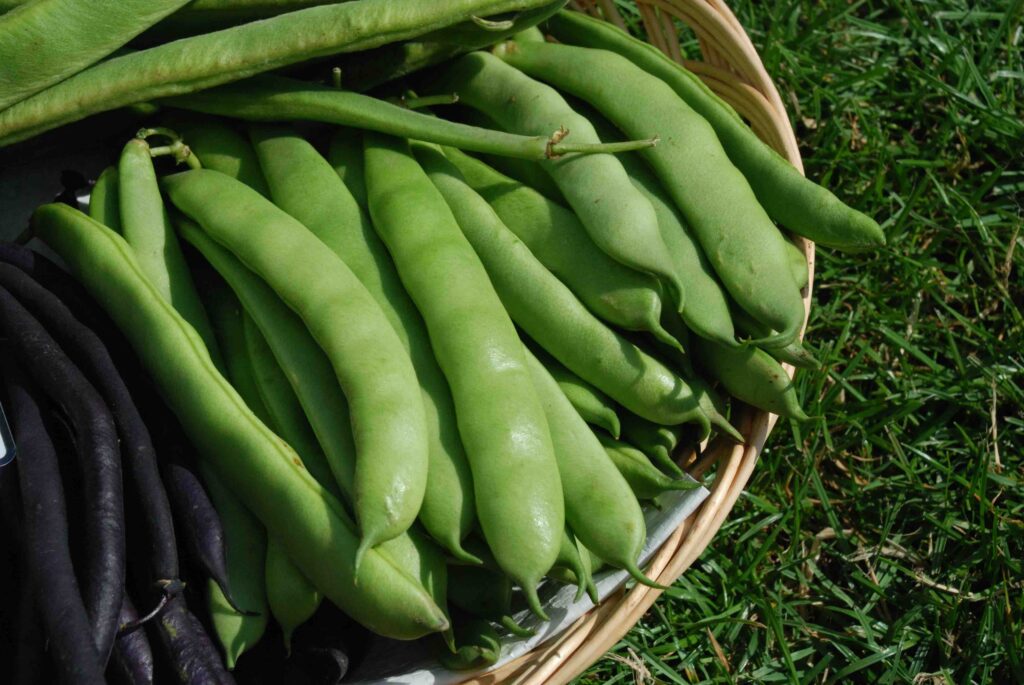
There seems to be a bit of an obsession with protein-rich foods these days. Walk round any supermarket and you will be confronted with hundreds of ultra-processed-foods claiming to be ‘high in protein’. In many cases this ‘extra’ protein will come from milk protein or peas and soya.
But why not cut out the middleman and produce your own, natural protein by growing beans.
There are three main groups of beans we can grow this summer. They make great home-grown crops. Each one crops over a period of several weeks, or more, so you do not have a glut as you can do with other crops. They can all be grown in patio in pots if needed. All have pods that are clean and easy to prepare so no dragging soil into you kitchen. And all will actually ‘add’ nitrogen to your soil for free.
The three kinds are broad beans, French beans and runner beans.
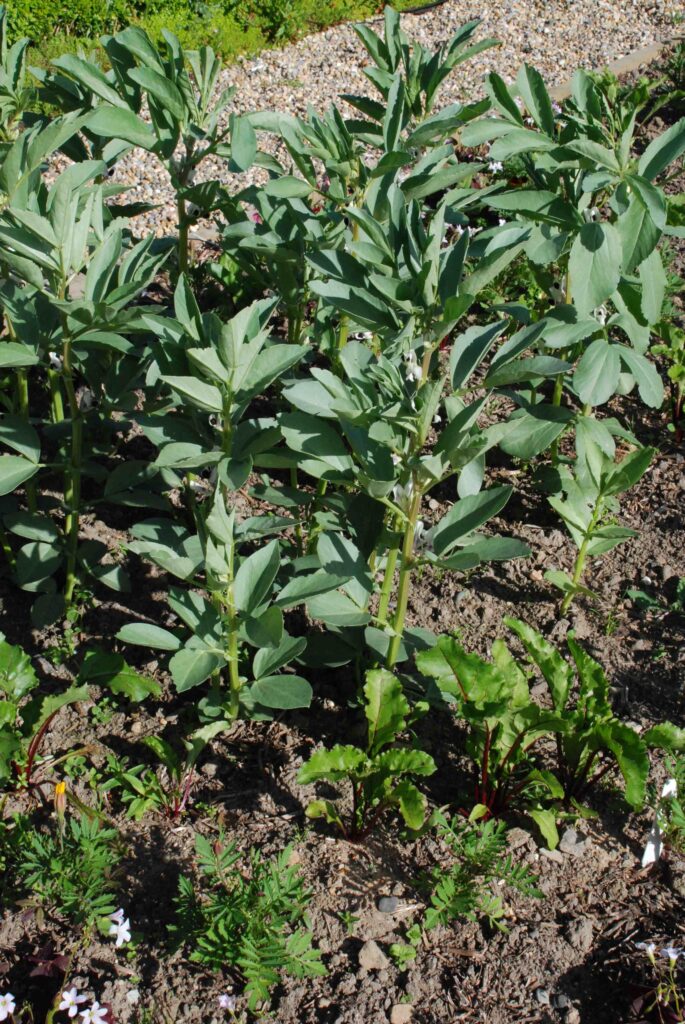
Broad beans
Broad beans are nutrient-rich because we eat only the seeds and not the pods. They are high in protein (45% of the calories are from protein), high in folate and pantothenic acid (Vitamin B5), high in fibre and low in fat.
How to grow
Unlike the other two, broad beans are hardy. In a sheltered garden you can even sow them in autumn for an early crop. But now is a good time to sow them. If you soil is heavy you can sow in pots on the windowsill. They do not need lots of heat and you MUST plant them out when they are small, less than 10cm high. Sow one or two seeds per pot. Or you can sow them, direct where they are to grow in the veg plot or in pots of multipurpose compost.
They are rather tall, bulky plants except ‘The Sutton’, which is dwarf, and the best for pots. Sow two seeds together at stations 20-25cm apart in double rows. They may need to be staked or supported with twigs. They usually grow about 70cm high.
The black and white flowers are very attractive to pollinators.
When to pick
When you can see the seeds swelling in the pods open one to see the size of the seeds. Broad beans can be eaten when the seeds are small or large but the bigger they get, the tougher they get. I prefer to eat them when the seeds are not too big or the skins get very tough – and life is too short to skin broad beans! In theory you can eat the whole pods when they are small but I have never fancied that. I may be missing out but one of the joys of growing broad beans is opening the pods and feeling the velvety insides of the pods and lovely though that feels, I have never really been excited about eating them. You may wish to try or know better.
In most cases, you should be picking broad beans in June and July, along with the first early potatoes. Pull up the plants in July and replant the area with cabbages or salads.
Problems
Broad beans are hardy and easy to grow but… there are two problems.
Blackfly (aphids) can infest the plants and these can weaken the plants and even reduce the crop. Check the plants and squash any blackfly or use an organic spray (in the evening when bees are not around). Chocolate spot is a fungal disease that can attack the foliage. If your plants are affected, harvest all your beans as soon as possible and compost the plants.
Like all beans, these have nodules on the roots that are full of bacteria that add nitrogen to the soil. So when you pull up the plants, leave the roots to decompose and plant a crop that likes lots of nitrogen such as cabbage or lettuce.
French beans
French beans are naturally low in calories (35% of the calories are from protein) and high in fibre. They are high in vitamin K and contain folate and manganese.
How to grow
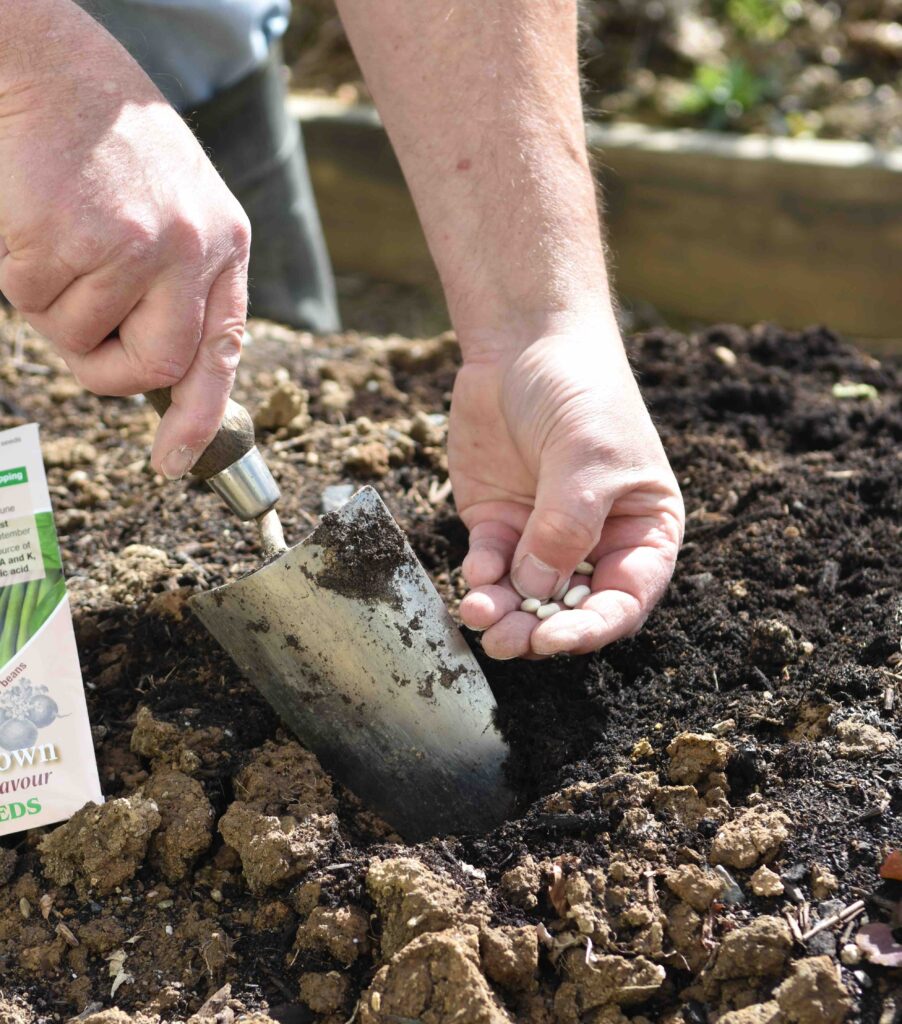
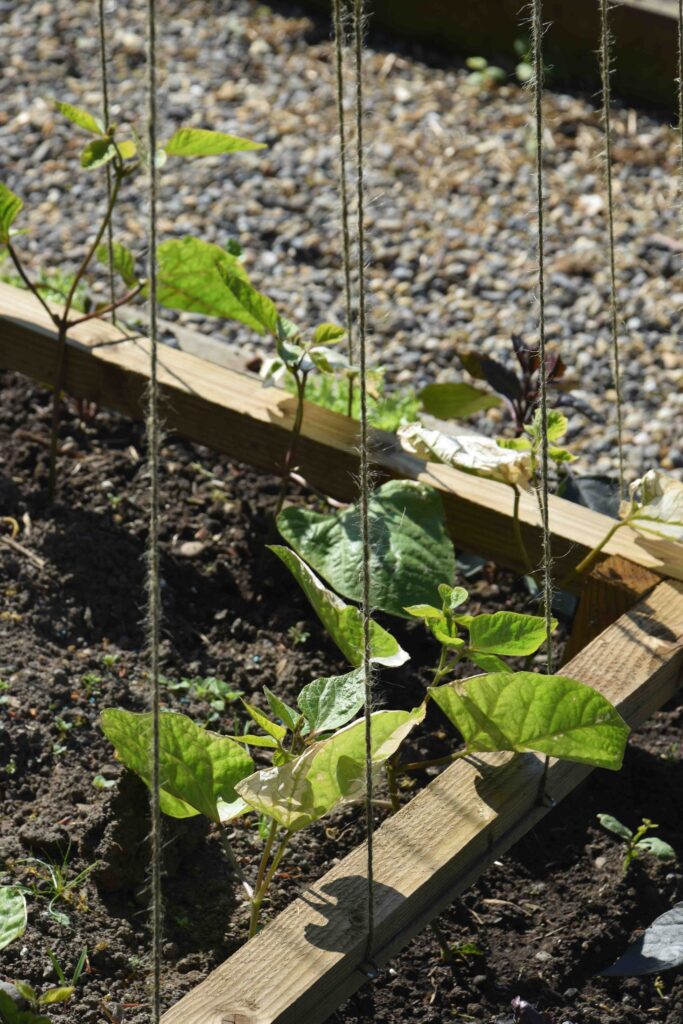
French beans are native to Central America and dislike cold, wet conditions. Most failures are due to poor germination because of cold, wet soil. Start them in cell trays or pots indoors and plant out in June. You can sow direct in the soil but do not try this until late May or until warm weather. You can then sow again in June and again in July for continuous crops.
There are hundreds of different French beans, some with flat pods, some with thin ‘pencil’ or ‘filet’ pods and there are different colours.
Then there are dwarf beans and climbing types. Dwarf French beans crop more rapidly but for a shorter period. Climbing beans take longer to start to crop but then crop over a month or more.
French beans are self-fertile so every flower should become a pod. All kinds can be grown in patio pots but, obviously, climbing kinds will need support.
With dwarf kinds, sow two seeds per station, about 15-20cm apart in rows.
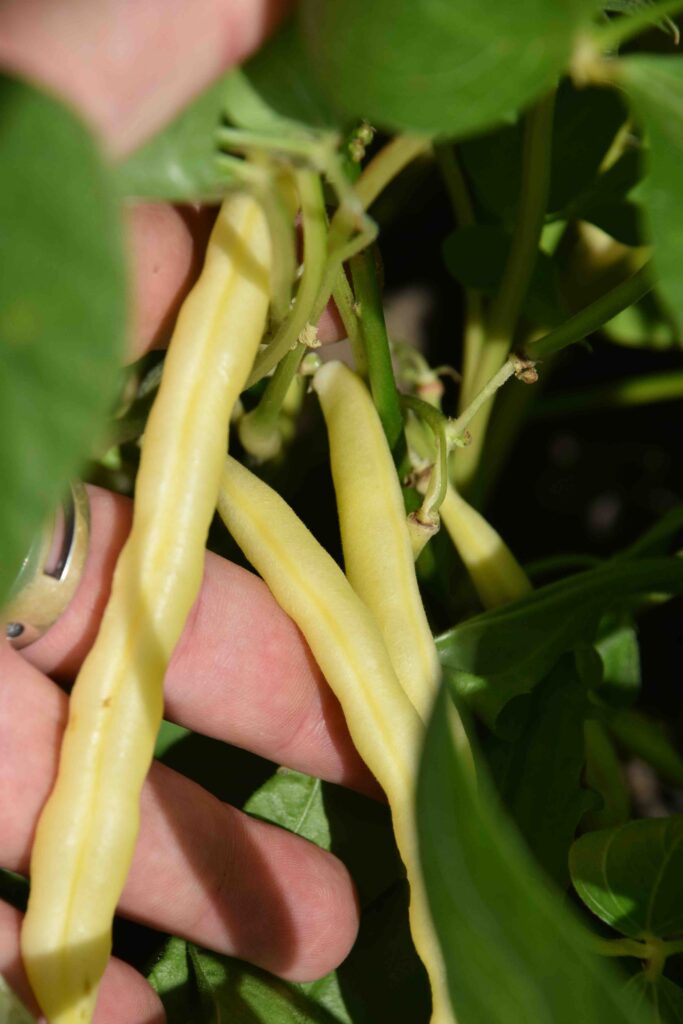
When to pick
Most modern kinds are not too stringy but pick the beans when they are young and before the seeds inside become too pronounced. If you leave some pods too long you can eat the mature seeds.
Problems
Although there are a few problems, few are likely to be seen in your garden. Poor germination is the most common issue – so don’t sow into cold soil. Obviously, slugs and snails can be an issue.
Runner beans
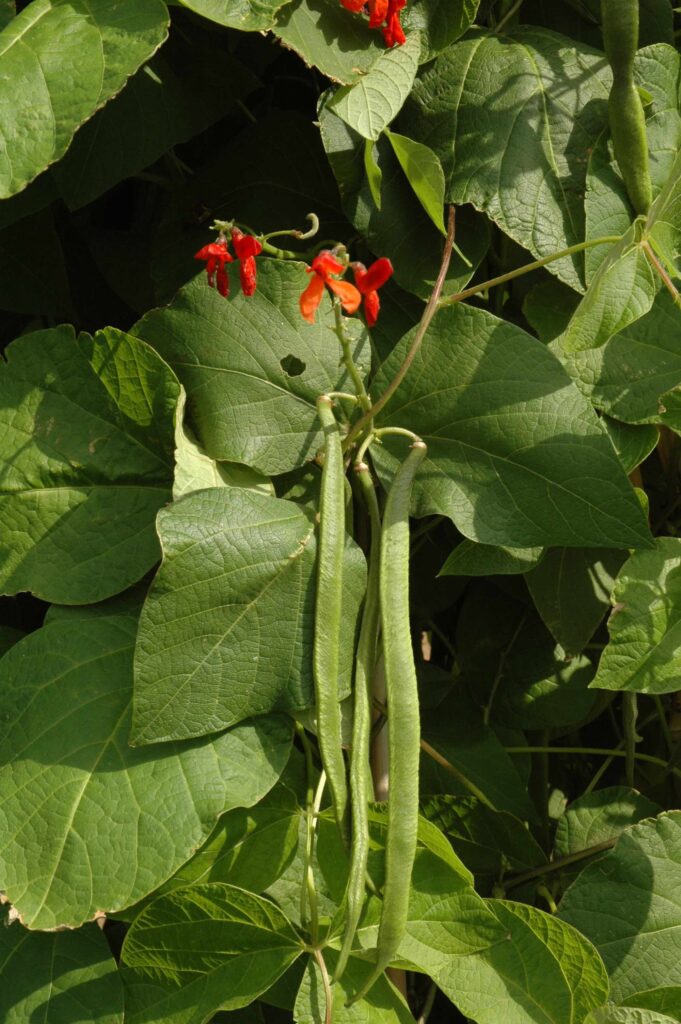
Runner beans have all the benefits of other beans though slightly less protein. But they are a source of Vitamin C and folate, fibre and some protein.
How to grow
Runner beans are different to the other two beans but are similar in growth and care to climbing French beans. They are sensitive to cold soil and frost. It is best to start them in pots and plant out in late May or early June. Sow two seeds per cell or small pot, in mid-April, in multipurpose compost and plant out when small and before they start to climb. Grow them up canes about 30cm apart. A sheltered, sunny spot is best.
When to pick
Pick the beans when they are fully grown but well before you can see the seeds in the pods so they are tender and tasty. Old beans become woody and unpleasant to eat. If you pick the pods when young it will promote more beans to form. Just a few old pods getting to the seed stage will reduce your total crop.
Problems
Unfortunately runner beans have problems – most notably the flowers fail to set pods. In general, white or pink-flowered varieties are easier to grow and set pods better. You can now buy hybrids of French and runner beans that set pods reliably.
Failure to set pods can be down to lack of soil moisture or lack of pollination but the main reason is warm nights. High night temperatures will prevent pods to set so be patient. Even if pods do not set in warm weather in August, they will set later when weather cools.
Veg talk
Growing your own Fruit and Veg
I am delighted to be back at ‘Knights’ next week (March 5th and 6th) to present a talk on growing your own fruit and veg.
The event includes tea and cakes and then the talk. You can find details here