Up until this morning it has been a mild week, though wet and windy. Unusually, there are lots of flowers in the garden including some tender perennials thanks to the lack of real frost so far. But a lot of the colour in the garden comes from autumn foliage, some of which is hanging on in the garden. Plenty of shrubs have autumn foliage in various shades of brown which, though attractive, doesn’t have quite the appeal of those with brighter colours. Among the loveliest are the Japanese maples but these can be tricky to please. They do reasonably well in my garden but often get caught by a late spring frost or strong winds so, having run around the garden on a sunny day, here are some of the less obvious trees and shrubs that have been brightening the days for me lately. All are easy to grow and suitable for most gardens.
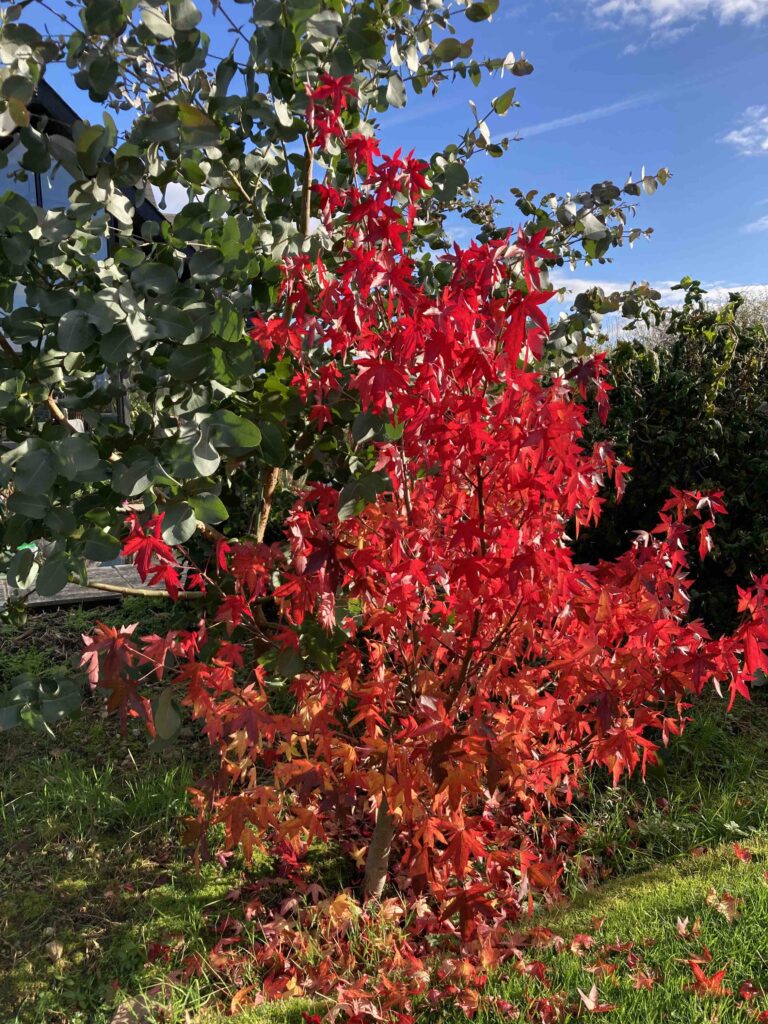
Above is the wonderful liquidambar which is probably the most spectacular of trees for autumn colour. It is ultimately a large tree that will grow in most soils. Mine (I have three) are in rather wet, heavy soil and have been slow to get settled but are now making some headway. Often the foliage turns orange, amber or purple but this year it was glorious scarlet and crimson. A feature of this great tree is that the foliage colour persists for many weeks and does not drop as soon as it changes colour.
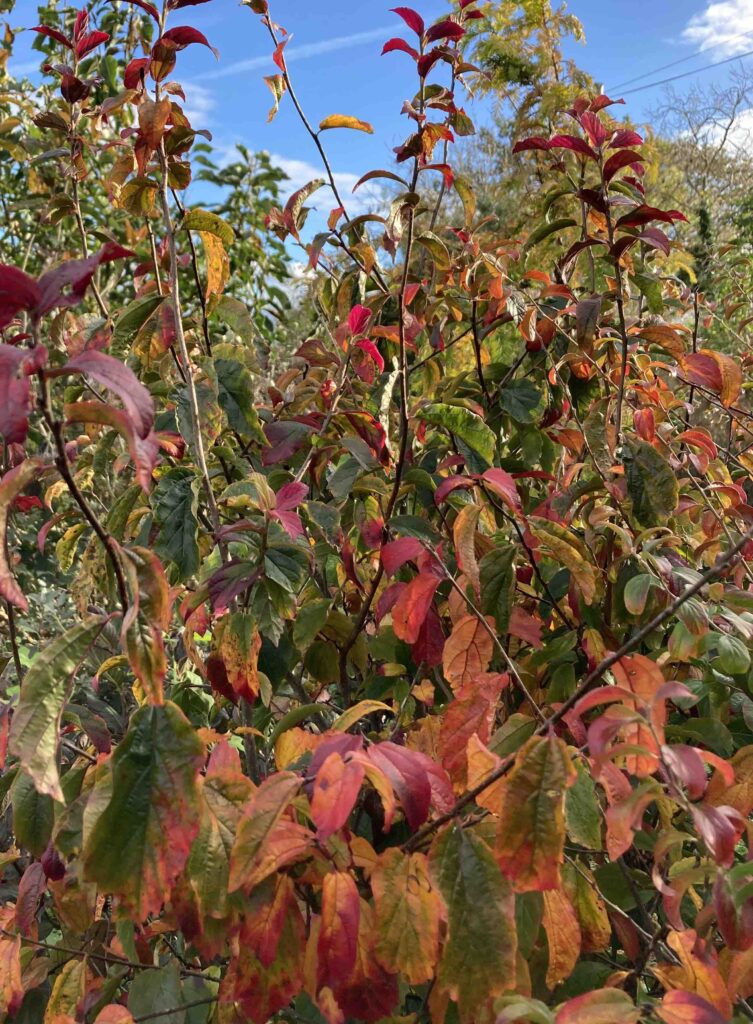
Another classic for autumn foliage is Parrotia persica. This is a hardy shrub or small tree that has beautiful bark but is grown primarily for the autumn colour which is amazingly varied in hue. Naturally a wide-spreading tree there are smaller and upright forms that take up less room in the garden.
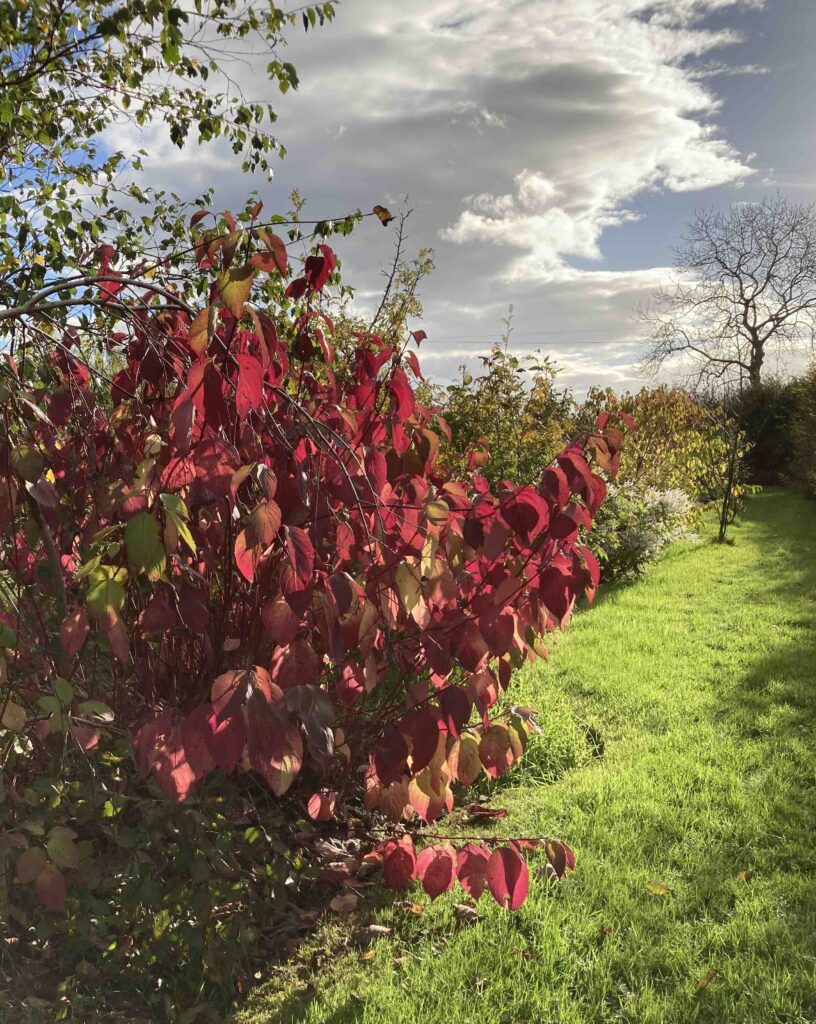
The most beautiful of all my autumn leaves come from Cornus alba ‘Sibirica’. I would be lost without this tough shrub in my garden: it thrives in heavy, damp soil and it is mainly grown for the bright red stems in winter. To maintain these and keep the plants tidy, prune hard in March. This encourages strong fresh growth that has the best colour. The leaves are green all summer and not exceptional but it has no pest and disease issues. If left unpruned it produces small white flowers and white berries after which the plant is named.
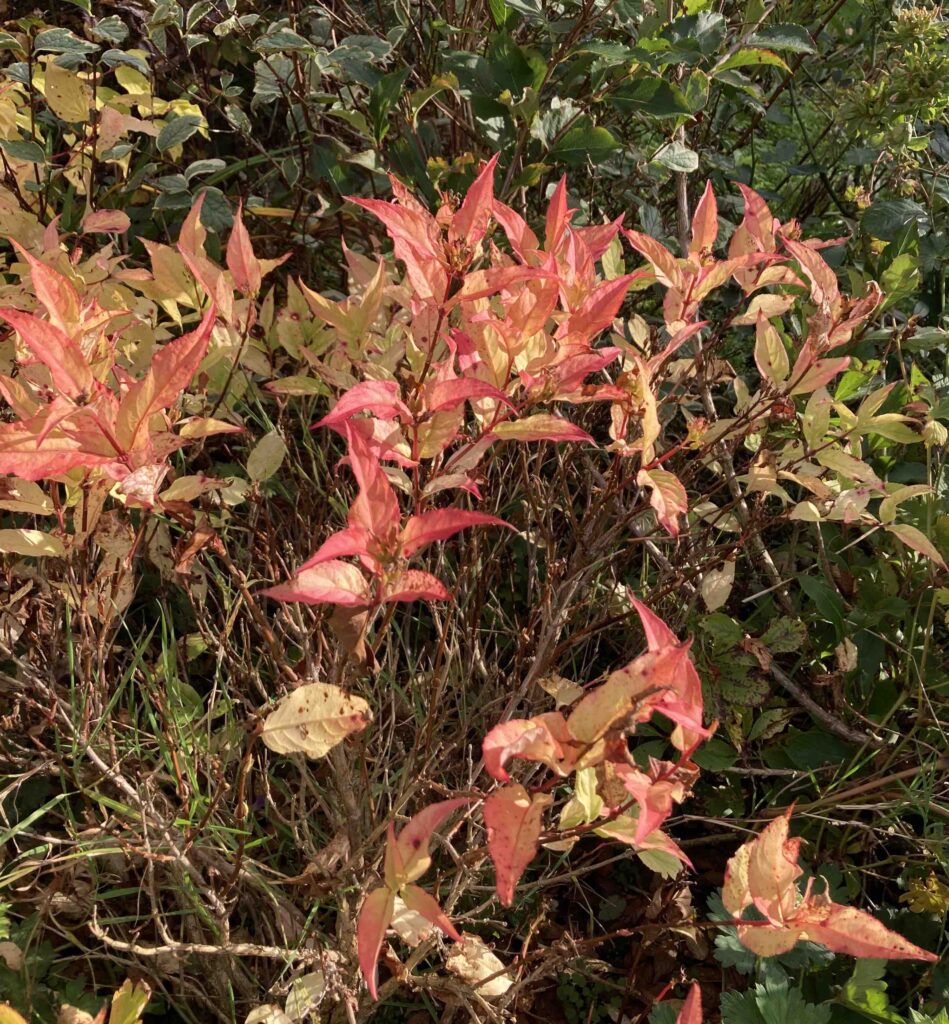
Diervilla are among my favourite shrubs, and yet few people have heard of them. They do not have huge flowers and the name is not familiar but they are really useful. They are related to weigela but they produce flowers on the new growth throughout summer which bees and butterflies like. They can be quite large but the Kodiak series are all small and have colourful foliage in summer. This is Kodiak Orange which has yellow and apricot foliage in summer, as well as yellow blooms. In autumn the leaves turn glorious colours. Diervillas are hardy, not fussy about soil and will grow in sun or part shade. They can be pruned at any time, though a spring trim is best. Like all the plants I am mentioning, you should be able to get them at Knights this autumn.
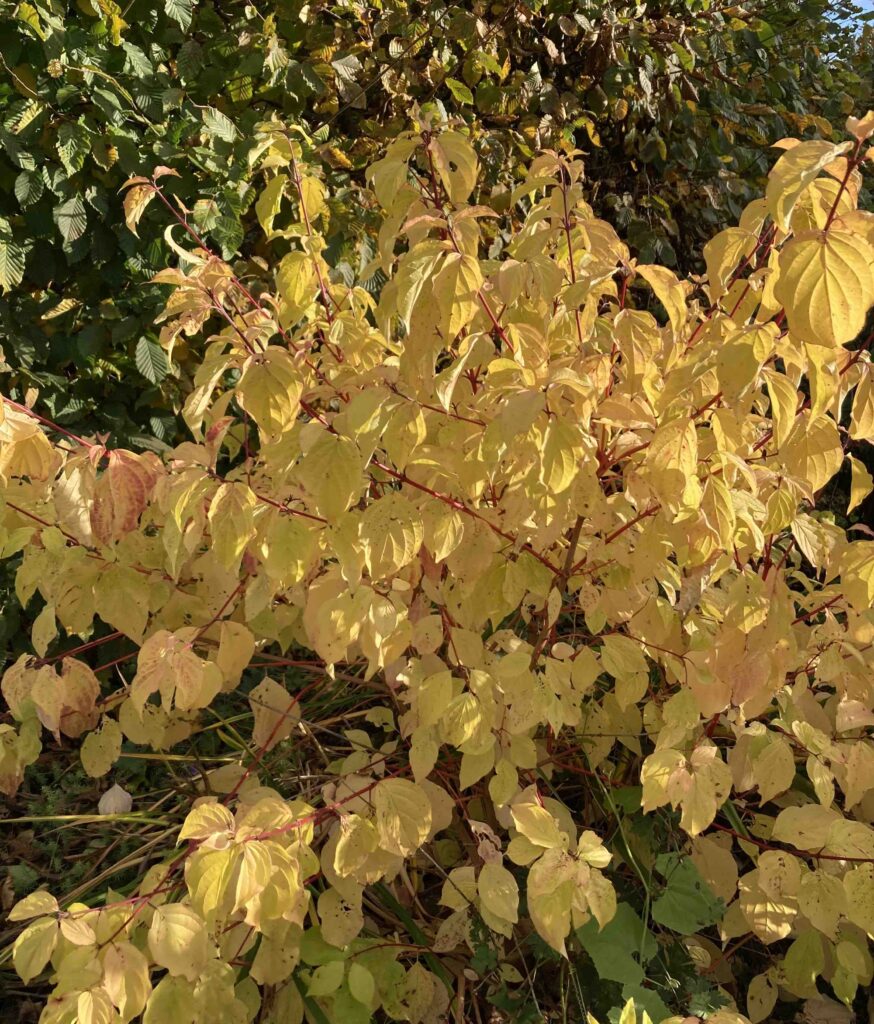
Another all-season plant that is grown mainly for winter effect is Cornus sanguinea ‘Midwinter Fire’. It has glorious, flame-red and orange winter stems but also lovely autumn foliage. It can be a bit slow to get started but ‘Anny’s Winter Orange’ which is very similar (above) which I have, is stronger growing, in my opinion. Prune out a few older stems every spring to encourage fresh, bright growth.
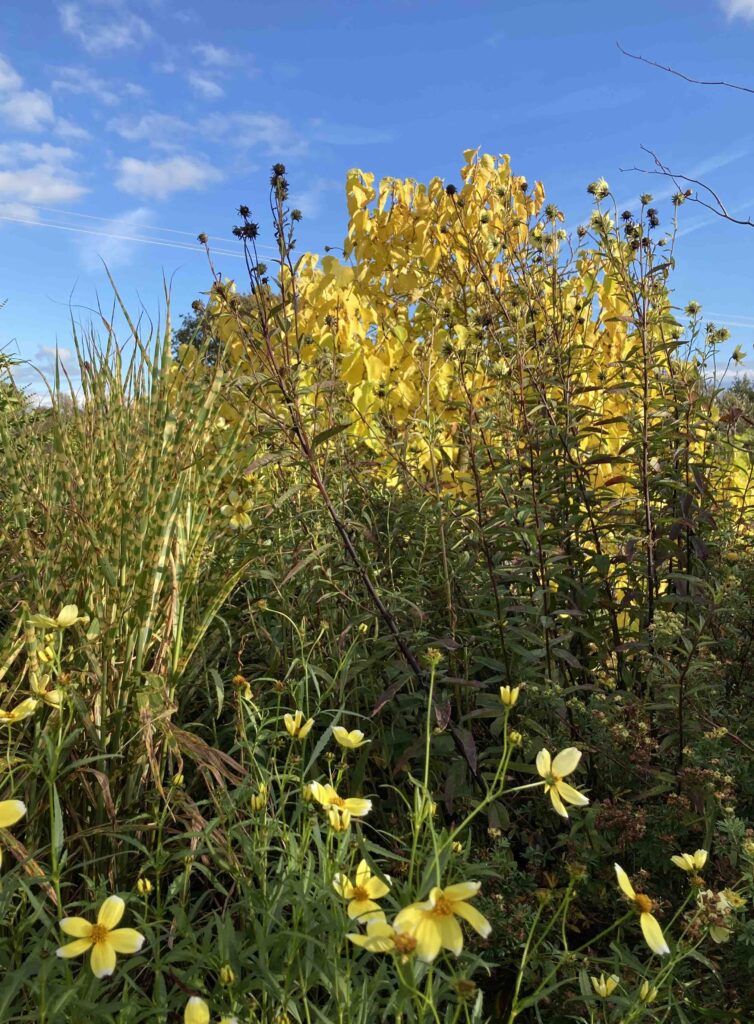
The common mulberry (Morus nigra) is not something you would plant for autumn colour – I grow it for the delicious fruits. And I also grow it because it reminds me of my teenage years at Nags Hall where a large mulberry tree grew and augmented my packed lunch in summer. If you have room for a medium-sized tree that is interesting and productive, try a black mulberry. This year it turned rich, butter yellow for several weeks and was a perfect backdrop to the last yellow flowers in the neighbouring border.
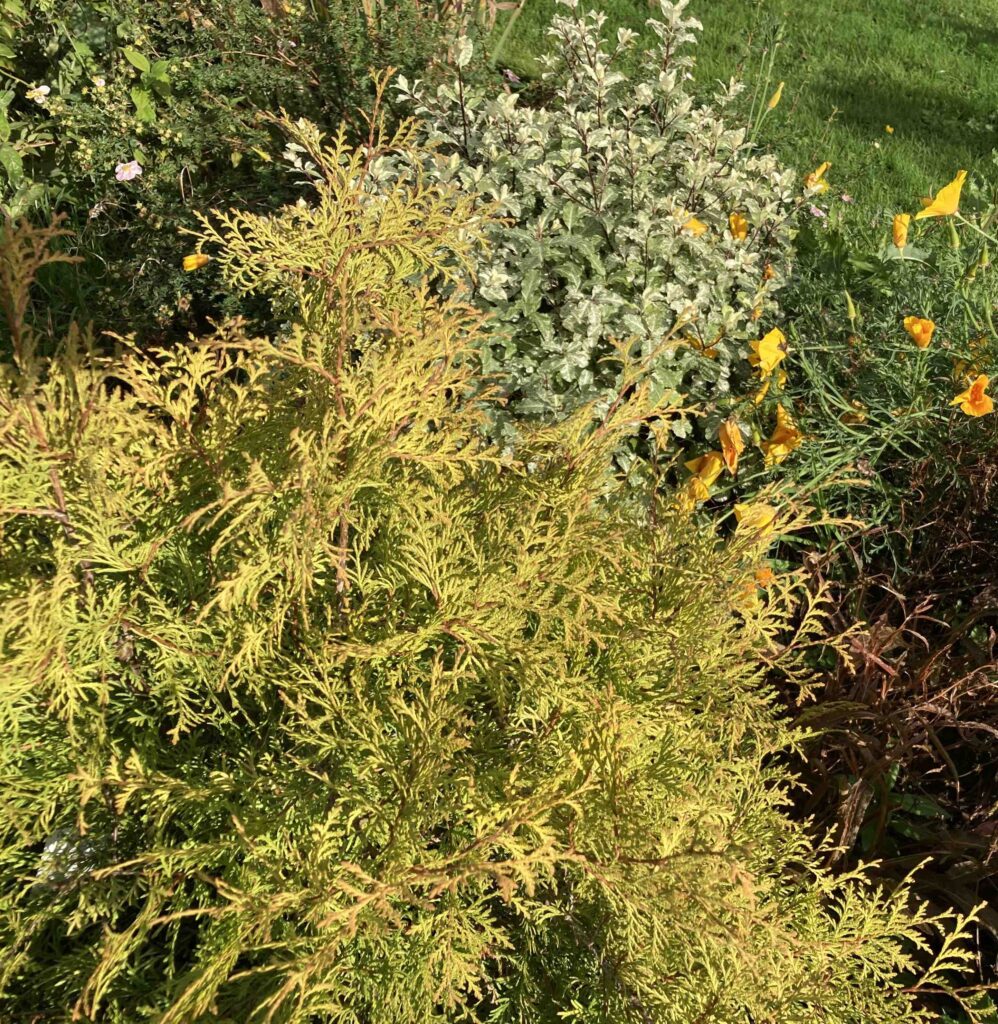
Of course evergreens are always useful and many have colourful foliage. Conifers are not the most popular shrubs at the moment but I cannot imagine a garden without a few – they are so varied and interesting. One of the best-loved small (not dwarf, despite what you may be told) is Thuja occidentalis ‘Rheingold’. It has a rounded habit and foliage that varies from gold to copper, according to the season. It is always available, is not expensive and it grows to about 1.2m.
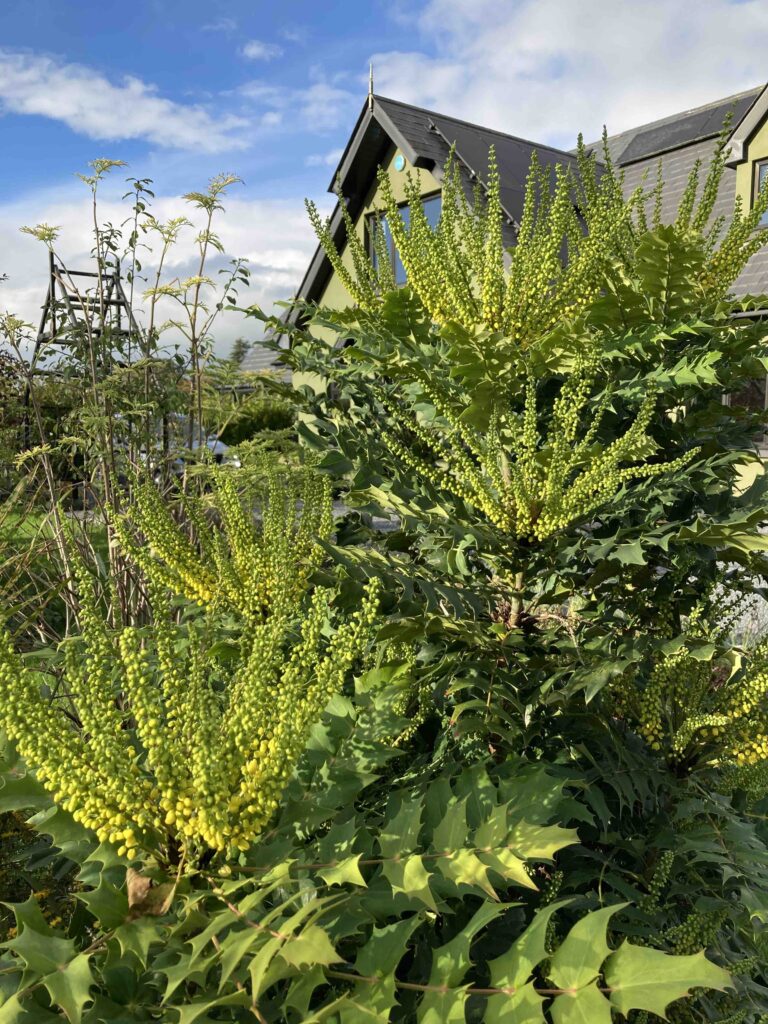
And ending with some flowers, my mahonia ‘Winter Sun’ is just starting to bloom. It, and similar mahonias such as ‘Charity’ are evergreen, bloom in November, and they are easy in sun or part shade. My plant is now five years old and 1.5m high with many branches and always a delight. In winter some of the older leaves will turn red and drop off but it is otherwise evergreen. The flowers are lightly scented but be careful pushing your nose into the blooms because the leaves are spiny.
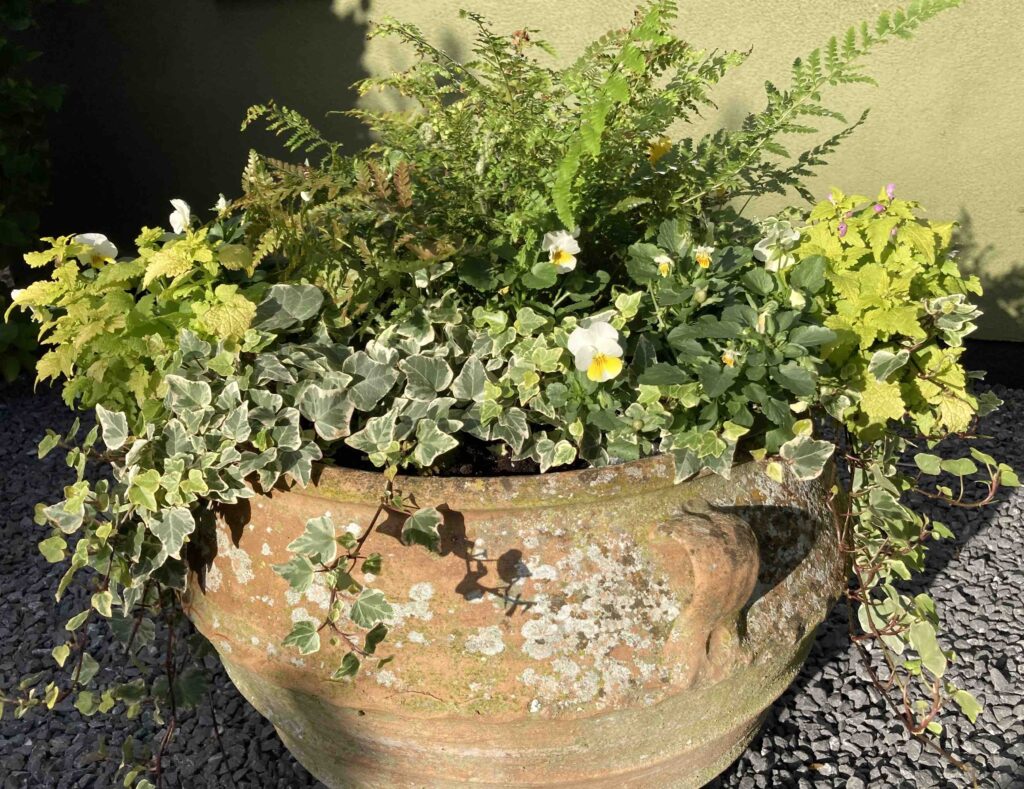
And lastly, don’t forget to plant up your pots for autumn and winter. There are lots of options for your patio pots in many colour ways.
Weekly reminders
Get your garlic planted now if you have not done so.
Rake fallen leaves off lawns
Buy and pot hippeastrum for Christmas colour
Pot up pots for winter and spring colour