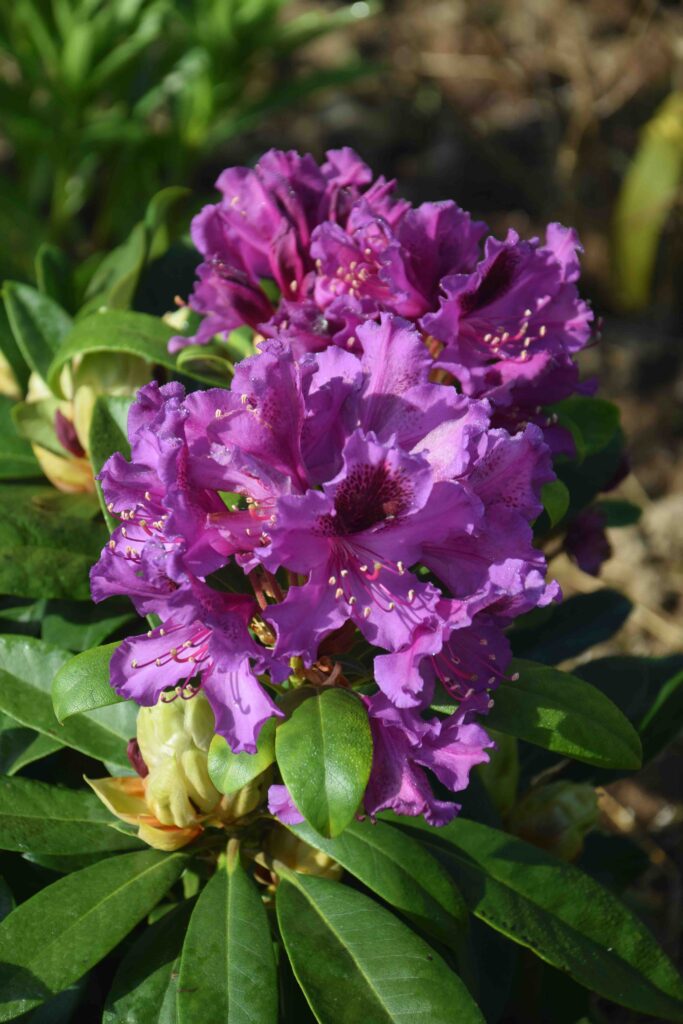
While autumn is the best time to plant deciduous trees and shrubs, spring is the best time to plant evergreens including rhododendrons, camellias and conifers. These plants are just starting to grow and they will quickly root into the soil. Spring is best because, unlike deciduous plants that have no leaves in winter, evergreens lose water from their leaves in winter. So spring is the perfect time to plant them.
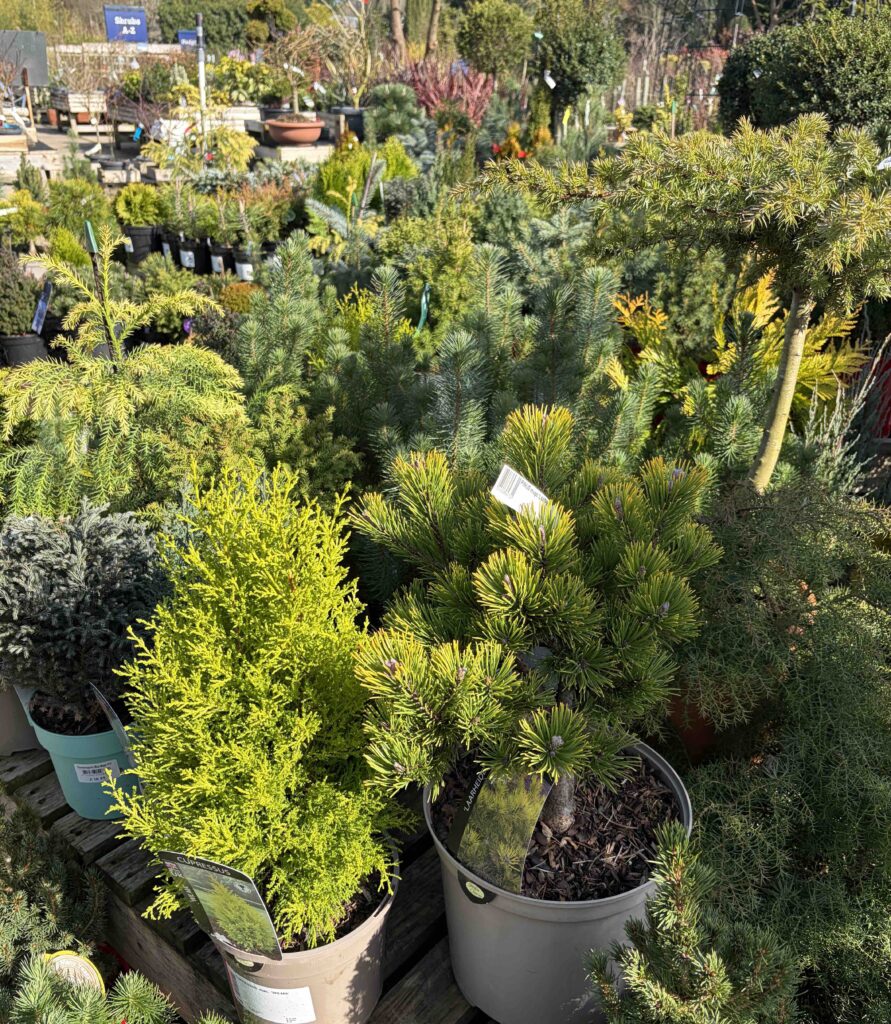
Conifers go in and out of fashion but they are currently regaining their popularity as great-value garden plants that pay their way all year round. After this dull, miserable winter I appreciate their varied colours and textures more than ever. There is a great selection at Betchworth and Nags Hall. Most of these are medium-sized conifers. Truly dwarf kinds are very expensive and most of those stocked are ‘slow growing’ or medium sized. All will have clear labels with growth rate or height after ten years. Most conifers prefer a sunny spot (yew (taxus) is an exception) and you should not let other plants flop against them or cover the lower growth. If light does not reach the lower growth it will kill it and it will not regrow. So always keep your conifers clear of other, spreading shrubs and tall weeds.
Of course conifers are largely grown for their foliage. Camellias, pieris and rhododendrons are grown for their flowers. The next month is the perfect time to plant them and you will find lots in stock. All three plants are ‘lime-haters’ or ‘ericaeous’ which means they have adapted, in the wild, to grow without calcium (lime) which most plants need. If they are planted in soil that is not acid (alkaline is the opposite to acid) they are unable to absorb certain nutrients from the soil (mostly iron and magnesium). If you do have alkaline soil you can grow these plants in pots of ericaceous compost.
In addition, look for ‘Inkarho’ rhododendrons which are grafted onto special rootstocks that are tolerant of lime. Not only does this mean they can be grown in virtually any soil, they are also very strong-growing. They solve an age-old gardening problem and are well worth planting.
Rhododendrons and all these other plants prefer a soil that is well-drained, but moist. They will generally not thrive in heavy, sticky clay but can do well in sandy, poor soils if they are watered in very dry summers. Of course you must water your new plant the first summer until it has rooted into the soil.
Before you plant you must dig in lots organic matter. Never plant in a pocket of ‘compost’ but mix it well with the ‘native’ soil. Most books will say to dig a hole twice the size of the planet pot but this is a minimum. Dig over an area about 1m wide. Rhododendrons have dense, fibrous, quite shallow roots. This makes them vulnerable to drying out and once dry it can be difficult to rewet the roots. That is why mulching, to help keep the soil moist, is so important. And why you must water your new plant frequently and never allow it to wilt.
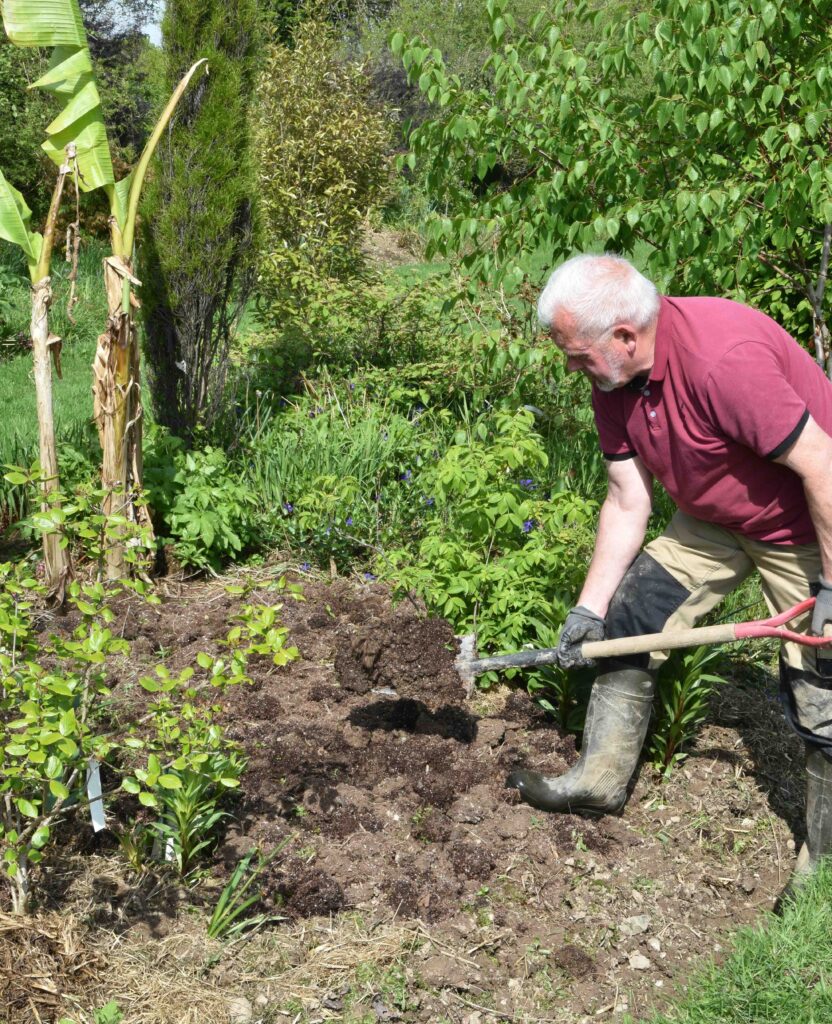
So start by preparing the soil well. Dig in garden compost or well rotted manure or a bag of planting compost (it may be rose and shrub-planting compost) or even a bag of ericaceous compost.
You can then dig out a planting hole. But before you do that, dunk the plant in a bucket of water for about 30 minutes so the roots are completely soaked.
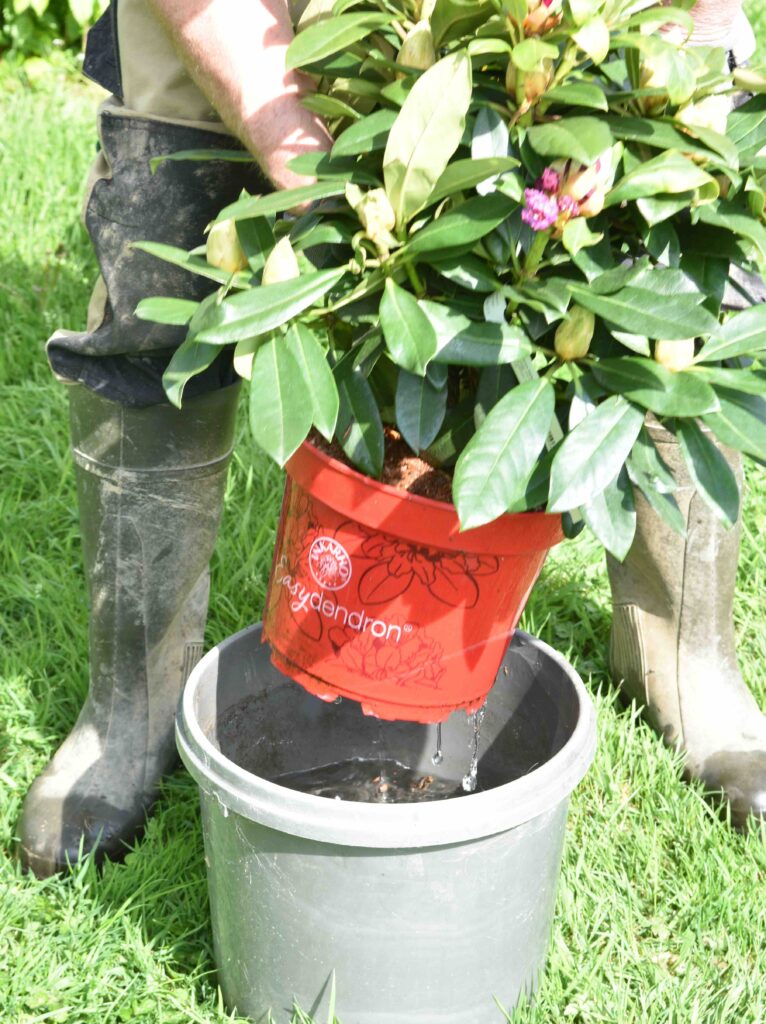
Then plant your new rhodo and replace the soil around it, gently firming and making sure it is at the correct depth. Then water it very throughly, with the rest of the water in the bucket. This watering is to help flush the soil around the roots so there are no big air pockets around the roots which can lead to roots drying and dying.
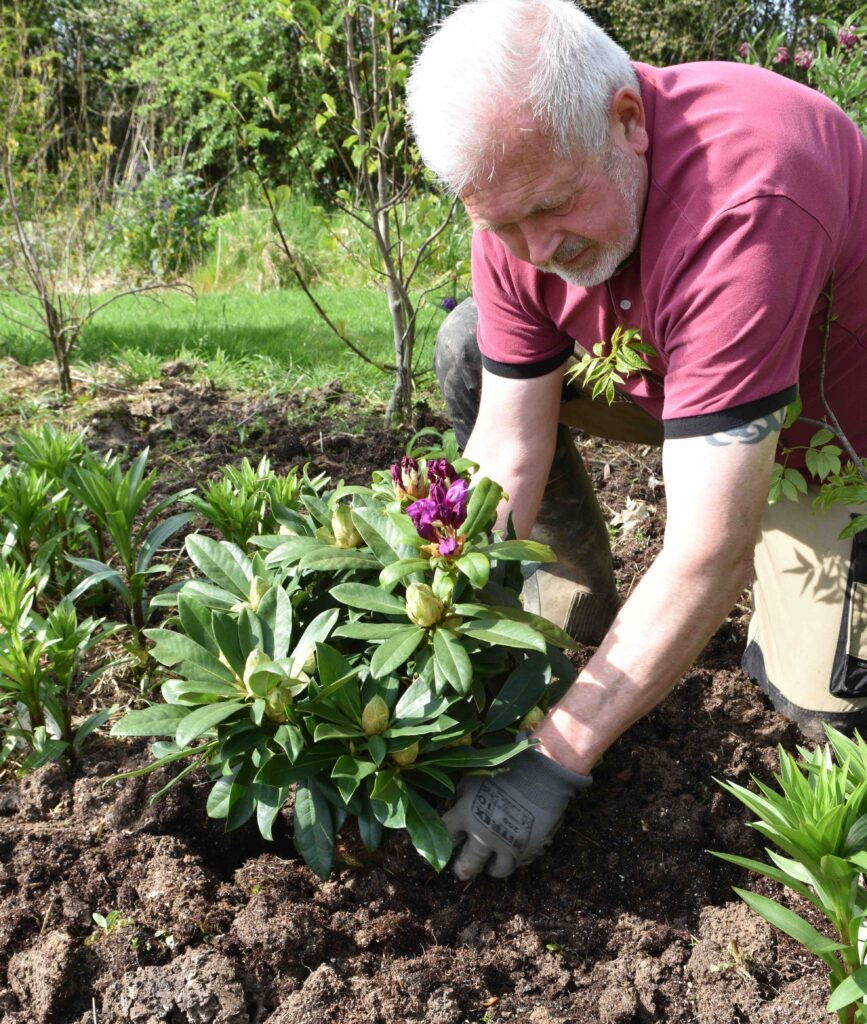
If you wish, you can put a mulch around this, to help maintain soil moisture.
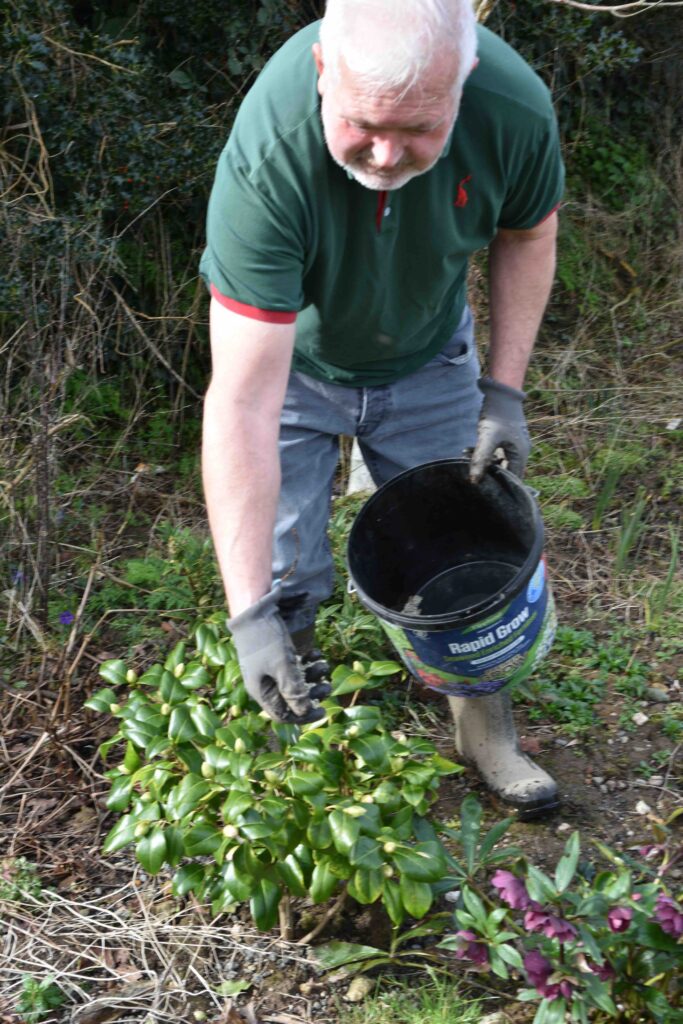
If you have existing plants, now is the time to apply a fertiliser. You can use any general fertiliser but avoid those designed for roses or fish, blood and bone because they will contain calcium. If possible, use a granular rhododendron or ‘acid’ plant food.
Happy Planting