Summer is coming and tulips and daffodils are just a memory. But there are some ‘spring bulbs’, planted in autumn, that are just starting to bloom. They are usually at their best at ‘Chelsea Flower Show’ time and get lots of publicity but they are too often forgotten by gardeners. They tend to be more expensive to buy than other spring bulbs but they are perennial, will last for years and are marvellous to bring colour to your garden, bridging the gap between spring and summer. I would recommend camassias and alliums to everyone. Though you cannot buy the dry bulbs now (they are sometimes sold at early summer flower shows but you must not buy them dry now) you can buy them in pots, coming into bloom, and these are a good option if you want instant colour.
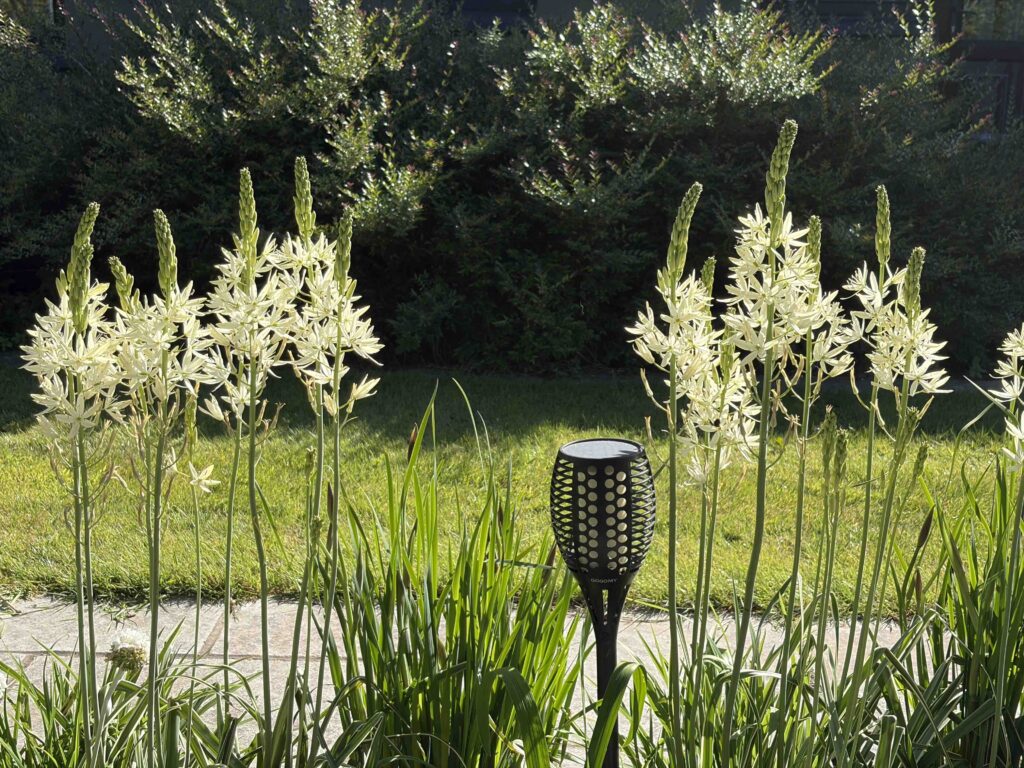
Camassias are bulbs from North America and they have spikes of starry flowers in blue or creamy white. In the wild they grow in wet meadows and these are one of the few bulbs that actually thrive in rather wet, heavy soils. The photo above is my garden now with Camassia leichtlinii ‘Sacajawea’. The bed is wet in winter but my five original bulbs are now large clumps with masses of flowers. ‘Sacajawea’ is unusual because it has variegated leaves, a nice bonus, and is named after a remarkable Native American woman who helped Lewis and Clark discover the west of North America.
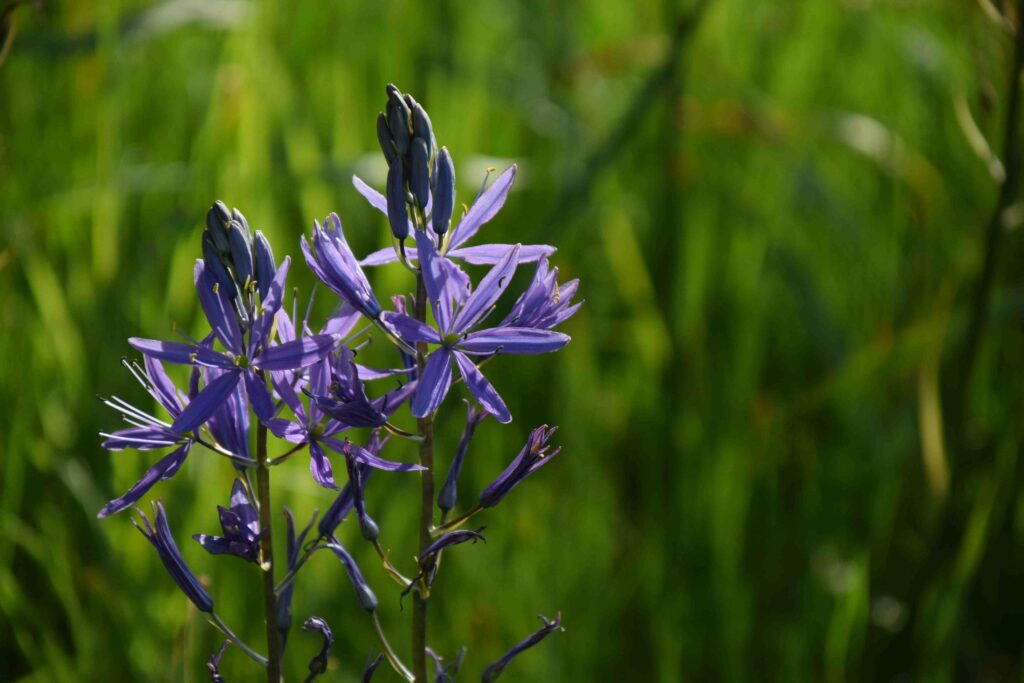
Camassia leichtlinii grows to almost 1m high and the flowers bloom over about three weeks and they can be cream or blue, flowering a few weeks later than most.
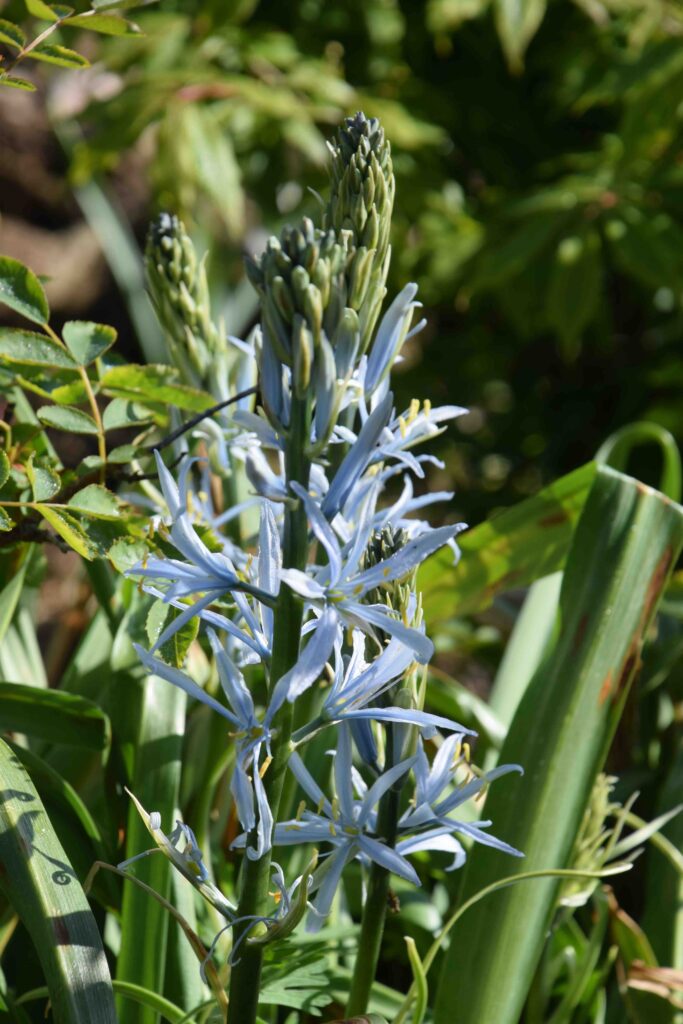
Blue is always a favoured colour in the garden and blue camassias are always popular. Prices vary hugely but those that are the least expensive usually have shorter flower stems. All can be planted in grass in sun or part shade (not too much shade) but you will have to leave cutting the grass until the foliage dies down – usually well into July.
The other spring bulbs that bloom after the daffodils are the alliums. These vary hugely in size and cost and most bloom in May and June. I could not imagine a garden without them but not everyone knows about them – a recent garden visitor said she had not seen such strange agapanthus! I can see the confusion but alliums are much easier to please than agapanthus.
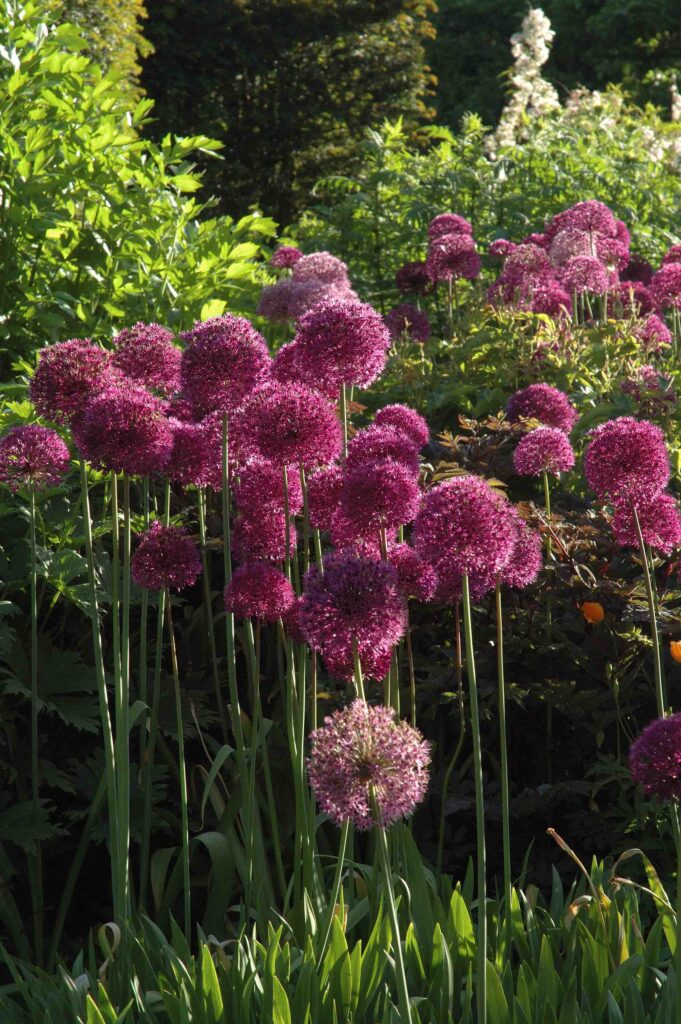
The ‘big, round. purple’ kinds are now extremely popular and are easy to grow but all need full sun and well-drained soil. You also need to remember that in nearly all cases the leaves look dreadful by the time the flowers open, in the worst case, the late-flowering ‘Summer Drummer’ the leaves are a real eyesore! Snails also adore the leaves of alliums and will crawl past your hostas to munch on allium leaves, and if you ignore this your alliums will slowly weaken. This is annoying when the bulbs can cost around £5 each! But if you look after them, your alliums will last for many years and get better every season.
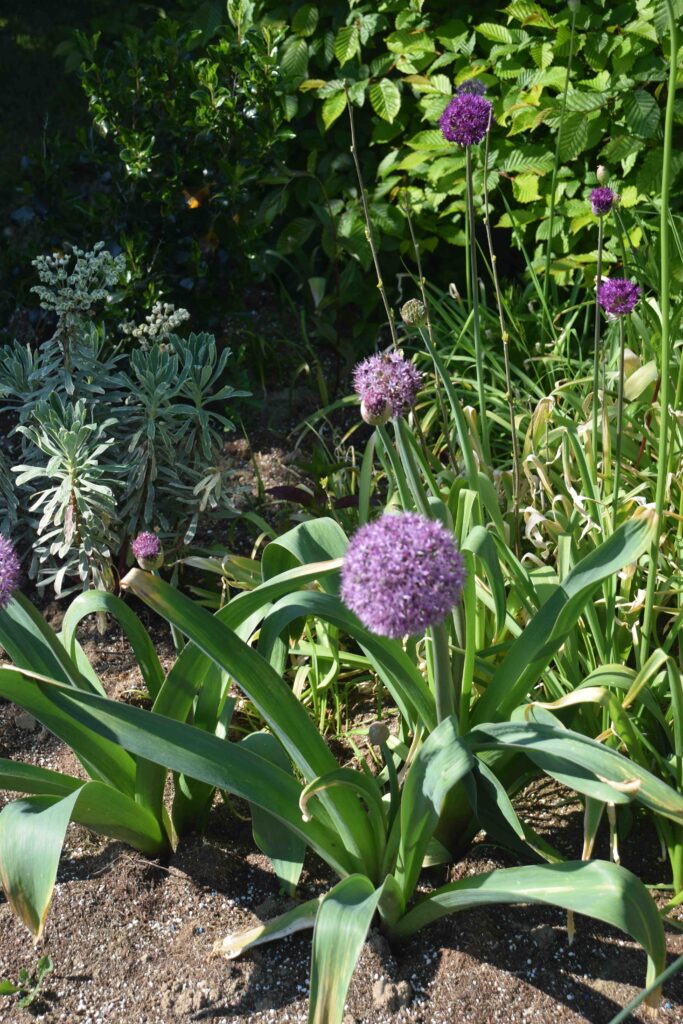
You can buy alliums in pots, in bloom now and they can be planted in the garden. I do not recommend growing them in patio pots because of the scruffy foliage – they are better in borders. The best, when planting in autumn, is A. christophii, which has big, metallic purple heads and is very reasonably priced. ‘Purple Sensation’ is also very affordable and has purple balls of bloom though not as long-lasting or large as the real giants like ‘Globemaster’. But they are all spectacular, bloom for weeks on end and are loved by bees.
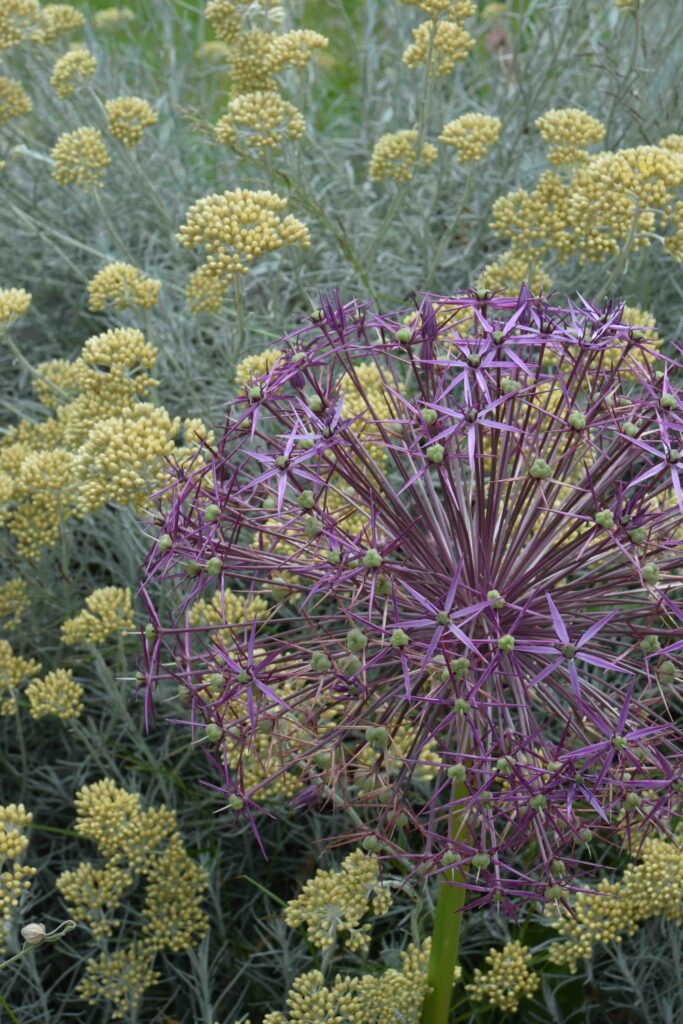
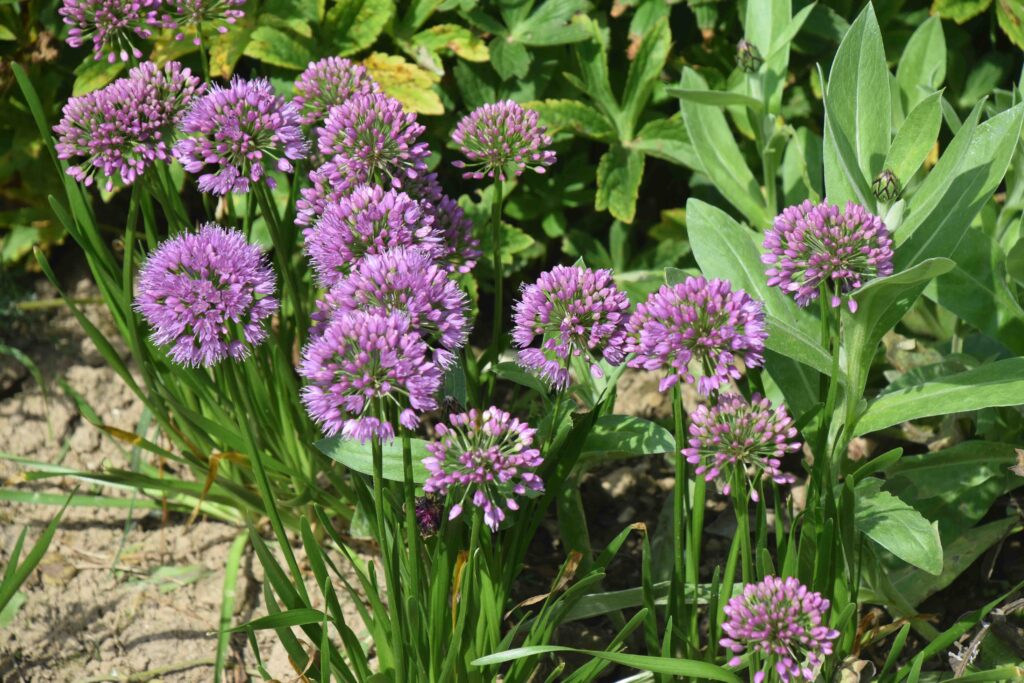
Alliums include a huge range of plants including leeks, onions and chives and not all alliums are even bulbs. Some are herbaceous and bloom somewhat later. One of the most remarkable is ‘Millenium’ which is neat and tidy and is ideal for small gardens and even containers because it has narrow, neat foliage, flowers for several months and is a bee magnet.
Growing in Containers
Don’t forget I will be at Knights next week presenting a demonstration on growing plants in containers, from petunias to peaches. I hope to see you there.
https://www.knightsgardencentres.com/webshop/events/talks-workshops