Well that was a mad few weeks in the garden! After frosts in many areas we then had a heatwave. It was as tough on our gardens and it was on us. Only ice cream sellers were laughing! I was delighted to meet many of you at Knights and we had a good chat about our gardens and I was able to dispel a few myths that some of you had picked up from the internet. While the internet can be useful you often cannot rely on the information and it can even be bad for you and your plants – like one tip to give plants sugar water to boost them – something that can actually kill them. So, with that in mind, I want to run through a few basics over the next month, starting with watering.
It could be argued that watering is the most important skill to learn and at the heart of ‘green fingers’.
Containers
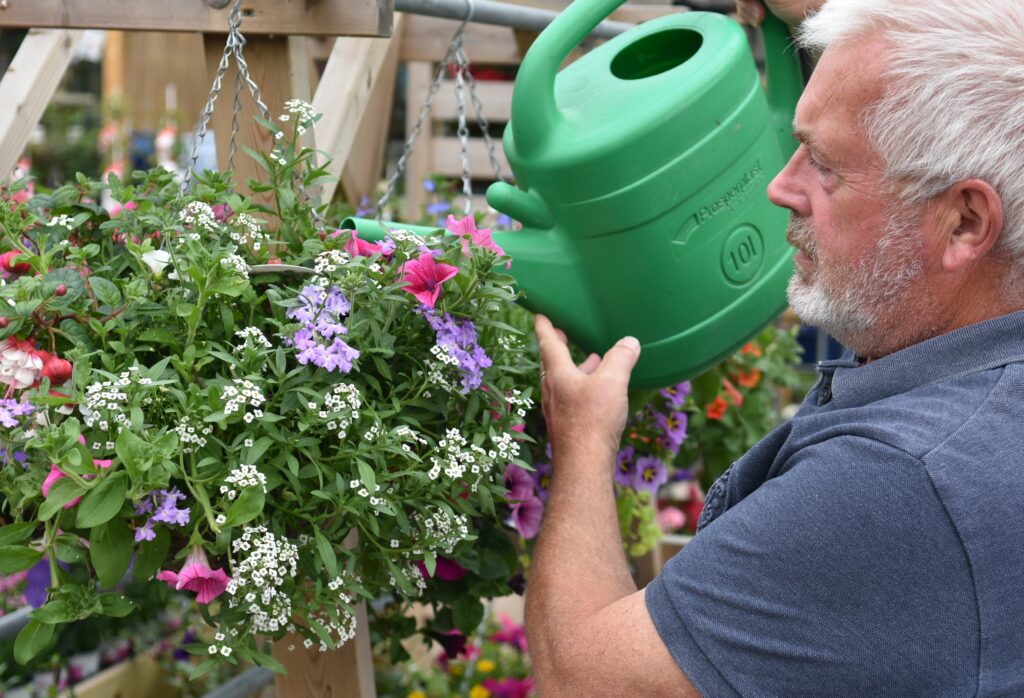
The important thing to remember about planting in containers is that they need watering frequently. Feeding too. It is essential that they do not dry out. Why? Because the compost will shrink and it will take several, slow waterings to rehydrate it – a can full poured on will just run round the sides. If the plants wilt or shrivel the flower buds will probably die along with shoot tips and the whole plant may die.
Pelargoniums (garden geraniums) are probably the best at tolerating this treatment, along with succulents, but most plants are not so forgiving. So please, whether it has rained or not, keep your plants moist.
And remember that, over the months, the plants will bet bigger and need more water. So you may need to water every three days (depending on the weather) when you first plant them, but need to water daily by August.
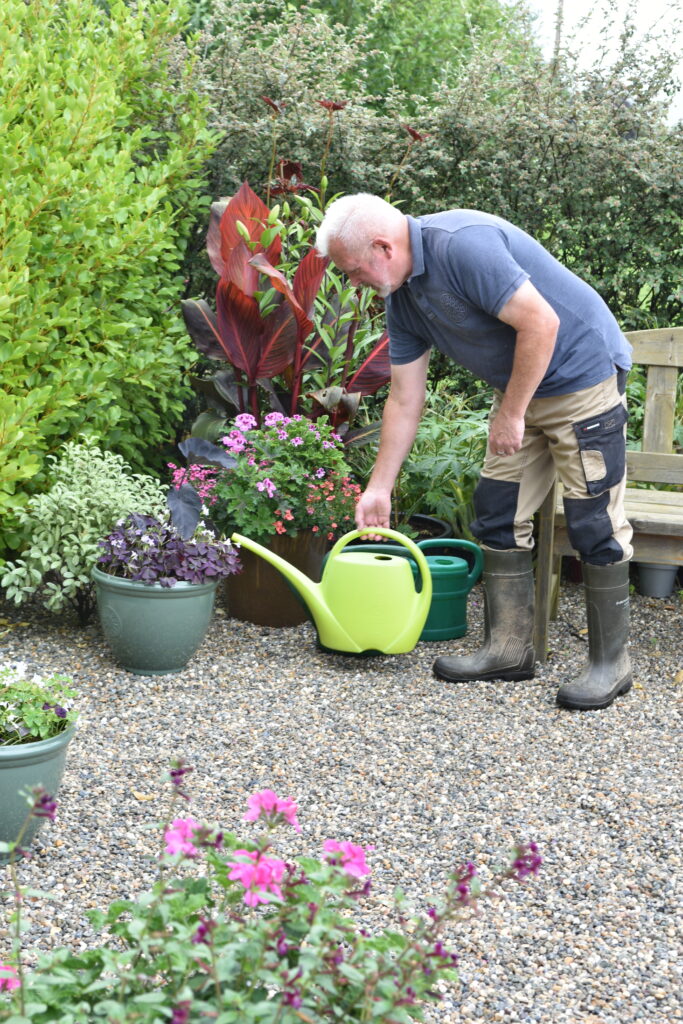
If you are away from home for more than a day please get a friend or neighbour to water your pots and baskets. And make it as easy as possible for them to water. Put the pots together, in shade if practical, and have buckets of water and cans filled for them to use. Standing the pots on drip trays or saucers can help but is not always possible.
Houseplants
In general, it is best to saturate the compost of plants in pots and then let it drain so that the spaces between the compost particles are filled with air before watering again. If compost is always wet there will be no air and plant roots need air or they rot. It is why some garden plants die when gardens are waterlogged in winter – in my own I have lost a magnolia and an apple tree after the exceptionally wet winter.
That is why it is impossible to say ‘water with a cupful every week’, though that would be convenient. Houseplants need more water in summer than in winter because it is warmer and the plant will be growing faster. A plant in a small pot, filled with roots, will need more frequent water than after repotting in a larger pot because the roots will not have filled the new compost.
So lift the pot and gauge the weight. Does it feel light? Then water. Is it heavy and dripping with water? Then leave for a few more days.
Planting in summer
It is great that we can go to Knights and buy a shrub and plant at any time, even in summer, but you must pay careful attention to watering. If the plant has not spread its roots into the surrounding soil it can only absorb water in the original root ball and, in summer, that plant in its pot would probably need watering at least every two days! If the rootball dries out it will shrink and that means that when you pour water on the dry plant in the soil the water will just run round the roots and will not help the plant much.
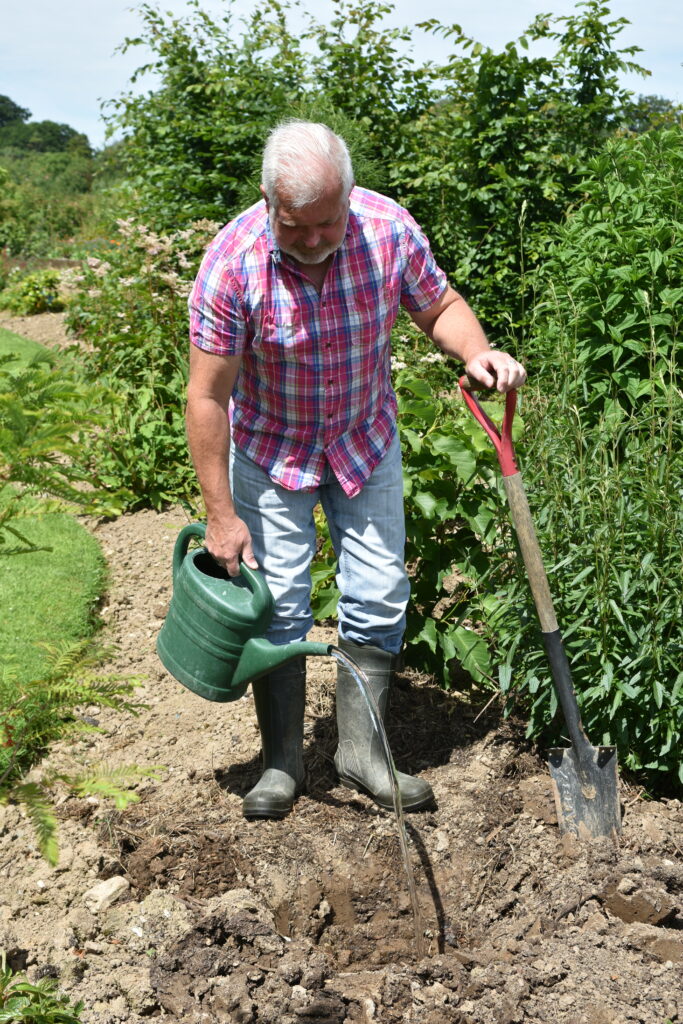
So good watering at planting time and afterwards is essential. First, put the plant in a bucket of water so it is soaked. Dig the hole, mixing in compost, and pour the bucket of water into the hole, having removed the plant. Plant the plant and then water it well with more water to make sure the roots are in contact with the soil. Then water every few days for a few weeks. And then keep an eye on it.
If the plant shows signs of wilting badly it may be better to carefully lift the plant, which will not have rooted into the soil within a month, and dunk it again and replant.
Tomatoes
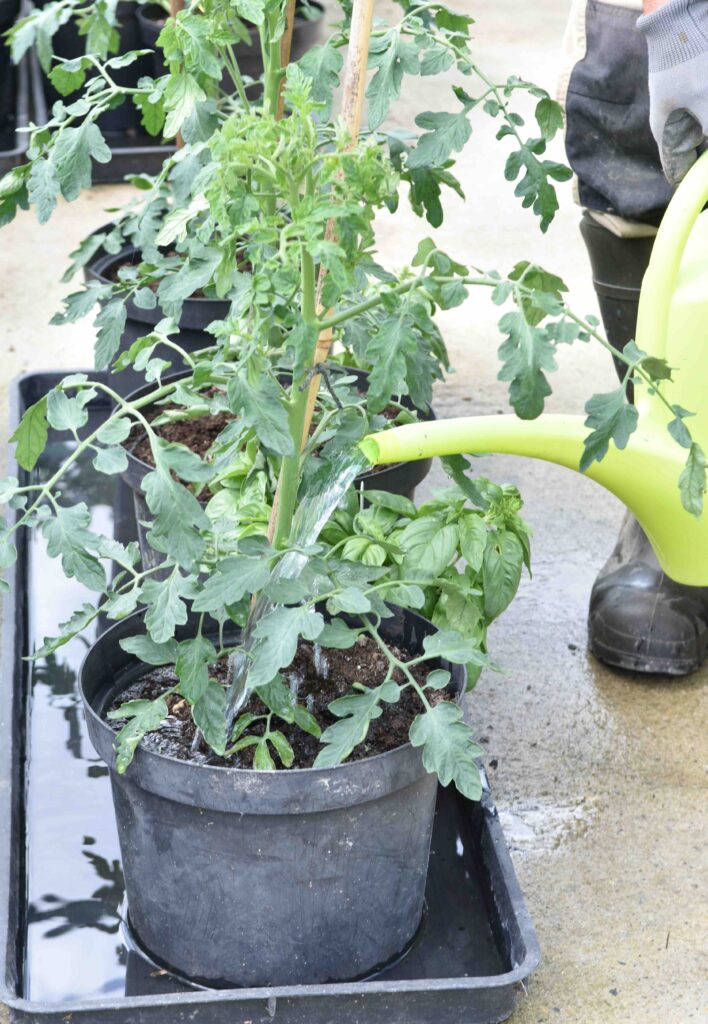
Tomatoes need more and more water as they get bigger. Wilting will cause damage to the foliage (brown ends to the leaves) and a condition called blossom-end rot where the ends of the tomatoes become sunken and black. Preventing wilting will eliminate this.
Border and bedding plants
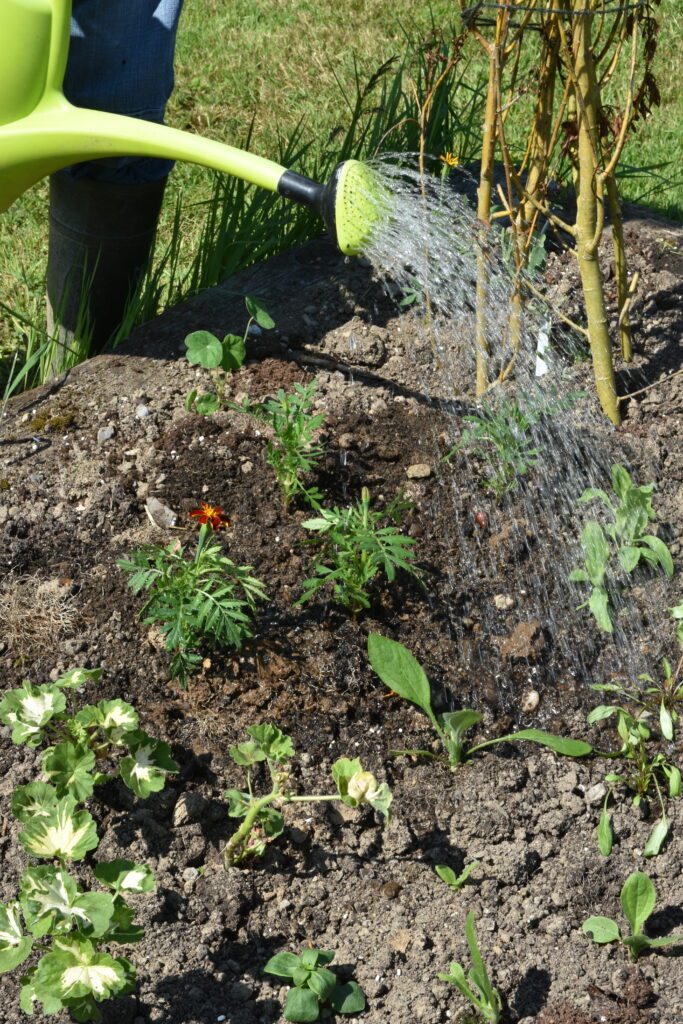
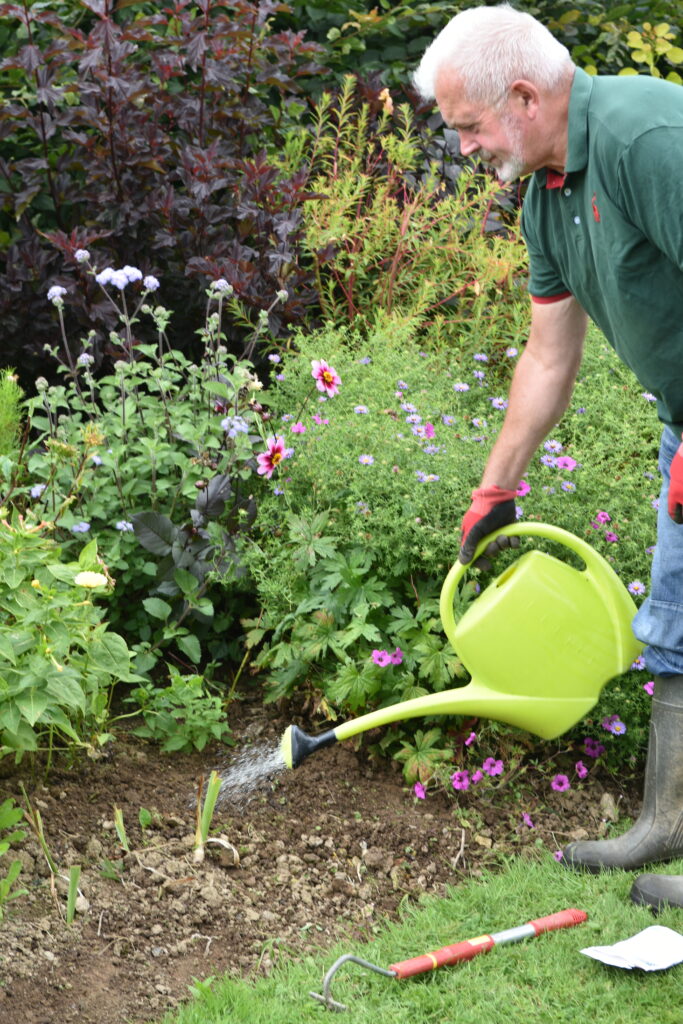
Keep all newly planted plants moist for at least a month after planting, until they are established. It is better to water infrequently and deeply. Do not sprinkle water over the plants, which will not do much good and it can encourage the roots to grow towards the surface, making them more vulnerable to drought. A good soak now and then is far better. But most plants, that have been established for years, will not need to be watered. Use water wisely.