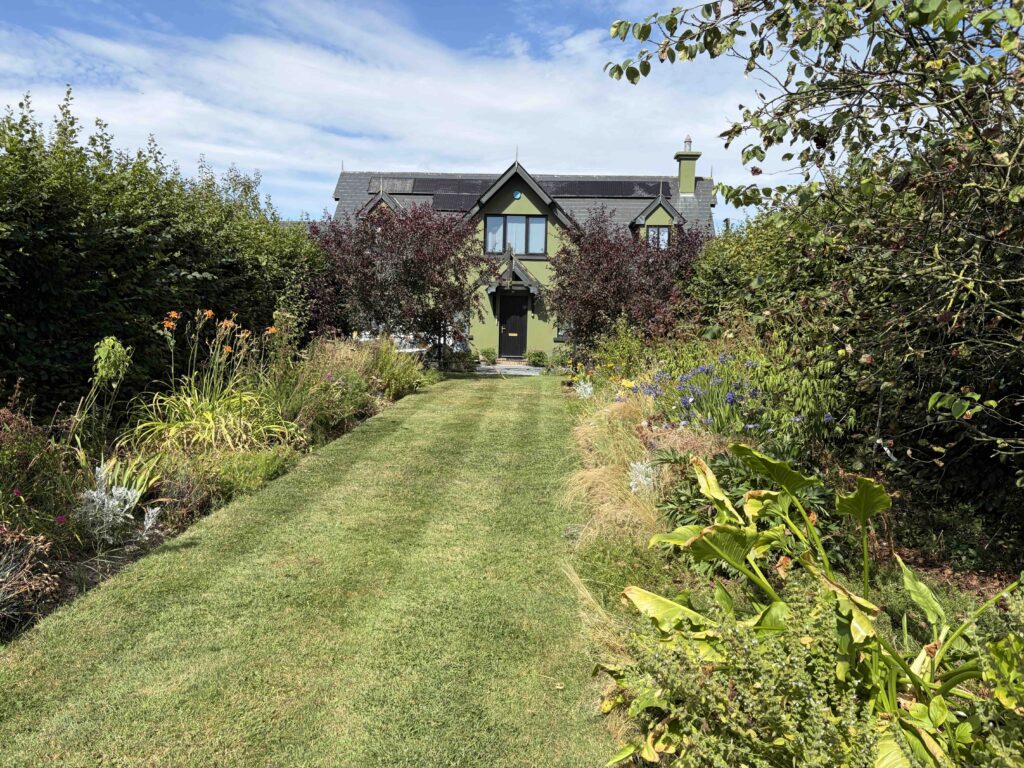
And the heat goes on. I am now watching the weather forecast and checking my phone several times a day to see if there is any chance of rain. I am not the kind of person who is glued to my phone – quite the opposite in fact – but I am checking it several times a day in case there is good news – rain!
It seems almost impossible that, after a dry Wimbledon, extraordinary in itself, we are desperate for rain and at WIsley there has been no rain at all for almost 60 days. It is tough on plants and on our lawns.
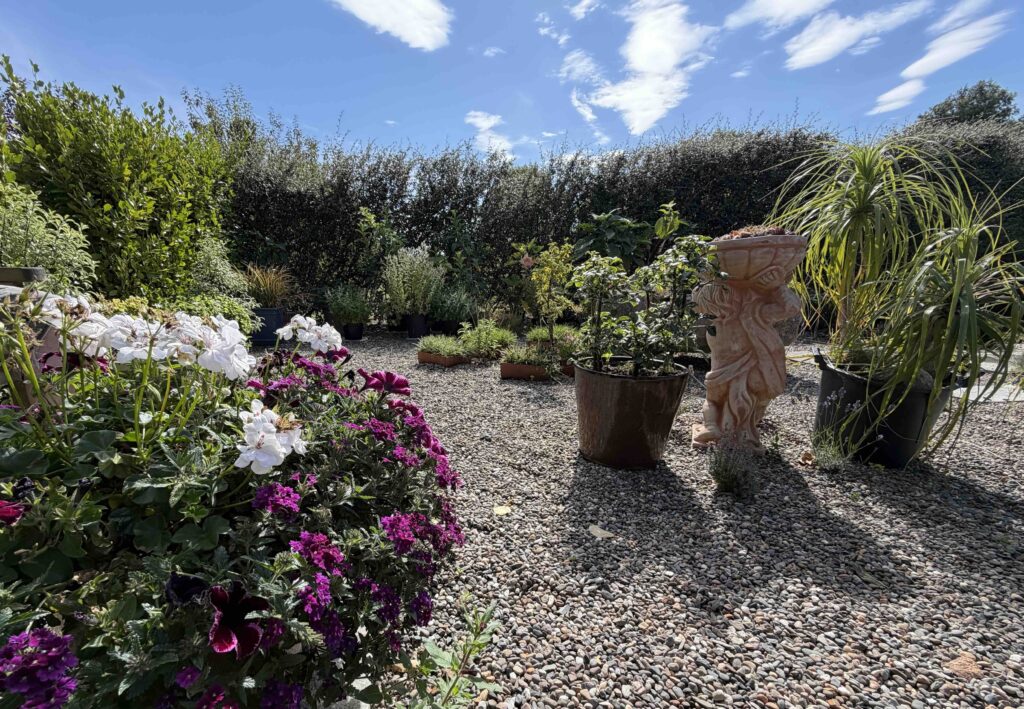
Plants in pots are especially vulnerable to drought so they take priority when watering. Even plants that are drought-resistant will die if they are in pots and can’t reach water.
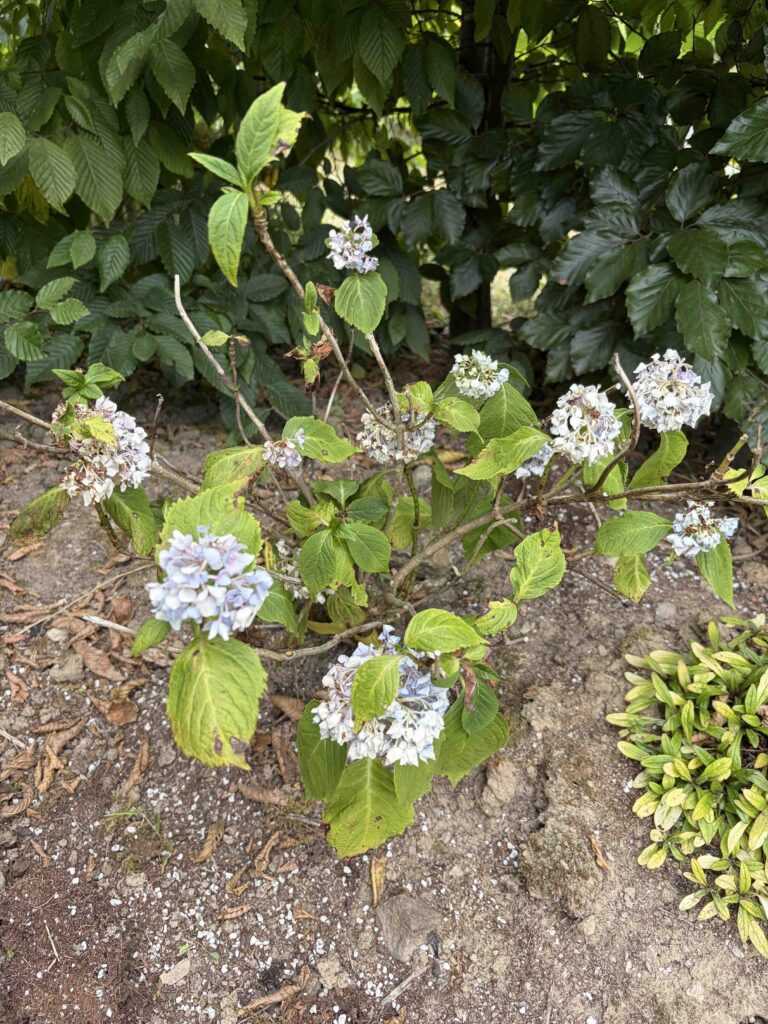
There is lots of advice flying around at the moment about what to do and I was listening to the radio the other day and an expert was saying we need to rip out hydrangeas and delphiniums and plant palm trees and olives. While it is true that these plants will withstand drought and high temperatures, once established, they still need watering when newly planted and, a serious issue when so many of us garden for wildlife, they offer virtually nothing to pollinators.
But it is something to think about and my hydrangeas, planted for two years now, are looking awful. And they do get a bucket of water every few days.
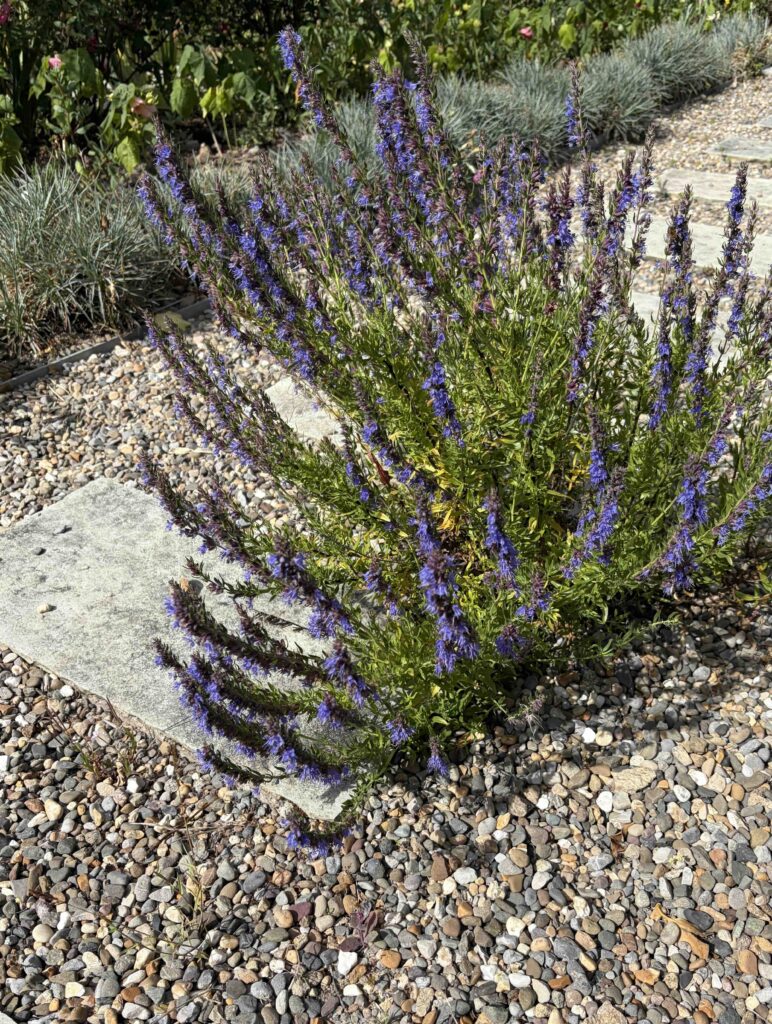
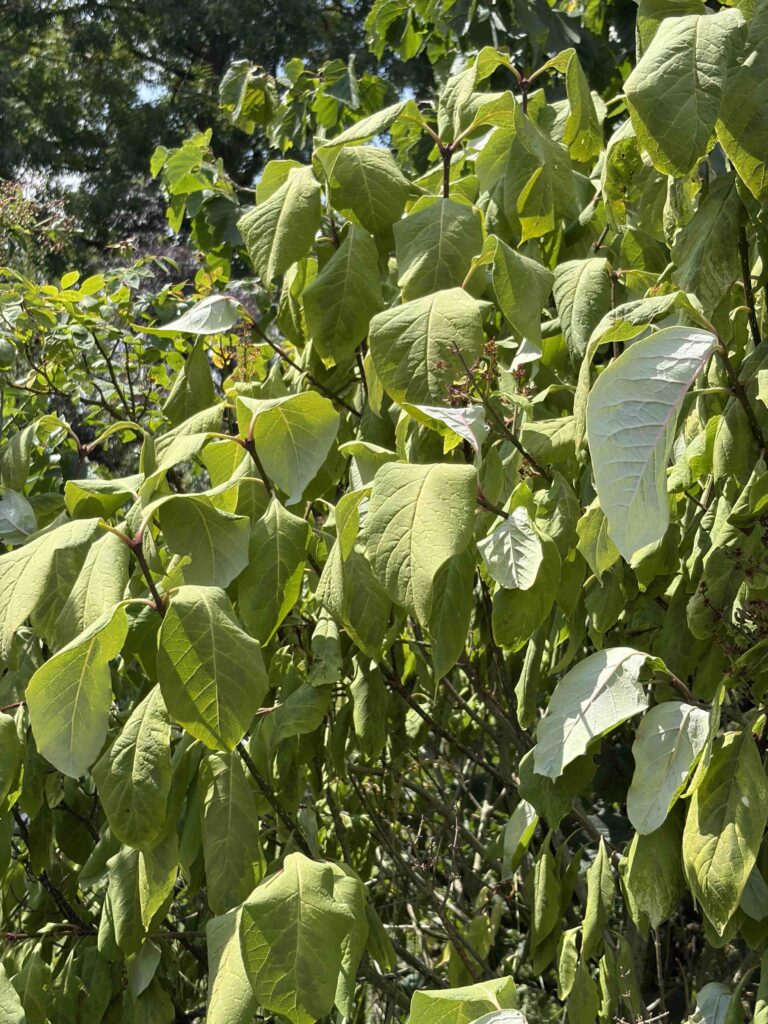
Plants often put themselves where they are likely to thrive – weeds for example. I had a small hedge of hyssop and it was scruffy after a few years so I removed it. Some seedlings appeared in the gravel and one was left because it was not in an awkward place. It has not been watered and is flourishing – a case of the right plant in the right place and it was not planted in a heatwave so naturally established.
We do need to think about what will thrive in our gardens if we are to reduce our reliance on watering. But I am not going to pull out my shrubs quite yet. Especially because winter was so wet and I actually lost shrubs because of water logging. I think we need to consider soil preparation and autumn planting more. Autumn is the best time to plant shrubs and trees.
Show your lawn some love – but not just yet!
The worst of this drought is that there is a limit to what we can actually do now and many people worry about their lawns.
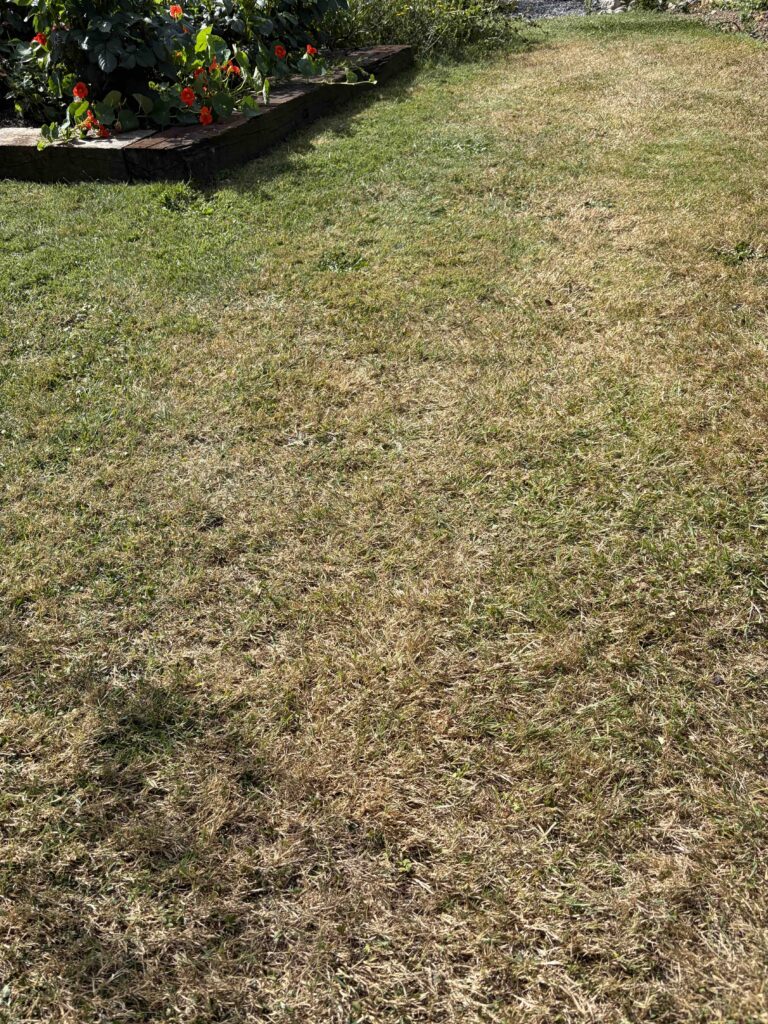
My lawns are starting to get quite brown now but my heavy soil, which meant that I could not walk on the grass for most of winter because it was so wet, means that it has held on to water longer than a sandy soil and so some areas are holding on to a green shade longer than others. But the brown patches are expanding.
Grass is very resilient, though not as resilient as the dandelions and clover which are making very distinct green patches in the lawns. But the grass will recover when rain finally falls.
And we can do things to help. The one benefit of this drought has been that mowing has not been necessary for weeks though you should still mow, just infrequently. Weeds and weedy grasses will still grow and send up flower stems so raising the height of cut and trimming off the long growth is beneficial.
But it is next month that we can do some real good. The best way to make your lawn more resilient in heat and drought, and to control weeds without using chemicals, is to feed your lawn. Most people feed their lawns in spring. But this year it will be even more important to apply an autumn lawn fertiliser.
An autumn lawn food supplies nutrients that will green up the lawn a little but, most importantly, it toughens the lawn so it can cope better with cold and wet and it stimulates root growth. This has a quick effect but, more importantly, it stimulates resilience and will help the lawn recover from the drought and make it grow more strongly in spring.
Autumn lawn fertiliser is in stock at Knights now so get yours before it sells out. Do not use a spring or summer fertiliser which will provide a lot of nitrogen which will green the lawn but may stimulate too much ‘soft’ growth that will not be as tough if we get a cold autumn.
Of course, an autumn lawn food is only effective when it rains and the soil is moist so we will have to wait for rain. But as soon as it does rain get some fertiliser on your lawn and show your lawn that you care!