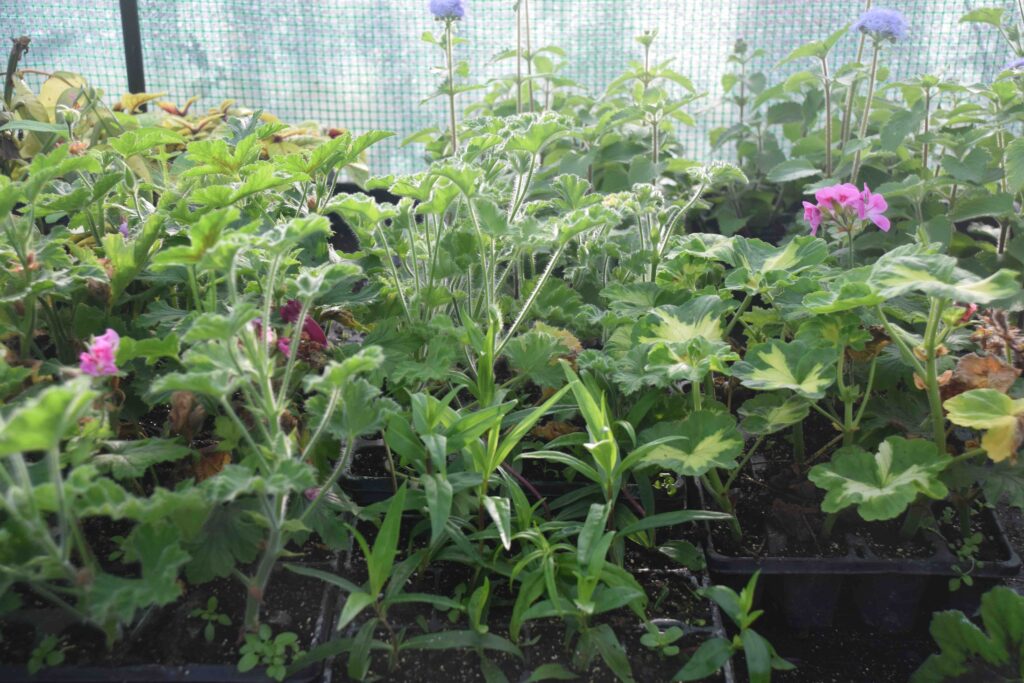
It is that most wonderful time of the year: when attention turns to taking cuttings. August is a great time to take cuttings of all sorts of garden plants. The growths to use as cuttings will be ‘semi-ripe’ which is the sweet spot between being very soft – which will root quickly but also wilt and rot easily, and ‘hardwood’ which are ‘woody’ and take a long time to root. I usually take my cuttings in mid-August but lots of plants just didn’t grow much in the summer heat so I am taking my cuttings a bit later than usual, but it is not too late!
Most of the cuttings we take now will root in a few months and do not need special conditions or heat. You can root them in a cold greenhouse or on a shady windowsill. The main group of plants to take cuttings of are pelargoniums, fuchsias, salvias and penstemons – all things that will not survive outside over winter. If rooted now they can be kept in small pots over winter and then potted in early spring and planted out in late spring. But you can also take cuttings of many shrubs such as hydrangeas and hebes, shrubs herbs like lavender, and pinks.
What you will need:
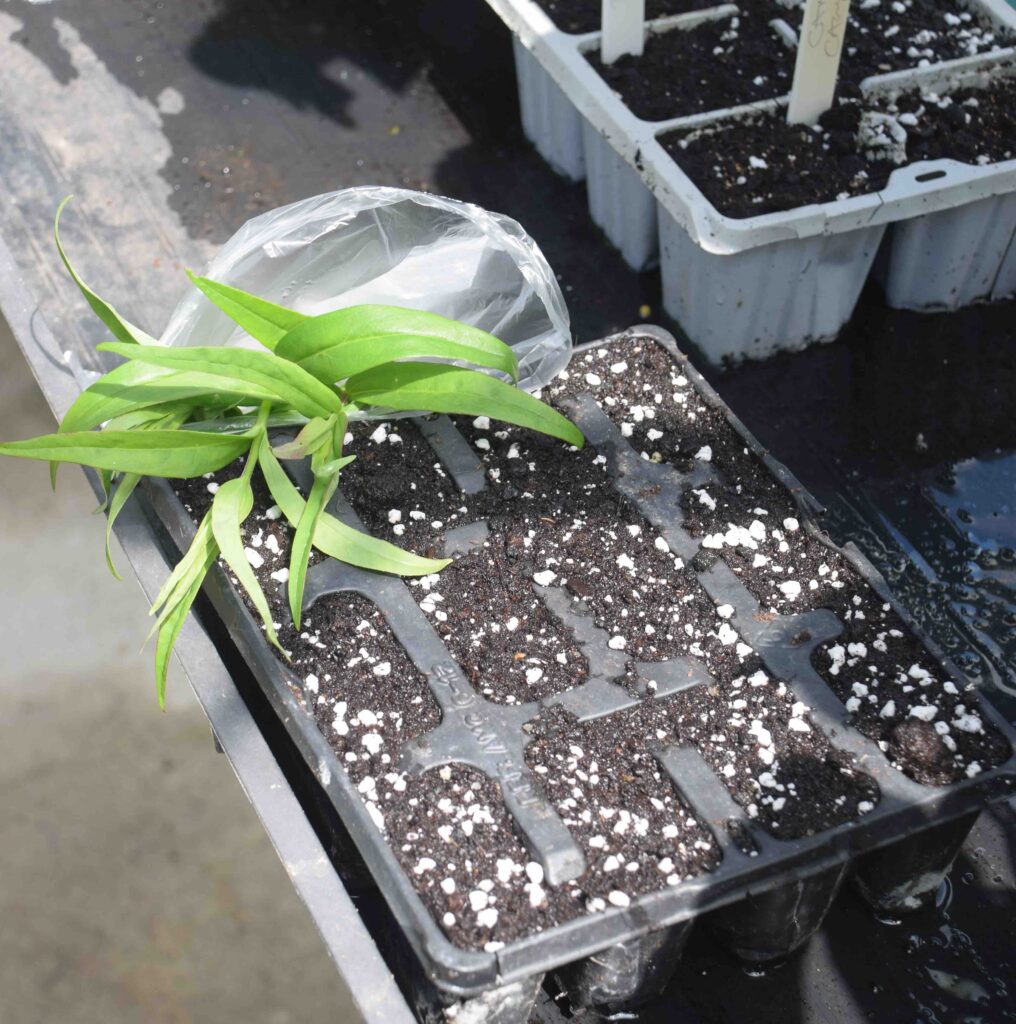
1 Pots or ‘cell trays’ to fill with compost
2 Compost. You can buy a bag of ‘cuttings compost’ but I use equal parts of multipurpose compost and perlite or vermiculite. The compost must be light and airy. Fill the pots and tap it to settle it. Do not firm it. Watering will do all the firming necessary. The base of the cutting must have some air around it or it will rot.
3 Propagator. You can buy a propagator kit with cell trays, base tray and clear lid. This is the easiest. But you can also just cover the pots with a plastic bag or any clear lid. You can even cut a clear plastic bottle in half.
You will also need a sharp knife – do not use scissors. And you can use a rooting stimulant if you like although it is not essential.
It is important to prevent the cuttings from wilting. Keep them in a plastic bag before and after trimming before you insert them. Once in the compost you need to water them and put on the plastic lid to keep the atmosphere around them humid.
Preparing the cuttings
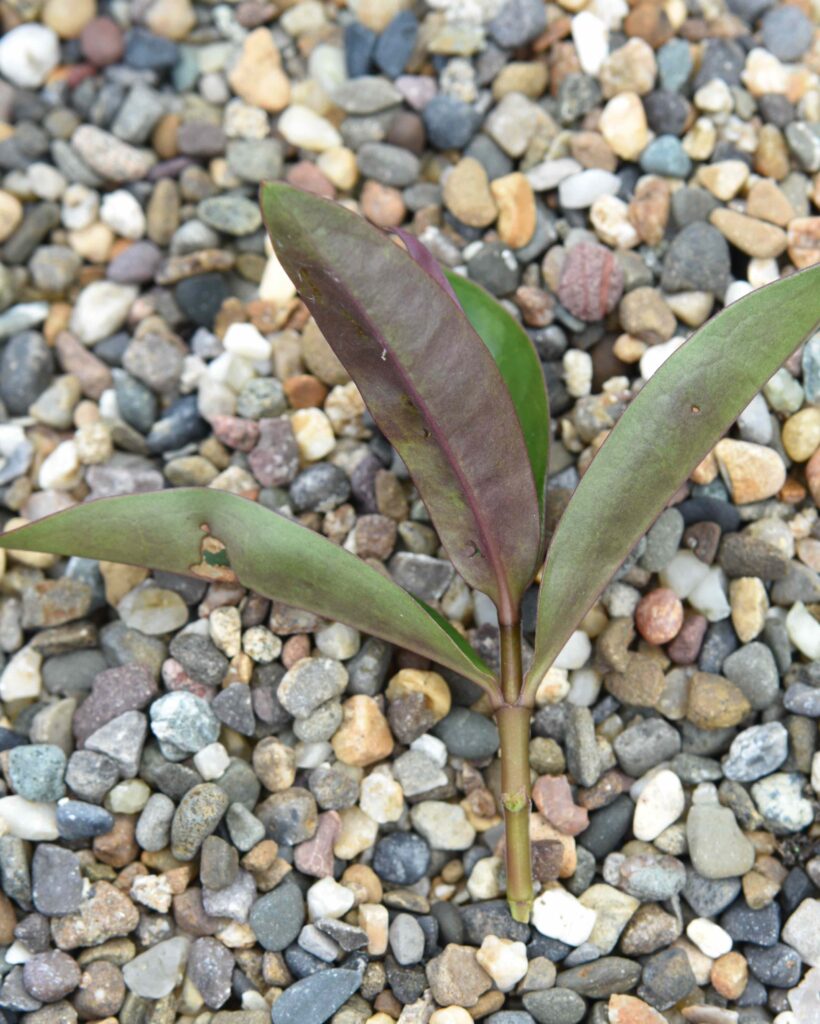
In general, most cuttings will be of shoot tips. Sideshoots which are not too vigorous are usually better than strong, main shoots. Try to avoid shoots with flowers or buds but if this is not possible simply snip off the blooms.
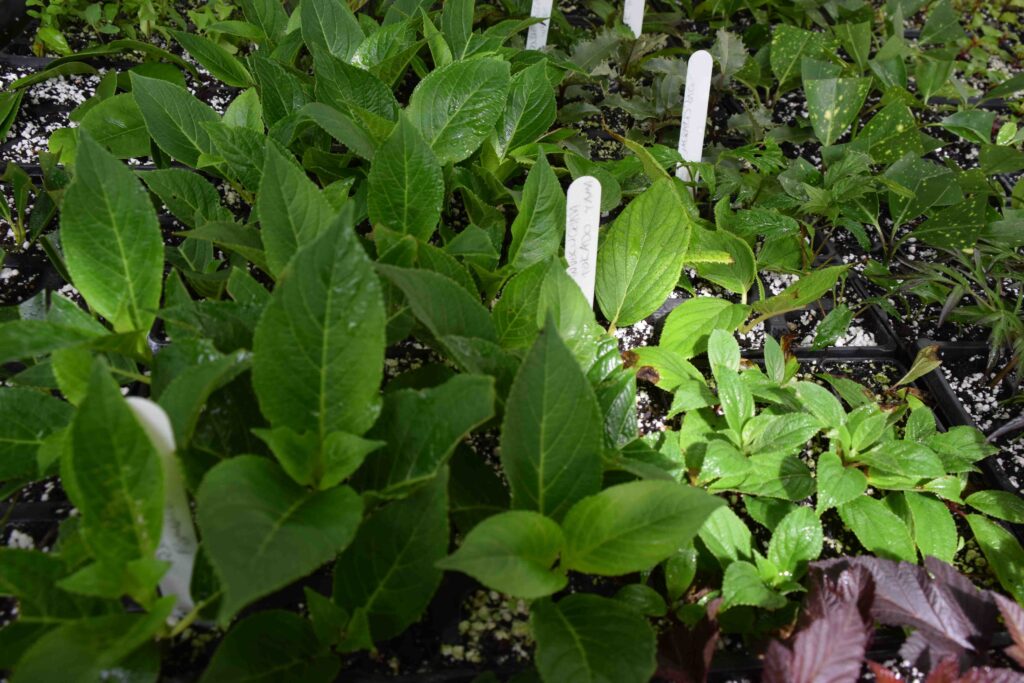
With hydrangea cuttings, trim off the tops of the leaves to reduce the leaf area and reduce water loss. Below.
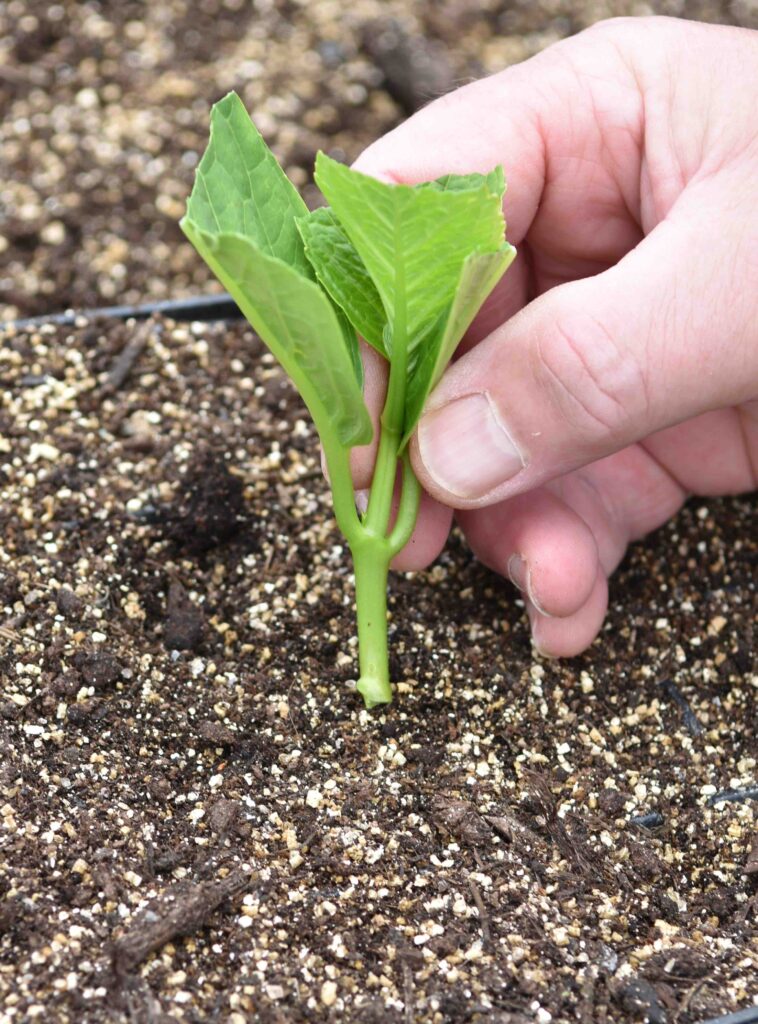
Most cuttings are ‘nodal’ and are trimmed just below a leaf or pair of leaves. Trim off the lower leaves. The length of the cutting will vary with the plant type. But the prepared cutting will usually have about two pairs of leaves above the compost surface. Do not bury leaves in the compost or they will rot. Pelargoniums and some other plants have ‘stipules’ – small leaflike structures – at the base of the leaves and these need to be picked off too – see below.
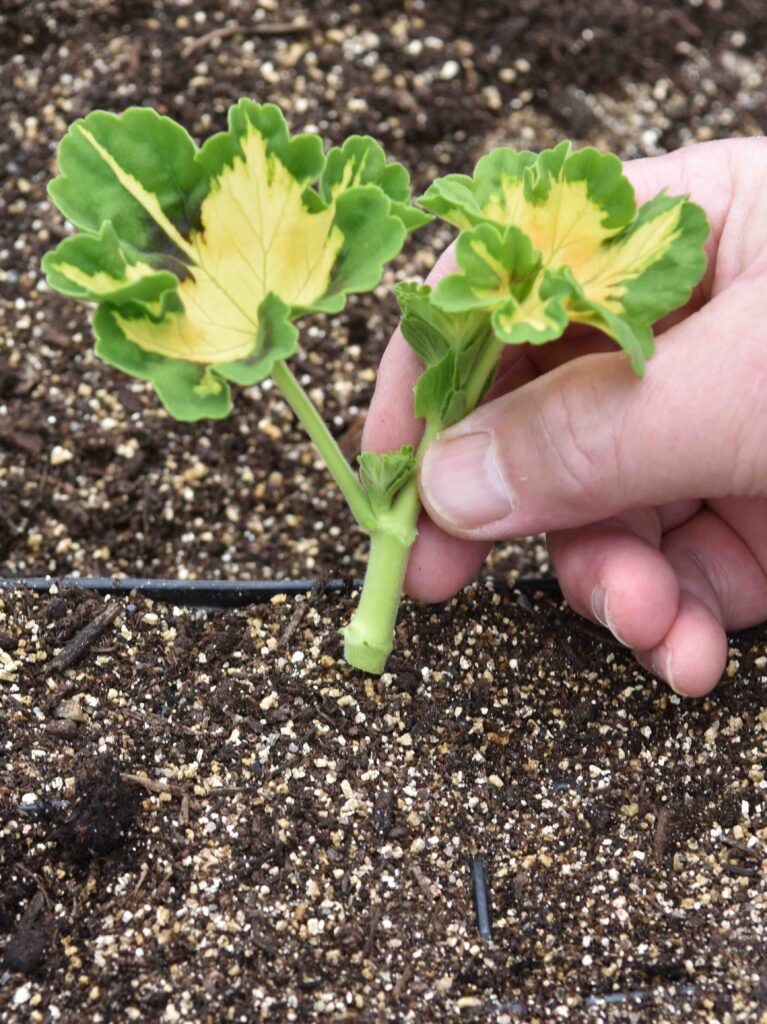
And then
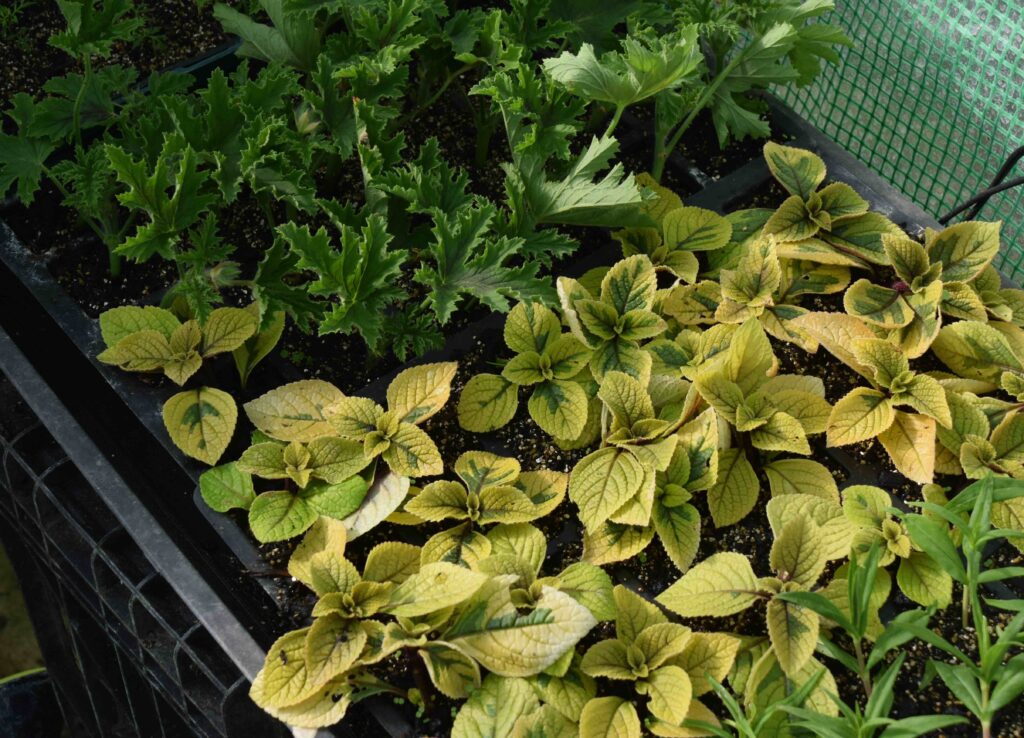
Keep the compost moist, the cuttings misted and the pots in light shade. You will be able to tell when they are starting to root when they ‘perk up’ and no longer wilt and you can see some new growth. This can be any time after about a month.