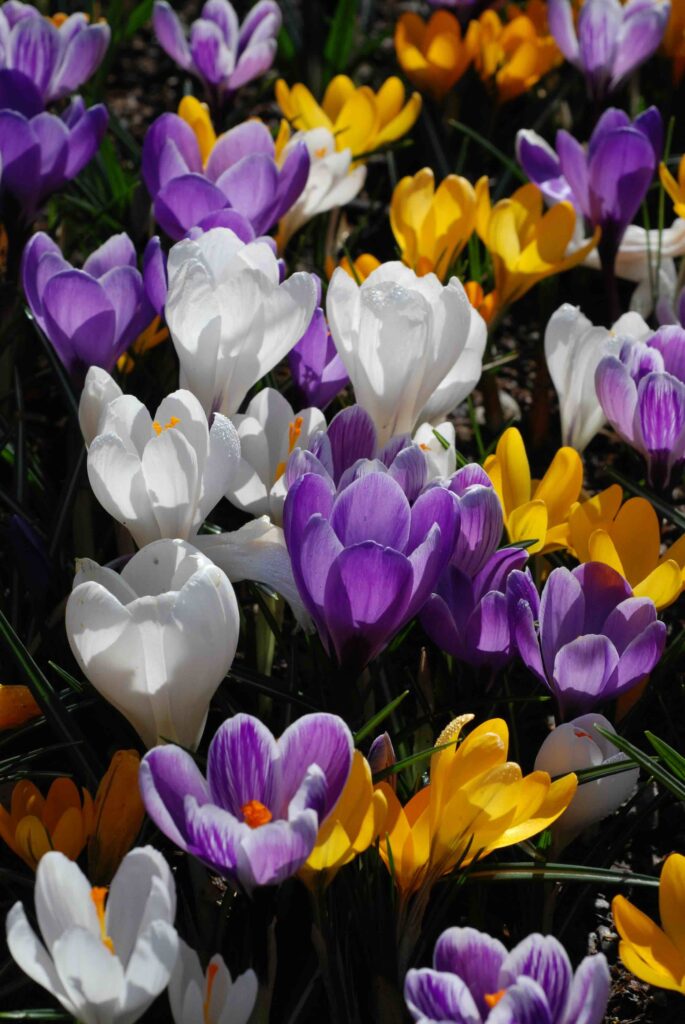
As we head into autumn our attention turns to spring-flowering bulbs. Daffodils and tulips are the most popular but there are lots of small bulbs that also add colour to gardens. Among these, surely the most beautiful are crocus. Their early flowers open wide to greet the spring sun and they are inexpensive and easy to please.
I always tend to avoid mixes of colours when I am planting but I have to confess that there is a special beauty in a mass of purple, yellow and white, large-flowered ‘Dutch crocus’. These are the traditional favourites and whether you buy single colours or mixtures the are bound to cheer you up in spring. Even better, their nectar-rich blooms are a hit with early-flying bumblebees.
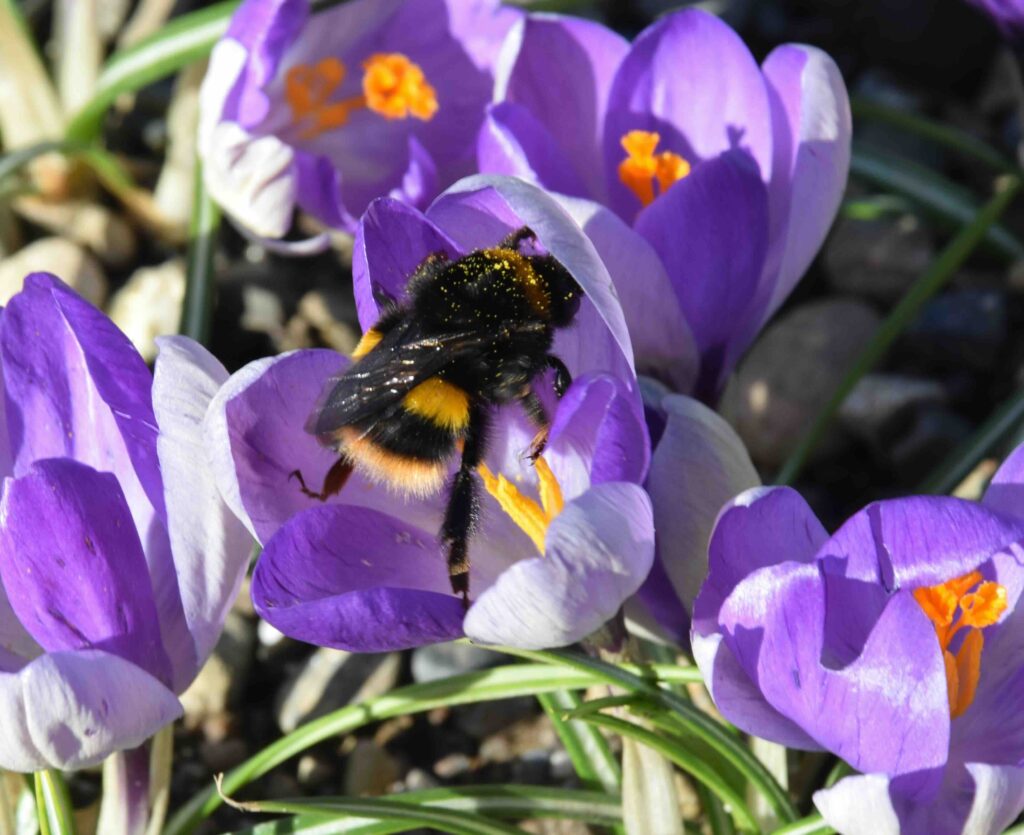
The key to crocus is to plant lots! Each corm will produce several blooms, sometimes one after another, and although they look pretty, and some have intricate markings, they are better when you are generous. Most will increase over the years, some more than others, don’t be mean with them. Crocus like full sun and well-drained soil and you can plant them in grass, in borders or in gravel. If you can’t plant hundreds you can enjoy them in pots. They are perfect for adding colour to pots of permanent shrubs such as Japanese maple or hydrangeas and they are ideal for window boxes. Their narrow foliage expands after the flowers fade and must be allowed to die down naturally but they are not as obtrusive as daffodil and tulip leaves.
Most spring-flowering bulbs can be planted from now till November but September and October are best so the bulbs develop roots before winter cold. Small bulbs should be planted soon because they can dry out in the packs. But there are some crocus you must plant NOW!
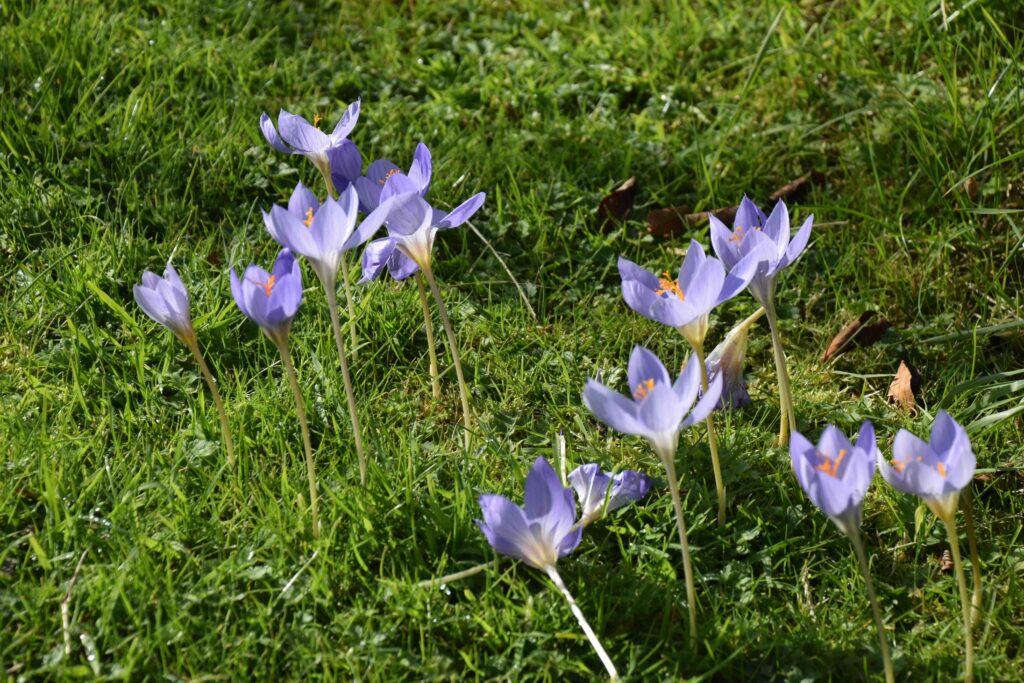
Not all crocus bloom in spring. A few bloom in autumn and they bring a fresh, taste of spring to our autumn gardens. The best is Crocus speciosus. This wonderful plant is happy in grass but you must remember where it is planted so you do not mow off the flowers as they emerge in October. Their leaves emerge in spring so you could plant them with spring-flowering crocus or daffodils. Look out for this gem of a plant. Sometimes my autumn crocus are accented by the fiery autumn leaves of my liquidambar that are scattered on the lawn – just perfect.
The most commonly available autumn crocus is the saffron crocus (C. sativus) but this is not such a good garden plant and it does not always bloom well. But if you fancy growing your own saffron give it a sunny, hot spot.
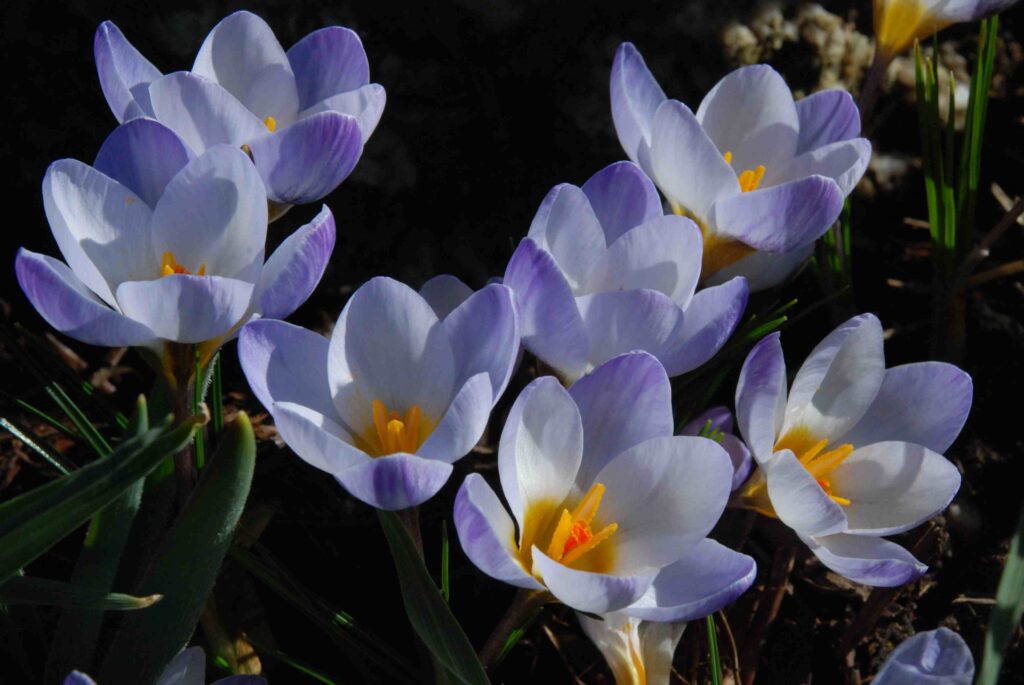
But back to spring crocus. Among the packs of crocus you will find some described as ‘botanical’ crocus. These are usually forms of Crocus chrysanthus and some may actually be named. These produce more flowers per bulb and the flowers are smaller but have a distinctive ‘chubby’ shape. They also have a wider range of colours and the flowers are scented of honey. They are just as easy to grow.
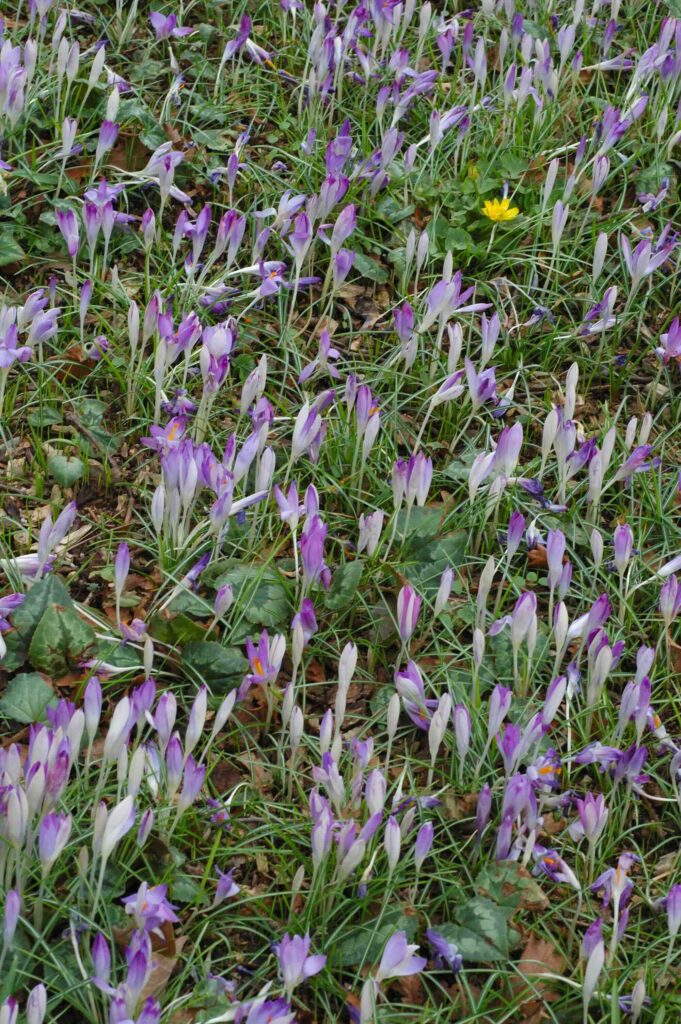
There is another crocus worth trying with the awkward name of Crocus tommasinianus. The most popular varieties are ‘Whitewell Purple’ and ‘Ruby Giant’. It is usually the first crocus to open in the garden, often in bloom with the snowdrops. The flowers are slender and small but they are produced in profusion and it nearly always self seeds to form large colonies. It also does well in some shade. I would not plant it in pots but it is a perfect choice for planting in grass and under deciduous shrubs.
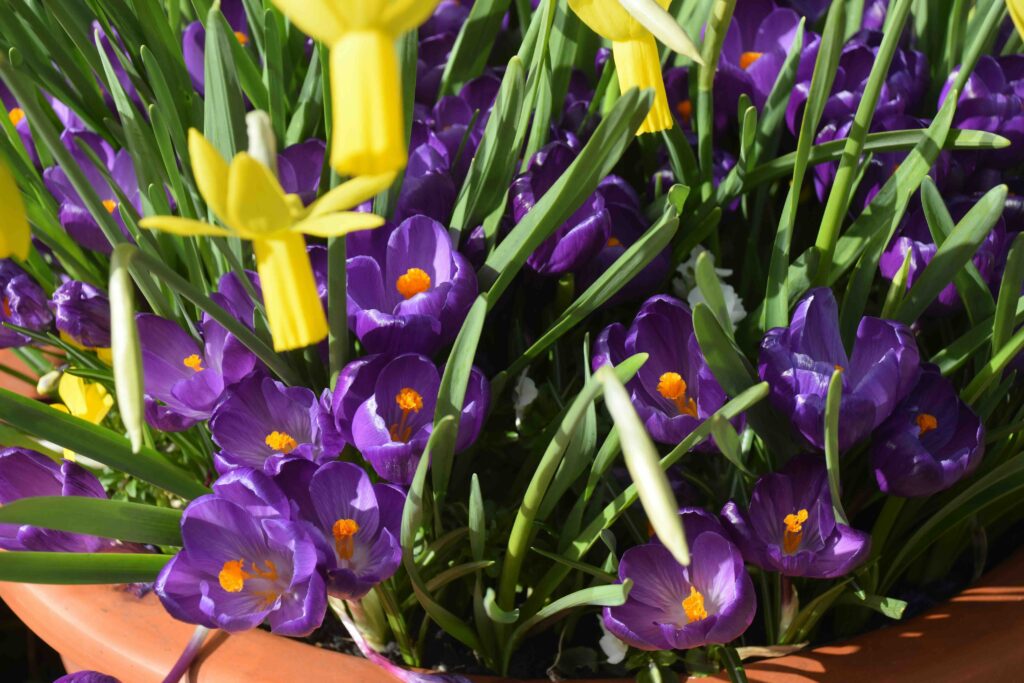
If planting in pots, put the crocus around the edge of the pots so the compact flowers are not hidden. And be generous with them. And plant them near the compost surface with large bulbs deeper in the pot. Here daffodils will bloom after the crocus have finished blooming.
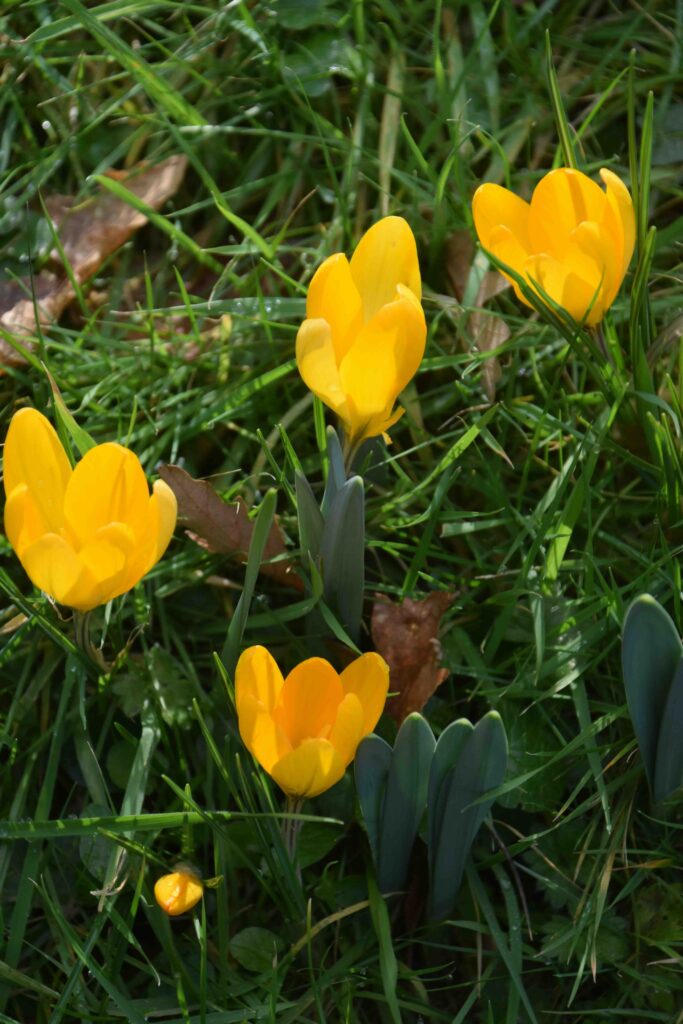
Plant your crocus about 3-5cm deep and 5-8cm apart to allow them to divide and spread. Plant them slightly closer in pots. Plant them in grass along with daffodils that will continue the display the following months.
Now is also the time to plant your pots for autumn and winter display.
Talks at Betchworth and Godstone
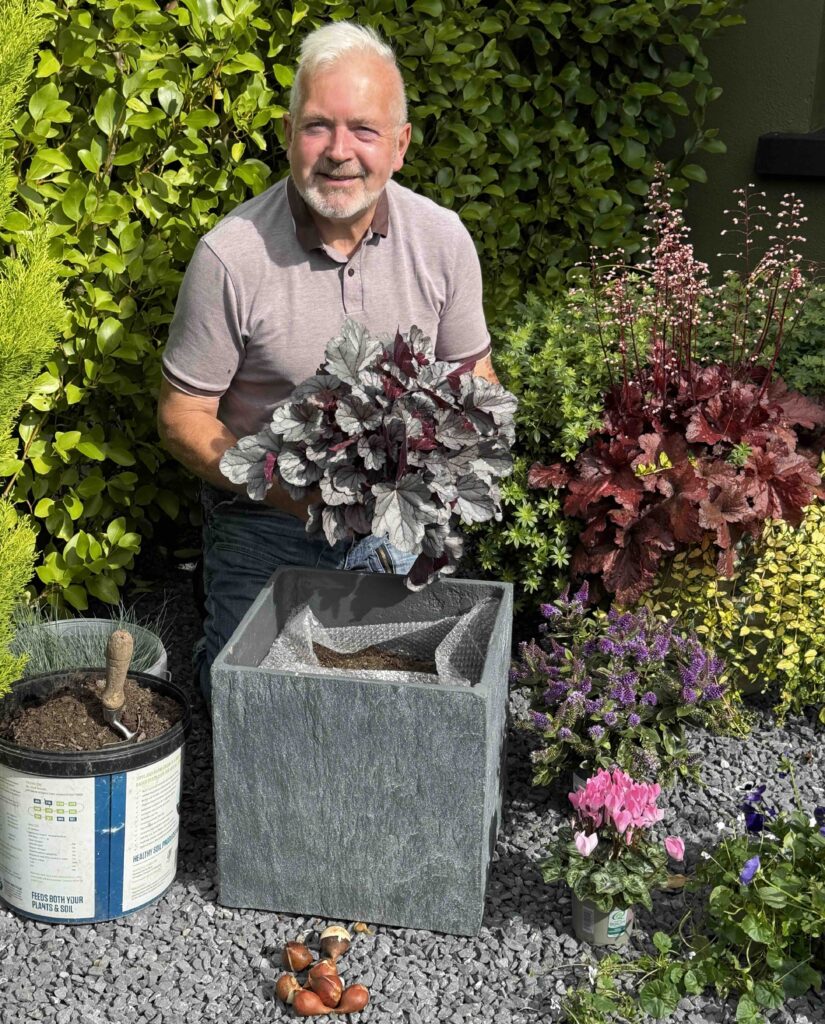
I am delighted to be back at Knights Garden Centres at the start of October – 1st and 2nd October.
The event will include advice on how to help your garden recover from the challenging summer and how to make your plot more resilient. I will also be showing you how to plant autumn pots and you can plant your own pot to take home. Refreshments are included and you can book your place HERE.
I hope to see you there.