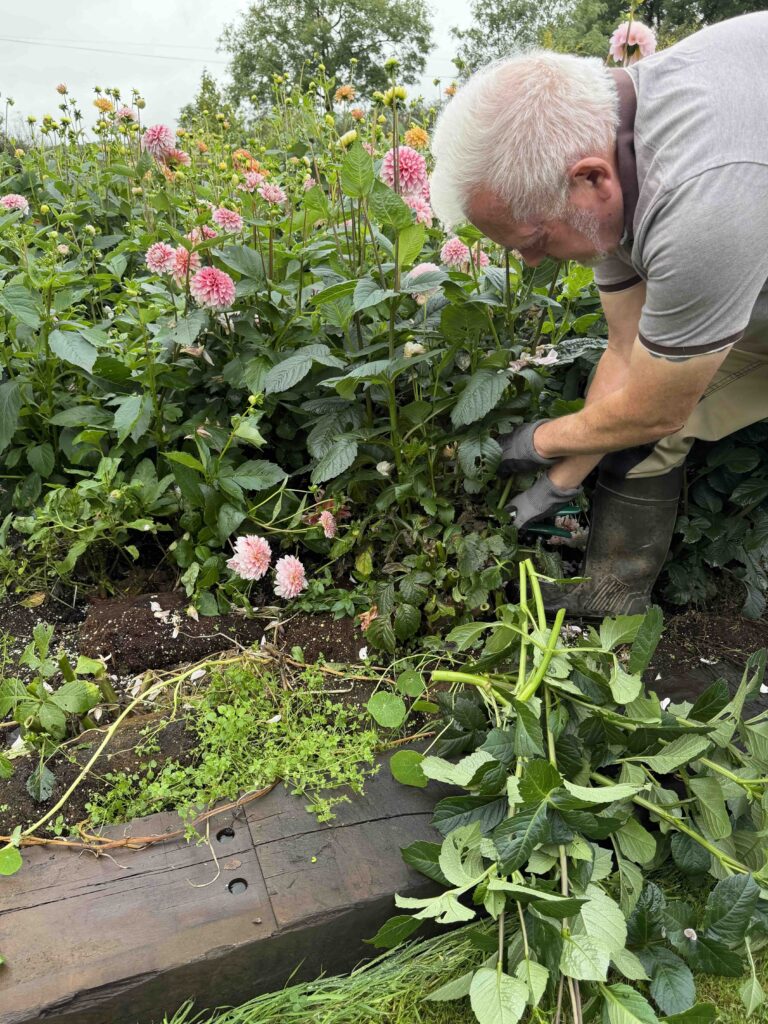
Autumn is well upon us now and, now we have had our first frost, it is time to lift and store various plants and roots. If you have enjoyed a glorious display from your dahlias this summer, now is the time to prepare for an even better display next summer.
Dahlias can be left in the ground in most areas and can often be expected to survive the frosts of winter. The problem is that new growth does not appear from the swollen roots themselves but from the base of the old stem where it is connected to the storage roots. Frost may not penetrate deep in the soil but if the base of the stem is frosted you will not get any new growth in spring. You could just apply a loose mulch over the plants to protect them but if the soil is waterlogged the roots will rot and new shoots in spring are prone to slug and snail attack. So it is best practice to lift the roots and store them somewhere free of frost until March.
Your plants are probably frosted now but even if not they will have stopped growing so cut them down to about 20cm so you can easily get to the roots.
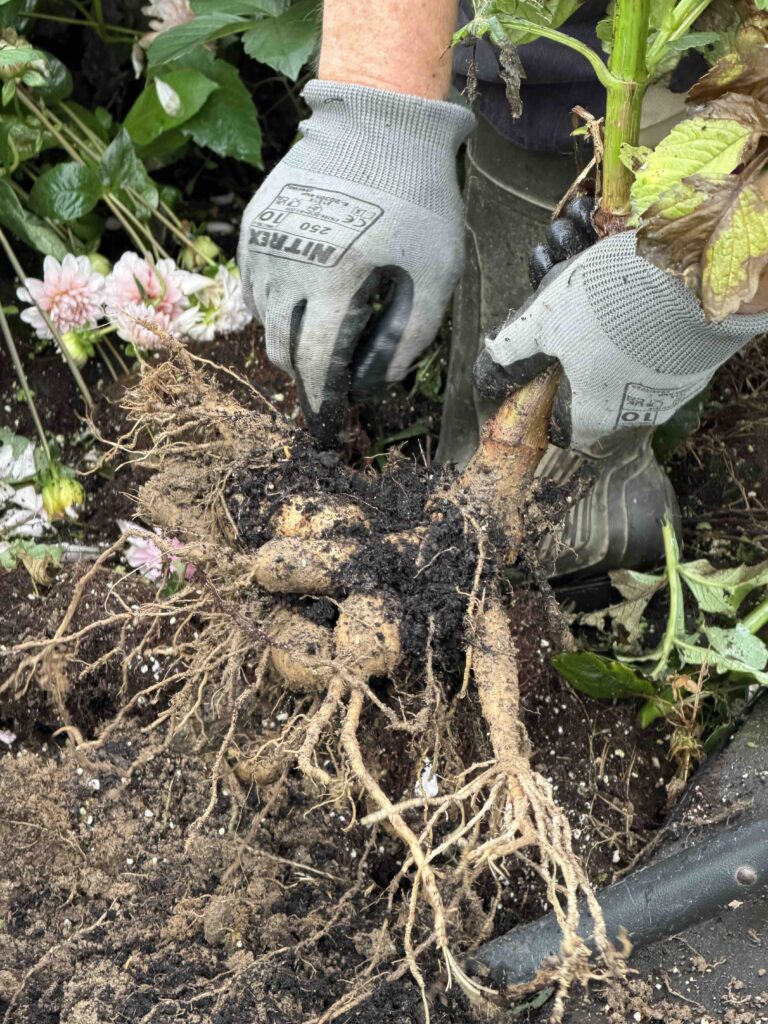
The roots will be much bigger than when you planted them so push in the spade a good distance from the base of the plant and lift them from below. Try not to damage the roots. Then shake off as much soil as possible.
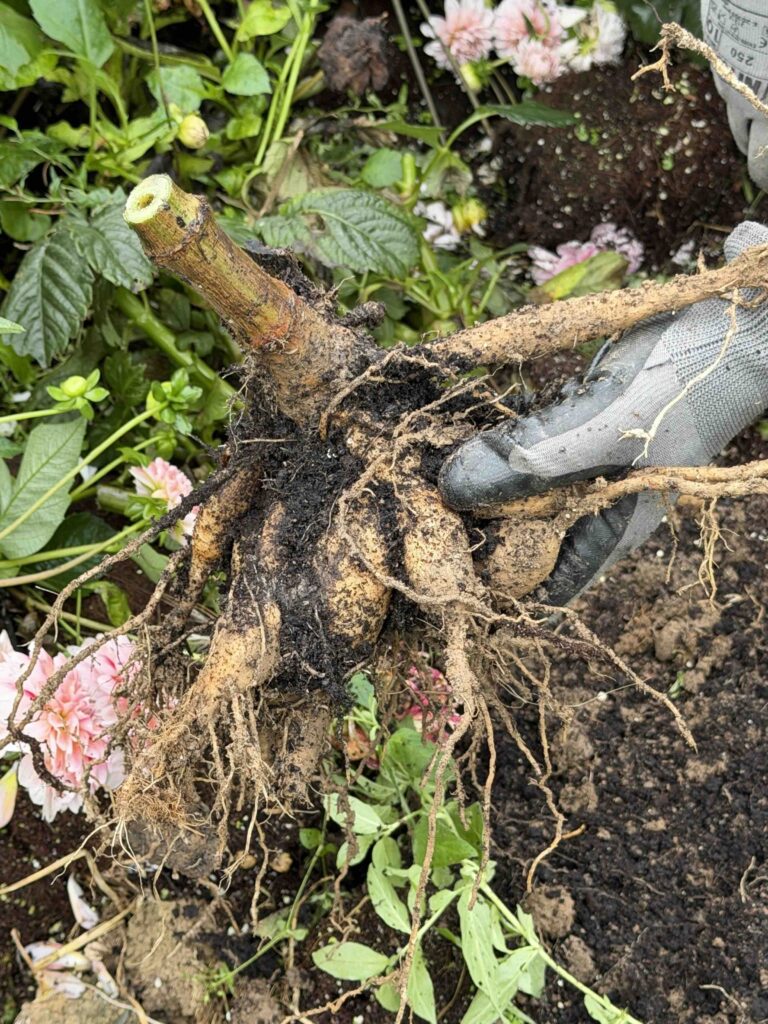
Then trim back the stem or stems to about 10cm, making a useful handle, and you are ready to store your dahlias. Although you will need to trim the large roots in spring, so you can pot them and start them into growth in some warmth, try to avoid cutting them at this stage because it can lead to rot. If you have damaged the roots, cut them off cleanly as near the base as possible. You then need to dry out the roots ready for storage. Some people put them upside-down but it is not critical. Once they are dry you can store them in boxes of straw, dry compost or just keep them uncovered. Some people hang them in the shed but there is a chance that they can become dehydrated so I prefer not to. Keep them cool but away from frost. Never put them in plastic bags or plastic boxes which will lead to mould. You will need to check them now and then and cut away any parts that are rotten.
Gladioli can also be lifted now. Cut back the stems to about 10cm. The new corm will form immediately above the old corm which will be shrivelled. There will also be lots of tiny bulblets around the base. These can be kept and will take two years to reach flowering size if you want to have hundreds of new corms. Let the lifted corms dry out and then you can snap off and discard the old corm and keep the new ones to plant next spring.
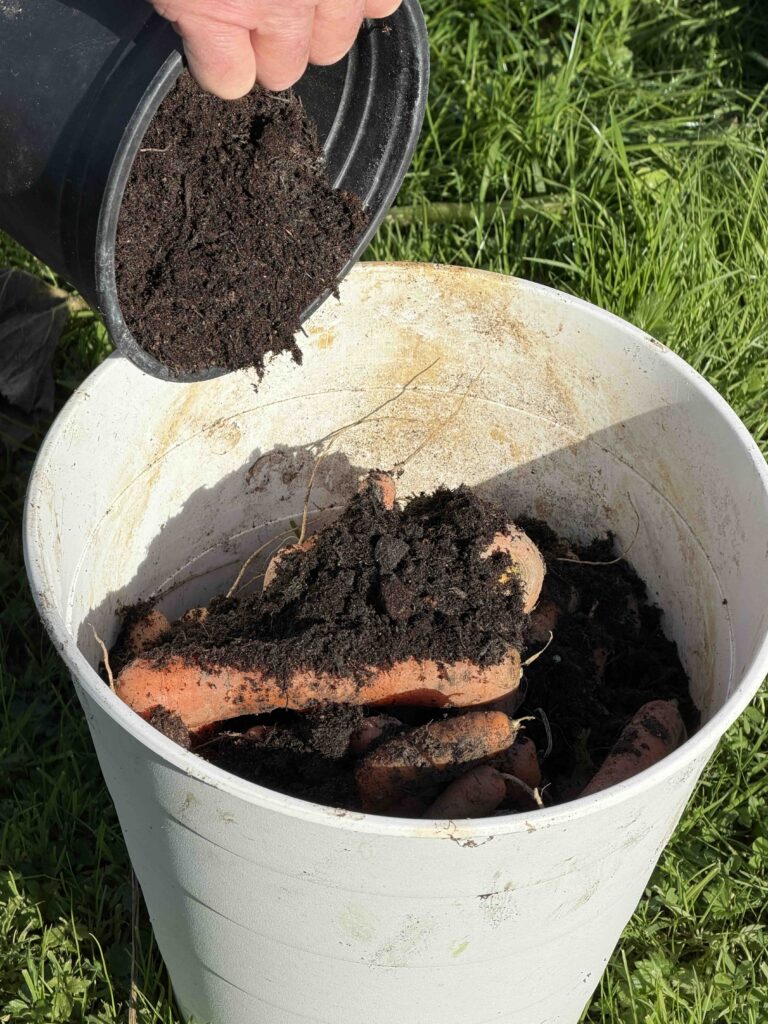
It is time to lift root veg too. Although carrots and parsnips are hardy and will not be damaged by cold in the soil, carrots are best lifted now. Left in the soil they will be munched by slugs or even mice and rats. Once lifted, twist off the tops and you have several options. You can store them in a bucket or large pot of sand or compost. I use old compost from my summer pots. It keeps the roots just moist. Put the pots in the shed and use as needed. Do not wash them before storage. Use any that are damaged immediately. I make carrot and swede mash or mixed mash with squash, parsnip or whatever I have and freeze it for use through winter.
Parsnips ‘hold’ in the ground better than carrots and they are generally better harvested once they have been frosted. The cold starts the change from starch to sugar in the roots so they are sweeter. Parsnips have much longer roots than most carrots so push in the spade deeply next to the roots to lift them. You can usually dig them as you need them.
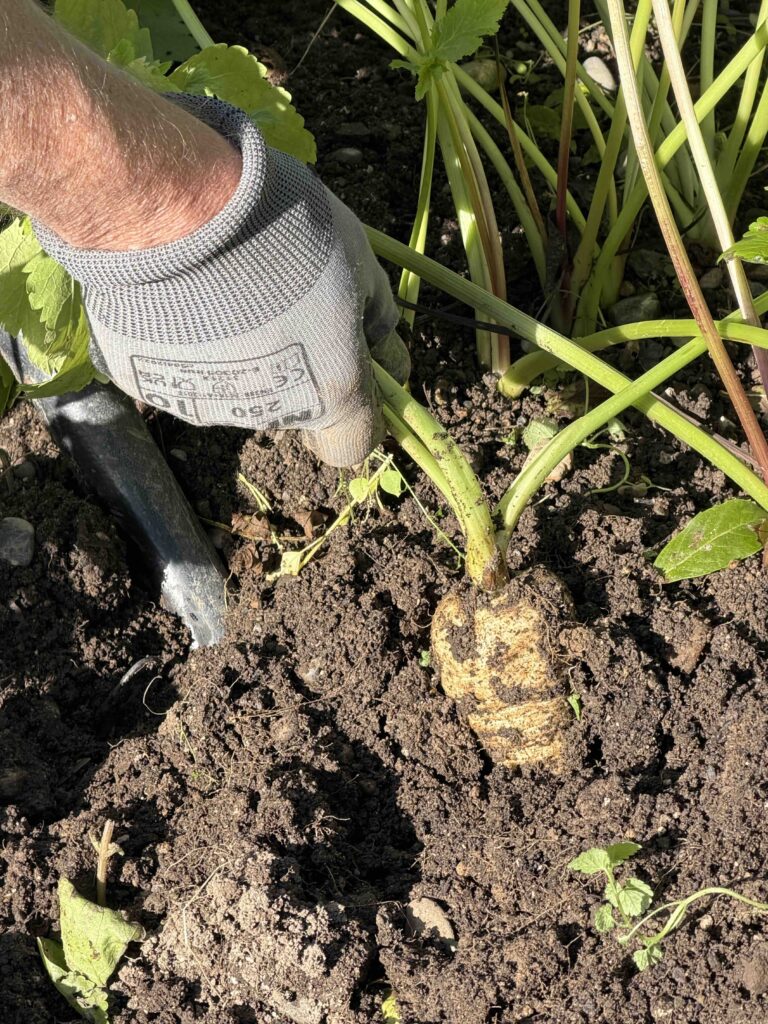
But you can cook and mash them or roast them and freeze them or make soup. There are lots of options and no need to waste any.
All root crops prefer a light soil and if you have not grown them before, now is the time to start to prepare the soil ready for spring sowing. My soil is rather heavy so I have two beds that I have improved with the old compost from my pots and I am able to get old growing bags from a strawberry farm. Over several years I have been digging this in and now the soil is friable and perfect for them. You can also add garden compost but avoid adding manure. If the soil is too rich and high in nutrients it will cause forked roots in carrots and parsnips. Try to remove stones as you dig too because they will also cause distorted roots. Avoid growing carrots and parsnips in the same soil each year. My two beds are used every other year, alternating with flowers and onions and garlic. A longer crop rotation would be better but it is the best I can do.
It is traditional to sow parsnips early because they need a long growing period. But if the soil is too cold the seeds will not germinate. This year I delayed sowing till mid April so the soil was warm and the seedlings grew away quickly. They produced a good crop. The same applied to my carrots. But it is important to use fresh seeds – they will be useless the following year if the pack was opened. Always buy fresh carrot and parsnip (and parsley) seed each year.
Beetroot and turnips (including swede) are not the same family as carrots and parsnips so could be planted in the bed to follow on from the carrots and parsnips.