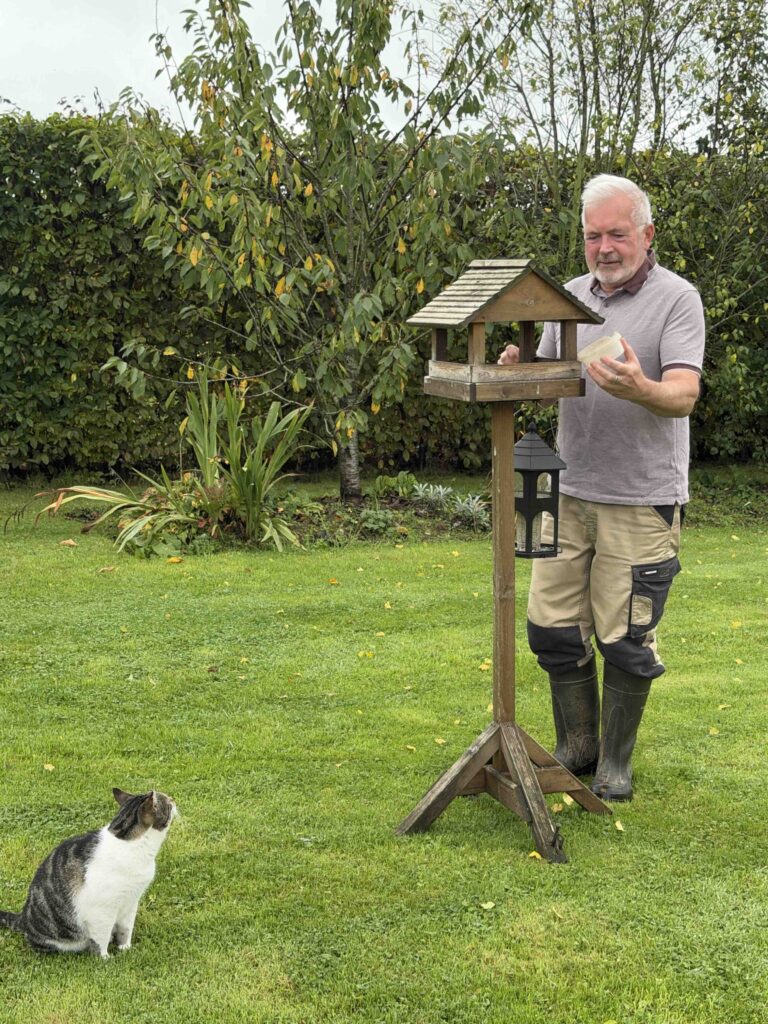
As winter approaches, there is plenty we can do to look after our garden birds. Feeding is the most obvious task we can do to help and we can provide a wide range of foods. Before I say anything else I need to address the elephant in the room – or the cat on the lawn – because I do have a cat and also Tom the stray (above) who decided we were a soft touch and now lives with us (after we had him ‘sorted’ and addressed his health issues.
The placement of your bird feeders is very important. Ideally they should be near some bushes or trees from which birds can flit. And you should ideally provide.a range of feeders because different birds feed in different ways. On the feeder above, sparrows, goldfinches and tits feed from the table and the hanging feeder while robins and chaffinches tend to feed from the ground. Collared doves land on the roof and ponder a while before they fly onto the table. Because of the cats it is important that the table is sited with a good, clear area around it. Food gets thrown onto the lawn and I don’t want the birds pounced on!
I have peanut feeders around the garden and these are also above lawns or paving. I am pretty sure the birds are safe and, in an ironic twist, the thrushes, blackbirds and robins dash to steal Tom’s cat food most days.
When it comes to wild bird foods, there is a huge range. I always think it is best to buy a good quality feed to avoid waste. Cheap mixes, full of wheat, tend to be scattered around by the birds and end up on the ground where they can encourage vermin. Peanuts and hulled sunflowers are my go-to choices. They are not the cheapest foods but none is wasted. And apples stored for winter use get tossed on the lawn as a treat for blackbirds in cold weather.
Knights have a wide range of different foods to attract various birds, plus plenty of feeders. Watching birds in the garden is a real treat so a bird feeder makes a great gift for everyone including children.
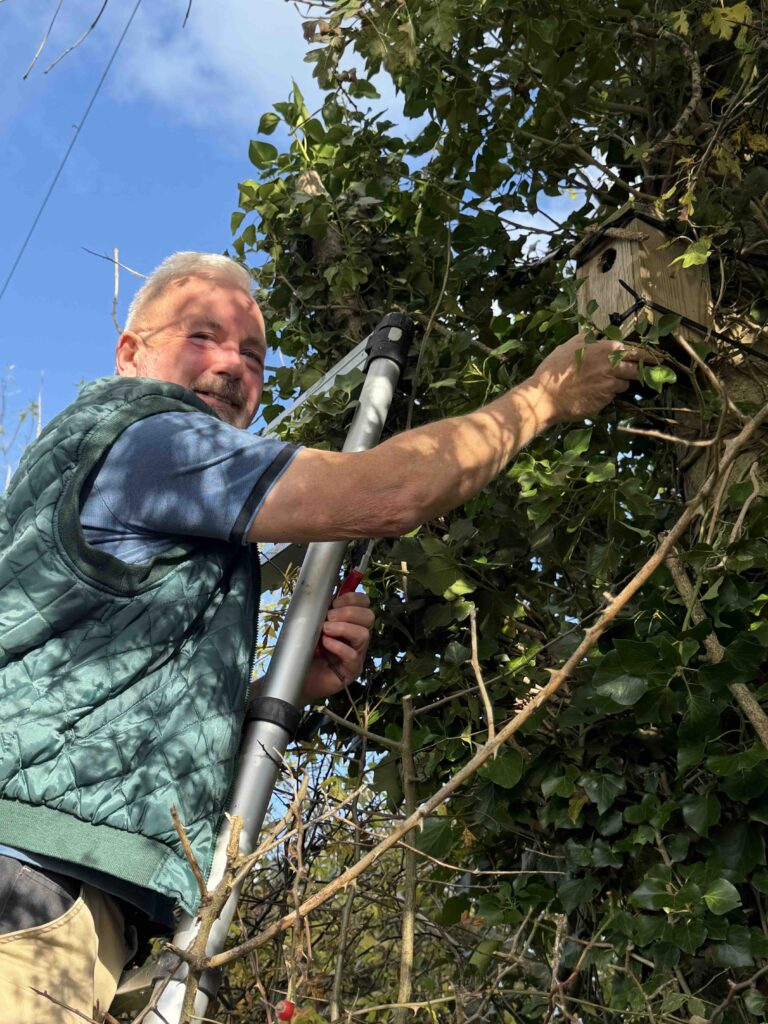
Birds also need places to nest. Some birds will make nests in hedges and trees but putting up bird boxes will definitely help various species. You can buy boxes to attract various species. Open-fronted boxes attract robins and blackbirds. Small openings, around 35mm, will attract tits. Larger openings will attract sparrows.
When placing them, they should be 2-3m above the ground, ideally away from strong winds and with an open flight line. Keep them away from cats! I put mine in trees around my boundaries and not on the house where fallen fledglings would be doomed!
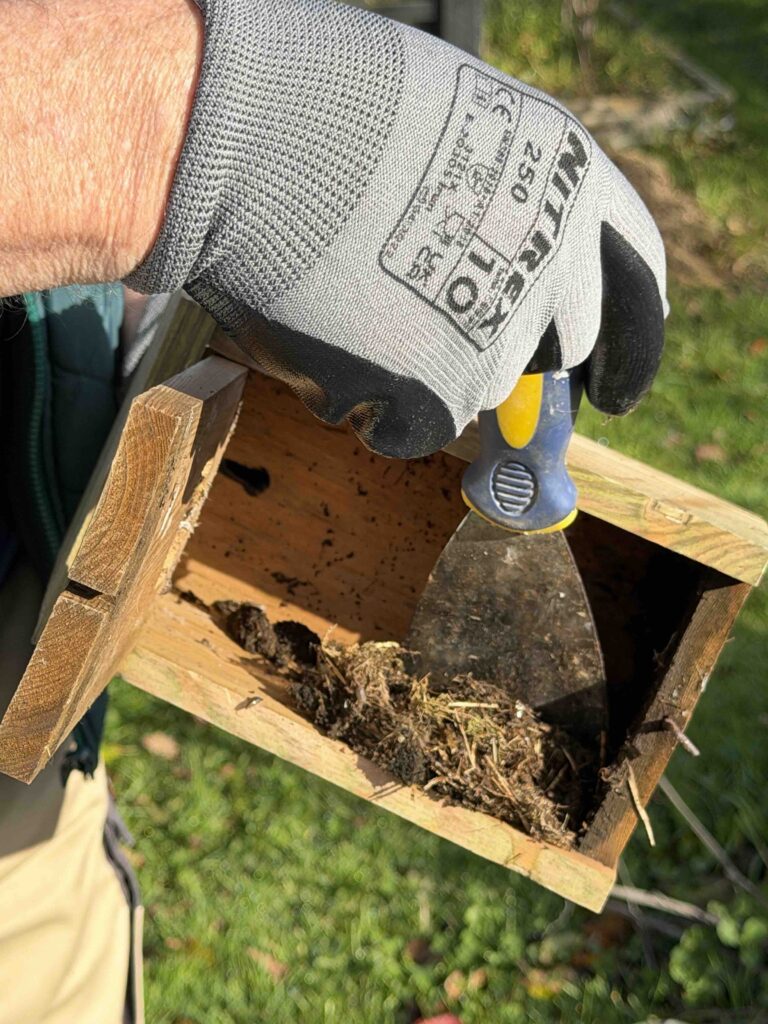
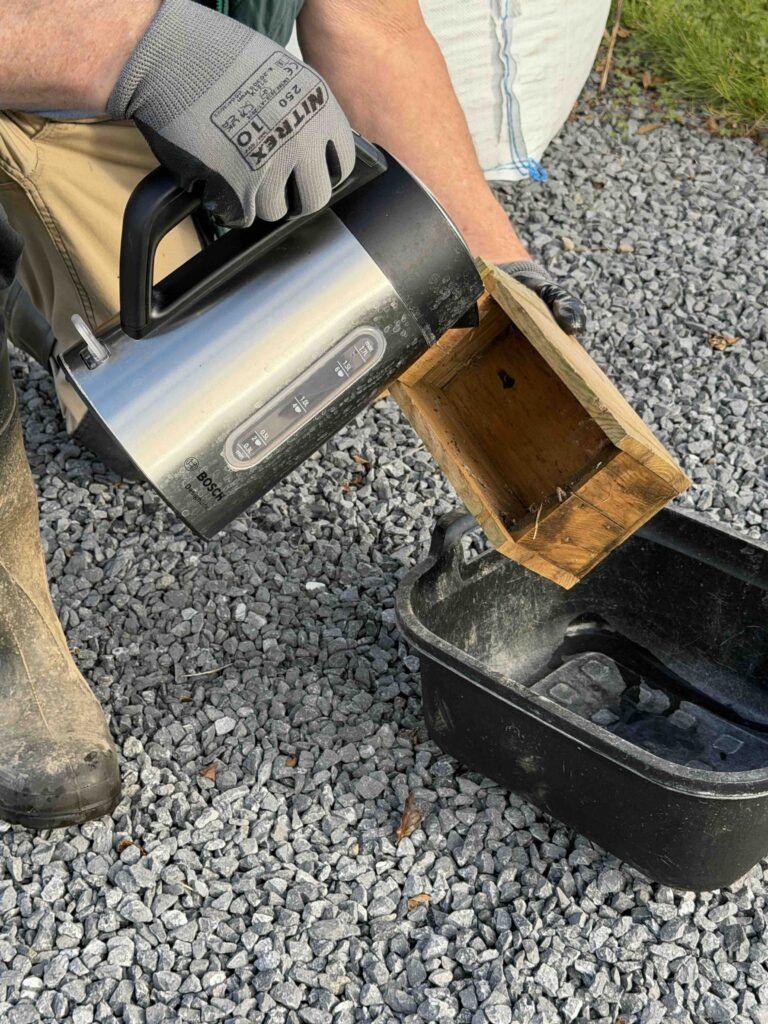
Bird boxes are empty now and it is the perfect time to remove them and clean them. This should be done annually. Take them down and open them. Remove old nesting material and scrape the box clean. You then need to wash it. You can use a special bird box disinfectant but boiling water is just as good. Always wear gloves when handling old bird boxes. Now is also a good time to install new boxes so birds have plenty of time to find them and get used to them before breeding season.
Once the box has dried, put in some hay or wood shavings to give the birds a start and reposition it. In fact, when I cleaned this box and put it back up, within days something had pulled all the bedding out – I am not sure what did it! I find that cable-ties are best for attaching boxes to trees and they avoid having to screw into the tree, causing harm. And, of course, never work on ladders alone! Have someone to hold the ladder and pass up tools and the bird box.
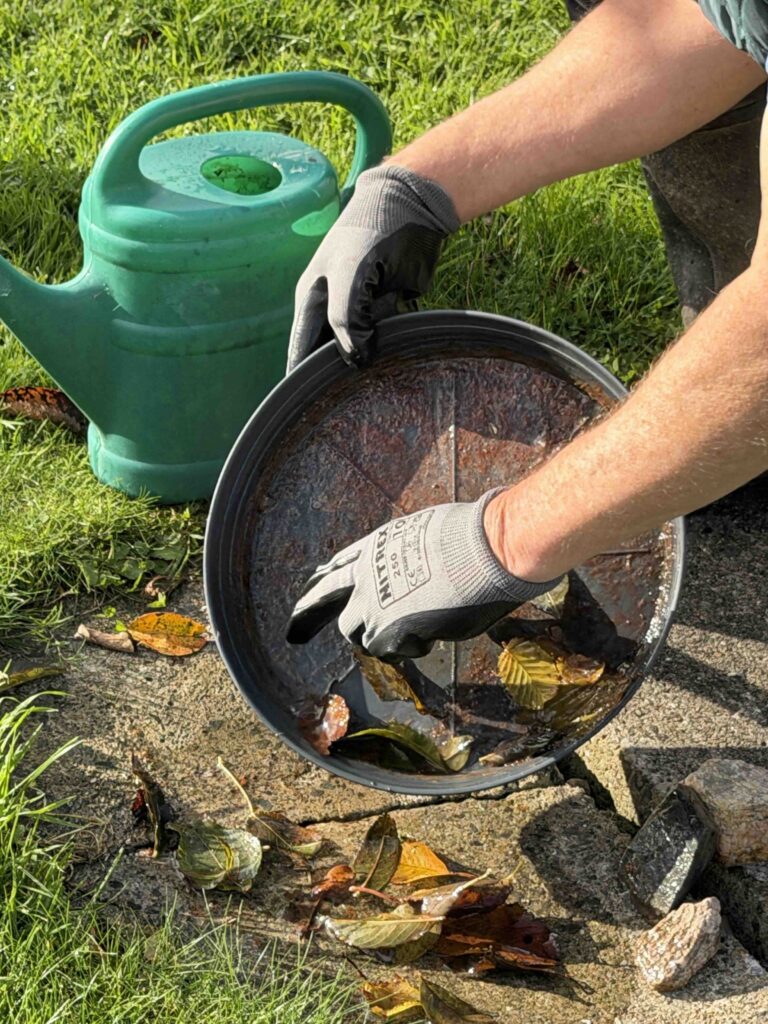
In winter, birds need water as well as food. Always keep your bird bath clean. Feeders and bird baths are places where birds congregate and that can lead to diseases spreading so always clean feeders and baths regularly. A simple, large pot saucer makes a good bird bath but put in a few large stones as perches for you visitors.
A little work now will help make your garden really beneficial for our feathered friends.