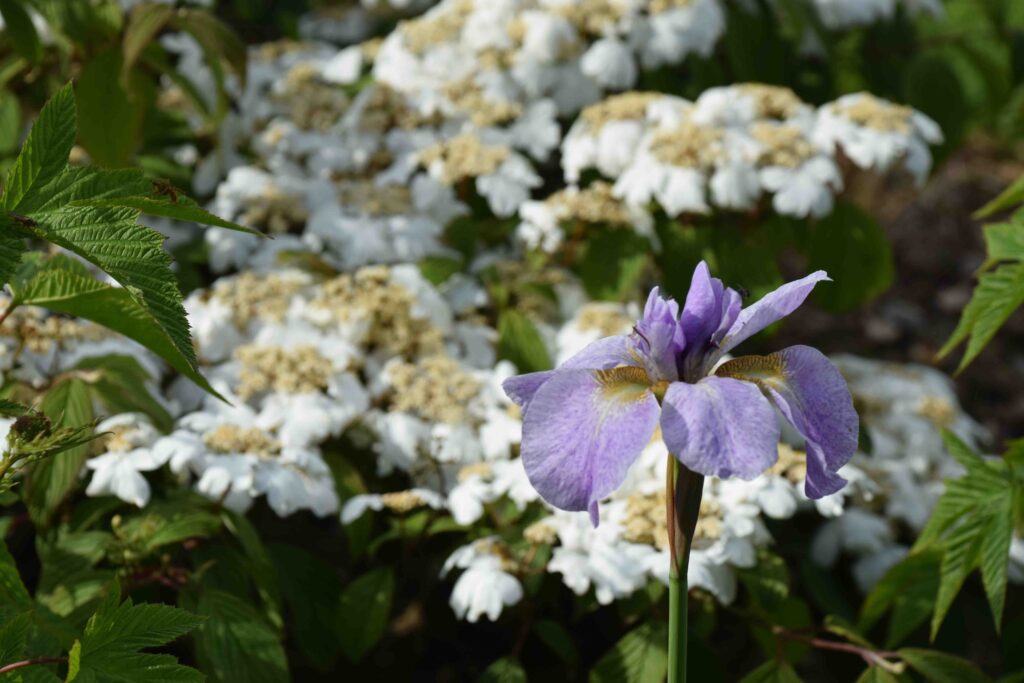
Iris are among my favourite flowers – many years ago I wrote a book about them and had a National Collection in my youth. Although we can all identify an iris and they are among the most recognisable of flowers, there are hundreds of species and thousands of cultivars. They vary from small, bulbous plants to large, herbaceous perennials. There is an iris suitable for every part of the garden from ponds to roofs (Iris tectorum was traditionally grown on roofs in Japan). Although each iris plant only blooms for a relatively short time, compared to a petunia, you can have iris in bloom from late winter to late summer and, of course, the colour of iris flowers encompasses the rainbow, with the exception of true red.
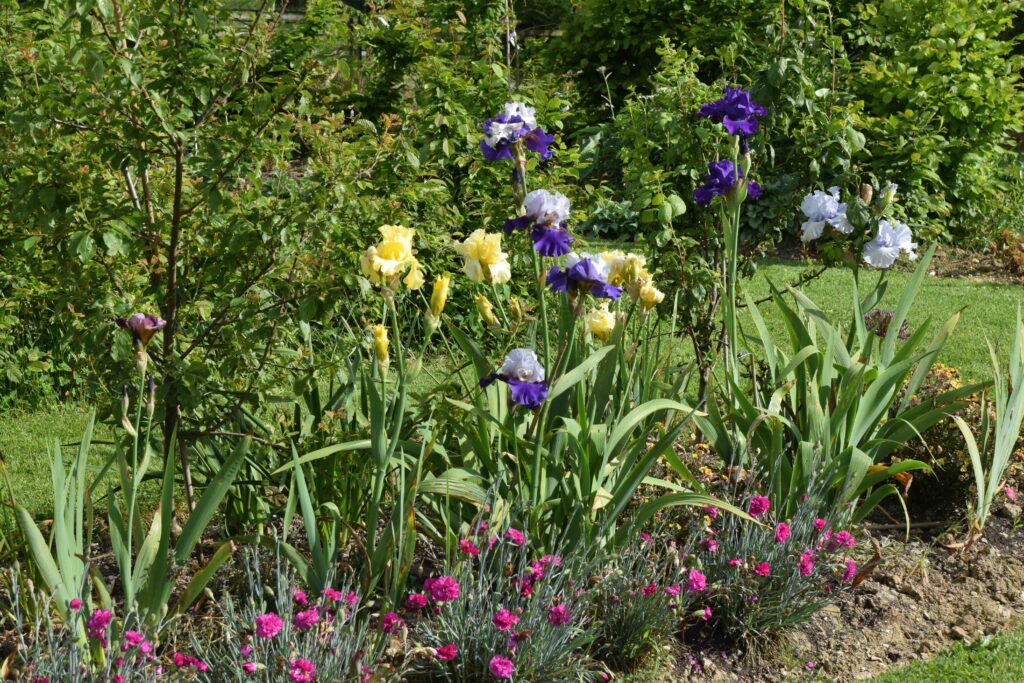
The best known of all are the tall bearded iris, sometimes, erroneously, called ‘Iris germanica‘. The wild species, that are the origin of these plants, are Mediterranean in origin, and all need a sunny spot and well-drained soil. They have thick, creeping rhizomes that need to be exposed to the sun. Old clumps become congested and they need to be divided every four or five years, ideally in July, after flowering. They have large blooms, often sweetly scented and they dominate the garden when in bloom in late May and June. But you must keep them clear of weeds and must not allow other plants to swamp them and shade the rhizomes or they will struggle.
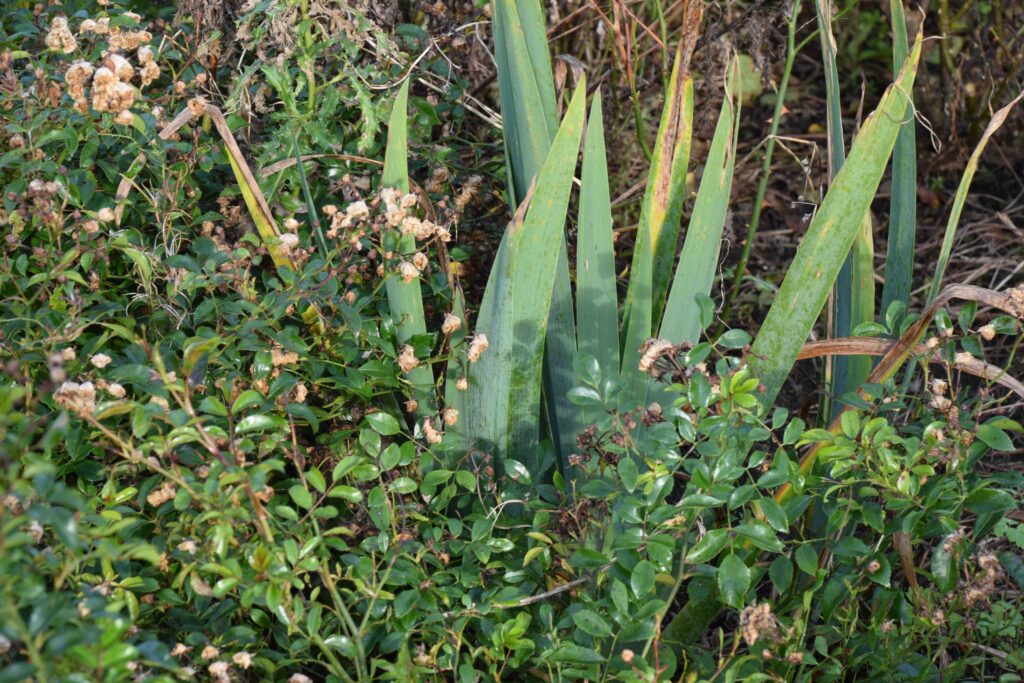
Not all bearded iris are tall. Another group are the Standard Dwarf bearded iris. These only grow to about 25cm high and have smaller flowers in proportion. This makes them much more resistant to wind and they also bloom earlier, usually in late April. Most are very vigorous and easy to grow but they also need sun and freedom from competition from other plants. Like the rest of the bearded iris they do not need watering, once established, and they grow well in raised beds and in gravel gardens so are ideal for modern gardens.
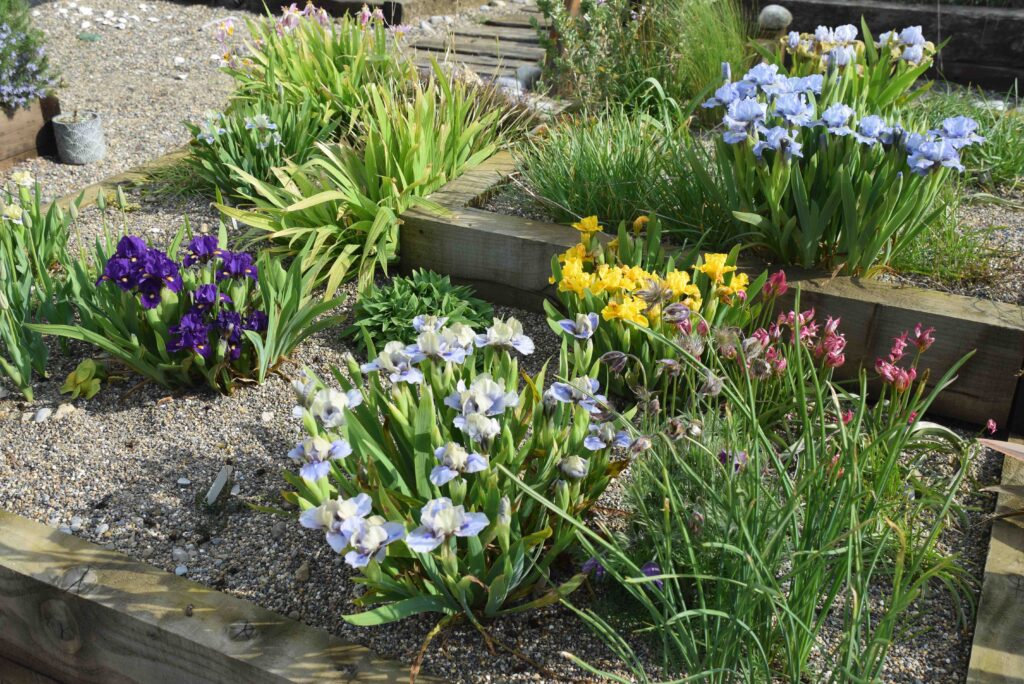
Like their taller cousins, they need regular division or they become crowded and do not flower well.
Although the bearded iris are my favourites I have to admit that my rather heavy soil and windy garden is not ideally suited to them all. Much of my garden lays wet in winter and although the bearded iris survive, it also encourages slugs and these are a nuisance. Fortunately, there are plenty of other kinds and if you also have rather heavy soil you will find, like me, that the Siberian iris are the ones for you. Not strictly from Siberia, these are tough, easy perennials with upright or arching, elegant foliage and stiff stems of dainty flowers in July, just as the last bearded iris are fading. To be honest, they are better garden plants and mix well with other plants in the border.
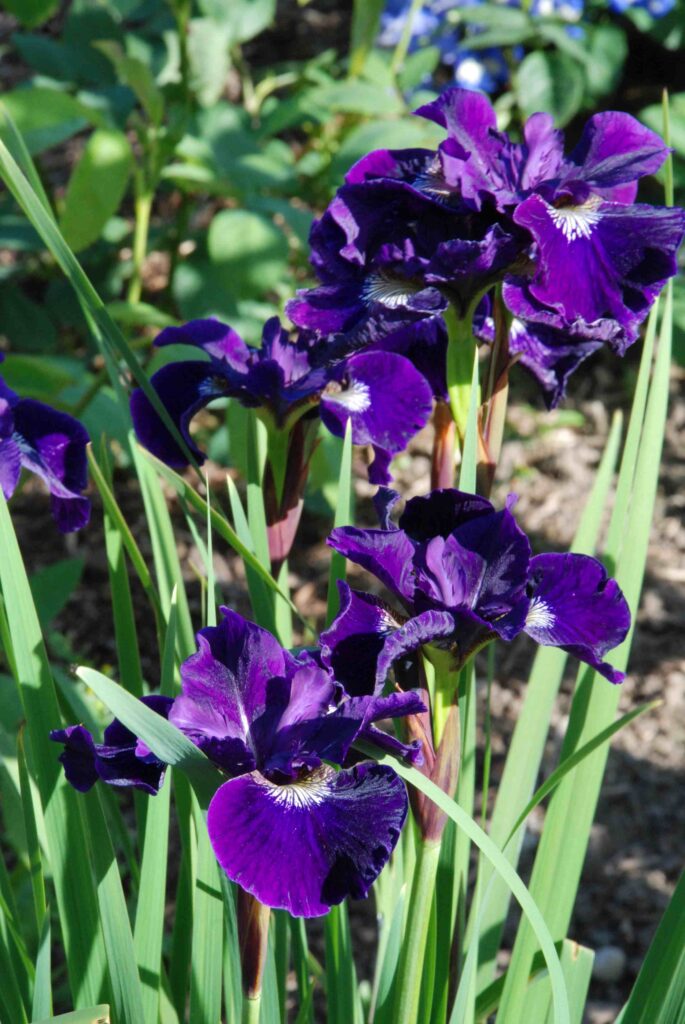
There is a wide range of colours to suit any planting scheme and they also make quite good cut flowers. Once planted they do not need to be divided until the centre dies out and then they are best chopped into sections and replanted in autumn or spring. They tolerate wet soil and do well in any sunny spot that is not too dry in summer.
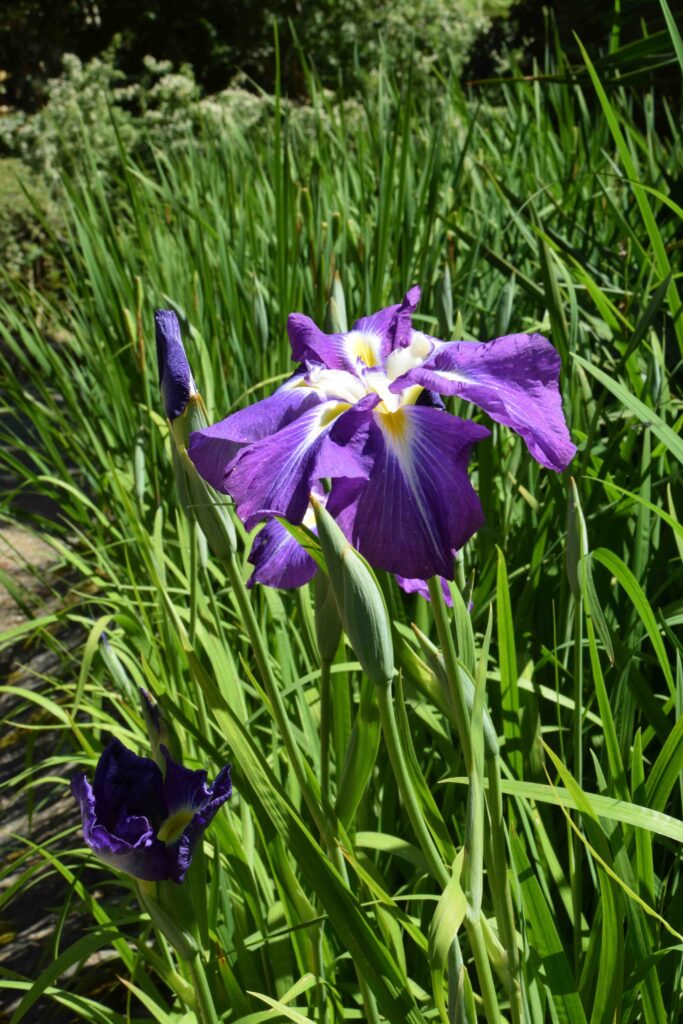
If your soil is really wet you could try the Japanese water iris (Iris ensata). In Japan these are grown in vast plantations, drained in winter and flooded when in bloom. They cannot be grown in ponds as such but relish moist soil, especially in summer. This put me off trying them for many years but, having planted them and grown them successfully, I can report that they are much easier than they might appear. I have them planted in ordinary borders that are wet in winter and they thrive in ordinary, but rather heavy, soil. They bloom with, or after, the Siberians, and they have huge, flat, often fabulously flamboyant blooms. Once planted, they need little attention and will grow and bloom year after year.
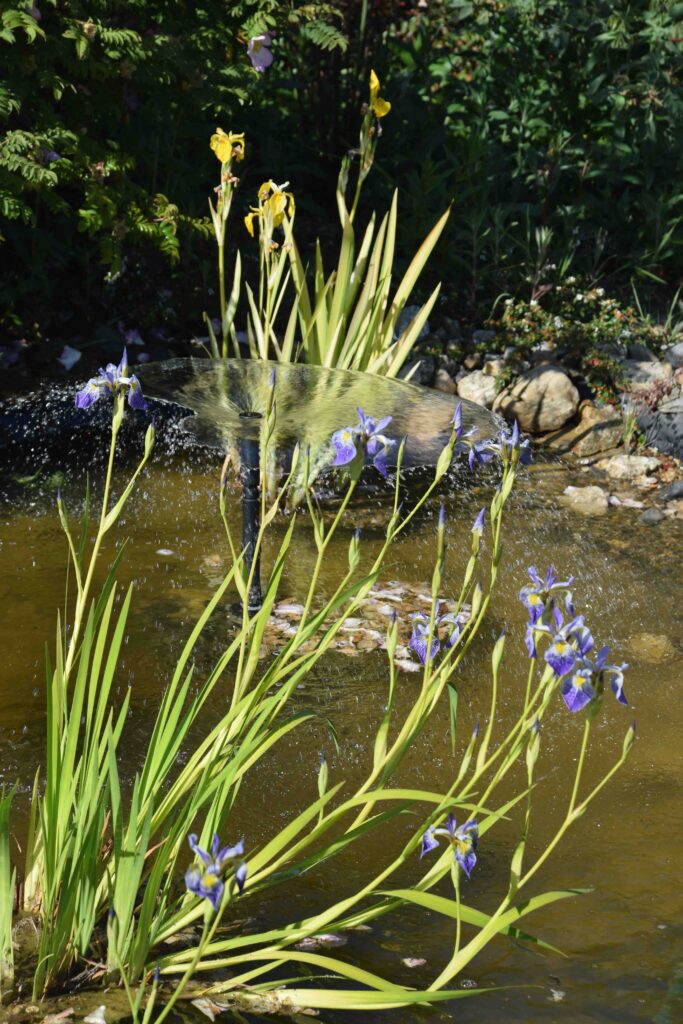
If you want to grow iris actually in your pond there are several kinds that will love it there, planted in baskets and the roots submerged in a few inches of water. Iris pseudacorus is the native yellow flag iris and really too vigorous for anything smaller than a lake! But the variegated form is a bit more manageable and in spring the leaves are strikingly striped with yellow. By flowering time the leaves are turning plain green but the spring display is so gorgeous I can forgive that. Iris versicolor is also tough and flowers for several weeks with blue or purple flowers on spreading stems. And Iris laevigata has blue or white flowers and will grow in damp soil or in the pond.
You can buy these as potted plants, often coming into bloom at Knights now.
Jobs for the week
Now is the ideal time to sow lots of veg. You can sow salads, French beans, carrots, turnips, calabrese and cabbage. To save time you can buy vegetable plants too.
The weather is improving and you can plant patio containers with summer flowers but be careful – there is still a chance pf an overnight frost. Be prepared to protect your tender plants with fleece on cold nights.
Lower the height of cut on the mower to give a neater finish if the grass is looking healthy. Leave an area of long grass if you can, to provide shelter and food for insects.
Container talk
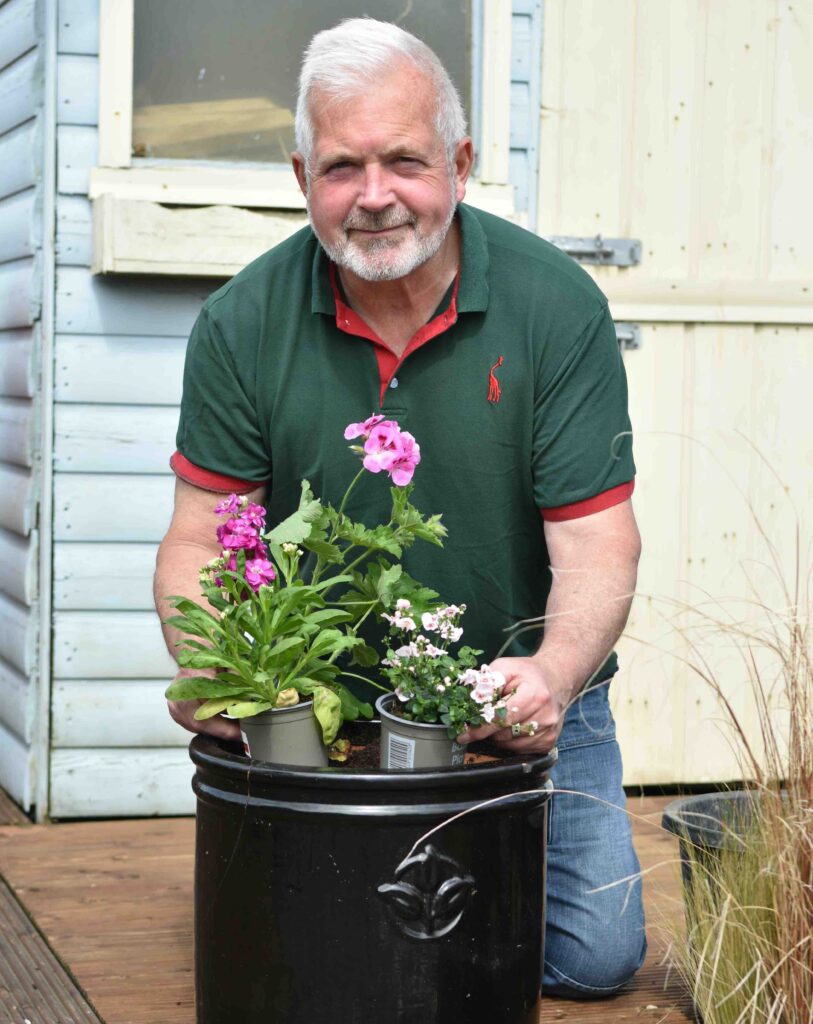
I will be at Knights Betchworth and Nags Hall On May 20th and 21st
I will be giving a demonstration on how to grow flowers and other plants in patio containers. Tickets cost £14.99 including tea and cake
https://www.knightsgardencentres.com/webshop/events/talks-workshops