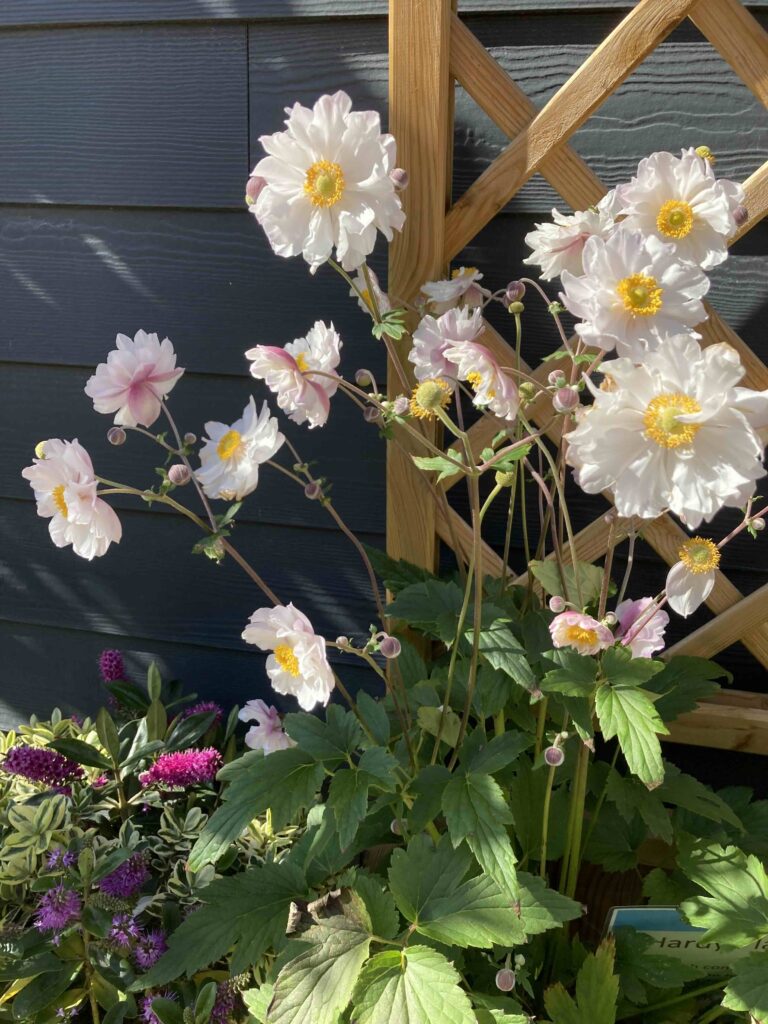
Just like clothes, music and food, plants come into, and go out of, fashion. Autumn anemones have always been valued by experienced gardeners but, I am glad to say, they are currently the height of fashion.
Commonly called Japanese anemones, they are also known as Anemone x hybrida, Anemone japonica and Anemone hupehensis, names that relate to the wild plants from which they are derived. With that bit of confusion behind us, what are these plants like and why should you include them in your borders?
Most importantly, they are beautiful. The distinctive blooms, in shades of pink as well as white and coming close to wine red, have circular clusters of golden stamens and a cute green ‘bobbly’ centre. Each stem, as it rises above the bold foliage, produces a long succession of blooms.
Key point 1: the stems are usually self-supporting so this is not a plant that needs to be staked.
Key point 2: the flowers are neat at all times. As the flowers fade, the petals drop. This is especially important with white flowers. I dislike white flowers that turn brown and ruin the effect of the later blooms. No worries here!
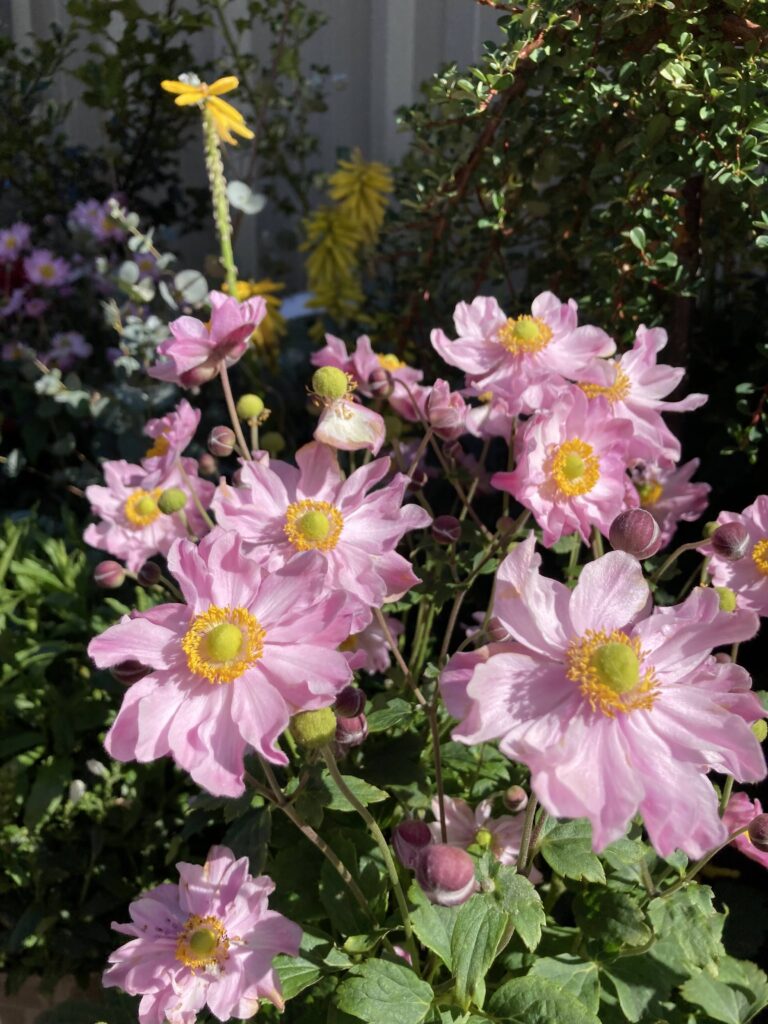
Old varieties, which I tend to prefer, were usually tall (more than 1m) and did not bloom till September but modern varieties, like those illustrated here, start flowering in August and they tend to be neater and shorter. They are ideal for the centre or near the front of borders.
Key point 3: They are not fussy about soil and they thrive in heavy, rather clay soils. They are also drought tolerant when established. Like all plants, planting in summer can be a problem because it can be difficult to keep them moist in dry weather. But they are perfect to plant now. They will have all autumn, winter and spring to become established.
Key point 4: Some of the older kinds spread a bit far and wide. I would never call them invasive but they did spread to form large clumps. This is equally good and bad! But the woody, underground stems are not deep and can easily be dug up if they spread further than you want. Ironically, they can sometimes be tricky to establish from dug-up pieces and you should not buy packs of bare roots. Buy a flowering plant in a pot now.
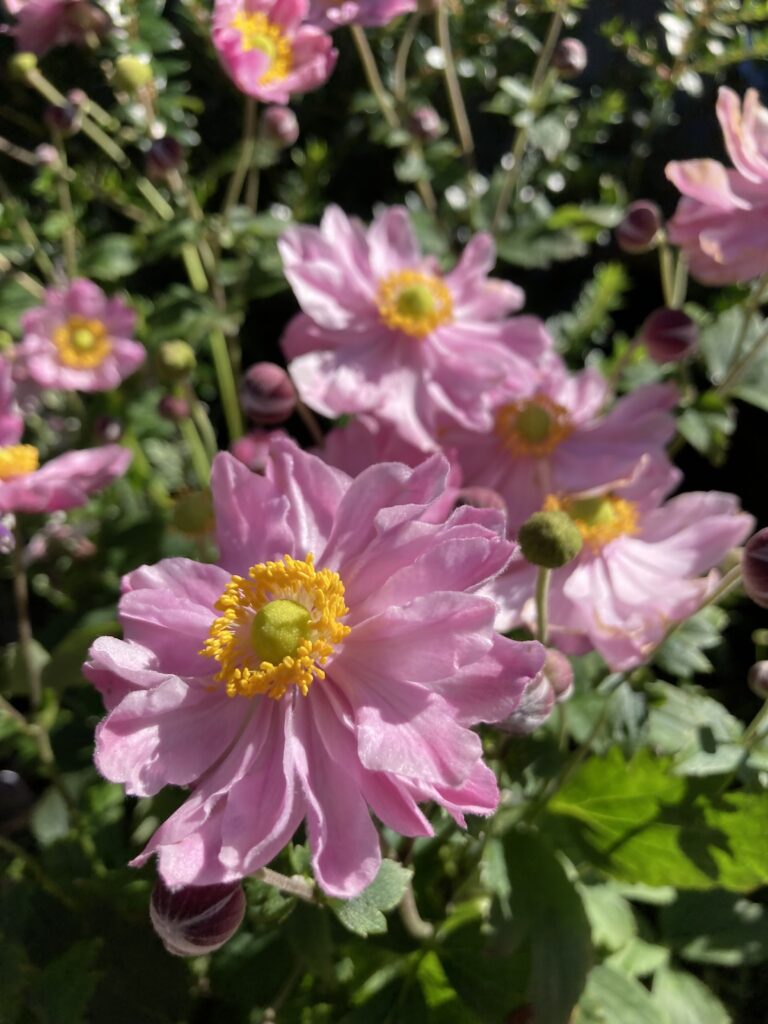
In winter, after the first frost, the leaves become blackened and the clumps should be cut down. That is all you need to do, just to tidy them up. The plants are hardy and not harmed by frost. The hairy leaves are also not especially bothered by slugs and snails. The foliage forms an attractive clump that will suppress weeds. They all thrive in sun or part shade.
You can also grow them in pots but if you do, use John Innes No 3 compost. Because they flower in late summer they are not the best things for patio pots because there is not much ‘happening’ for a lot of spring and summer. So if you do want to grow them in pots now, add some daffodils. Then the pot can be left as it is for three or four years.
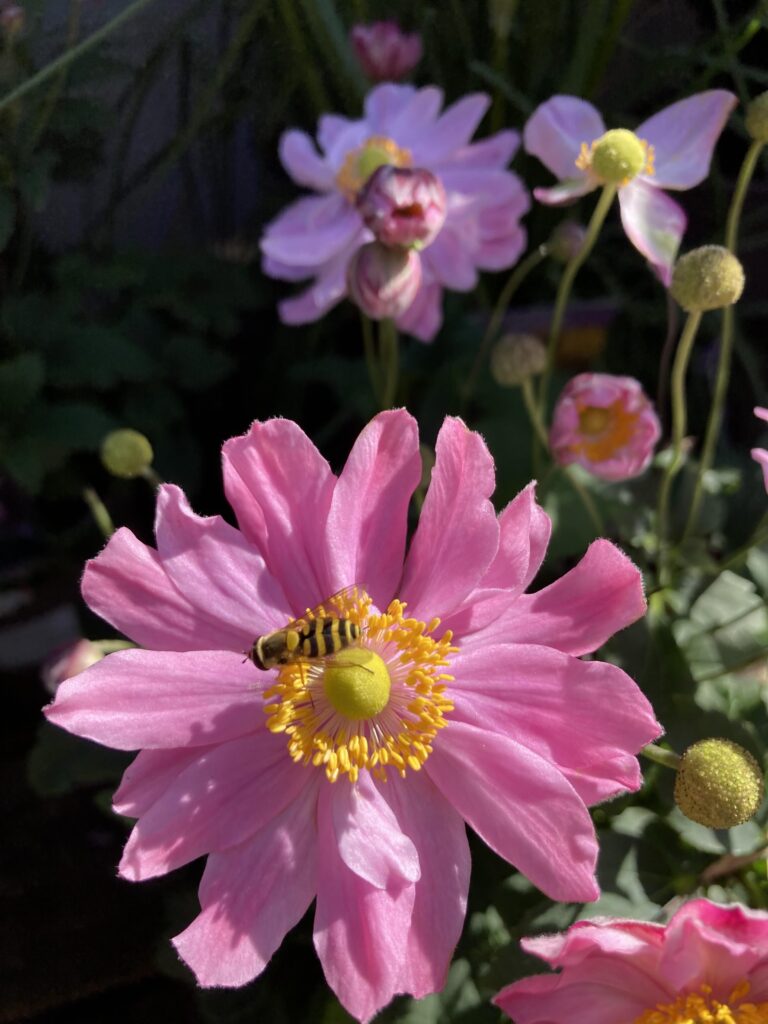
The flowers also last quite well in a vase so are nice for cutting. They also fit well with Prairie-style plantings with verbena, echinacea, grasses and rudbeckias and their simple flowers are valuable for pollinators.
Autumn anemones are available at Knights Garden Centres now.
Jobs for the week
Take hardwood cuttings of cornus and currants
Bring citrus and other tender plants indoors
Harvest winter squash and tidy the veg garden
Reduce the height of quick-growing shrubs like buddleias and roses
Put up bird feeders and keep them topped up