
The genus oxalis contains some lovely plants but also some nasty weeds. Oxalis corniculata is a pernicious weed, introduced to our gardens as an ornamental, that spreads by creeping stems and far-flung seeds. The purple-tinted foliage and bright yellow flowers are certainly pretty but it will quickly cover vast areas of the garden. It is thought to have originated in SE Asia (it is used to cure snake bites in Taiwan) but it has now spread so far and wide. It is thought that it is the third most widespread flowering plant in the world, now found even in Antartica! It is difficult to remove by digging it up, even though it only roots on the surface of the soil and the hairy leaves repel weedkiller. If you let it bloom, the seeds are flung great distances as the upright seedpods twist. It is a curse.
In frost-free areas, but not in the UK, Oxalis pes-caprae spreads in another way. The plant has bulbs and produces masses of tiny bulbils. If you disturb these when digging it up, you spread it even further. Commonly called Bermuda buttercup, it actually comes from South Africa and grows in winter and blooms in spring. It is a serious weed of cultivated soil in frost-free regions. The flowers are pretty and it can be grown in a greenhouse here. Pink-flowered Oxalis floribunda (O. articulata) is commonly grown in our gardens and is easy and reliable but can be tricky to remove should you decide to do so because of the prolific bulbils at the base of the plant.
But not all oxalis are weeds. Oxalis acetosella, the native wood sorrel is a lovely wild flower with delicate white blooms and the typical clover-like leaves. Like all oxalis, the leaves contain oxalic acid, giving them a sharp, lemony taste and if you watch any ‘cheffy’ programme they are bound to tweezer on some oxalis flowers as an edible garnish.
In fact, the oxalis most often used by chefs is Oxalis triangularis, and this is one of the most attractive and useful plants you can grow, especially in the purple-leaved forms. So put your prejudices aside and try this super little plant this year.

You can buy it as dry, catkin-like tubers in spring or as a growing plant now. The plants, in leaf, are usually sold as houseplants. On the windowsill they will make attractive plants with pale pink flowers above the purple, triangular leaflets – each leaf is divided into three parts. Keep them well watered and feed every week or so. If you water all year it can be evergreen but, with poor light levels in winter, it can get straggly so it is best to dry out the plants in winter and then divide and repot the tubers in spring. You will probably find dozens in the pot and be able to plant at least half a dozen pots.
What makes this such a useful plant is that it can also be grown outside in summer too. I use it in patio pots where it thrives in sun or part shade. Although the most common have purple leaves there are actually several variations, some with paler centres to the leaves. And a few have green leaves. I value one, called ‘Irish Mist’ which has pale pink flowers and the foliage is marbled with silver.
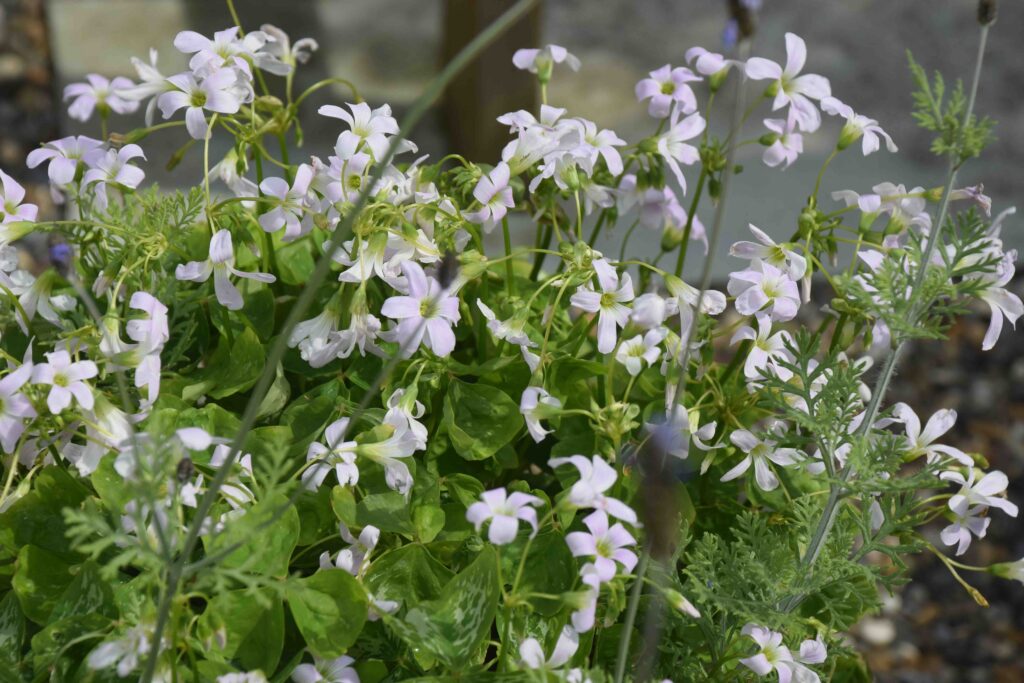
It blooms for months and bees are attracted to the blooms.
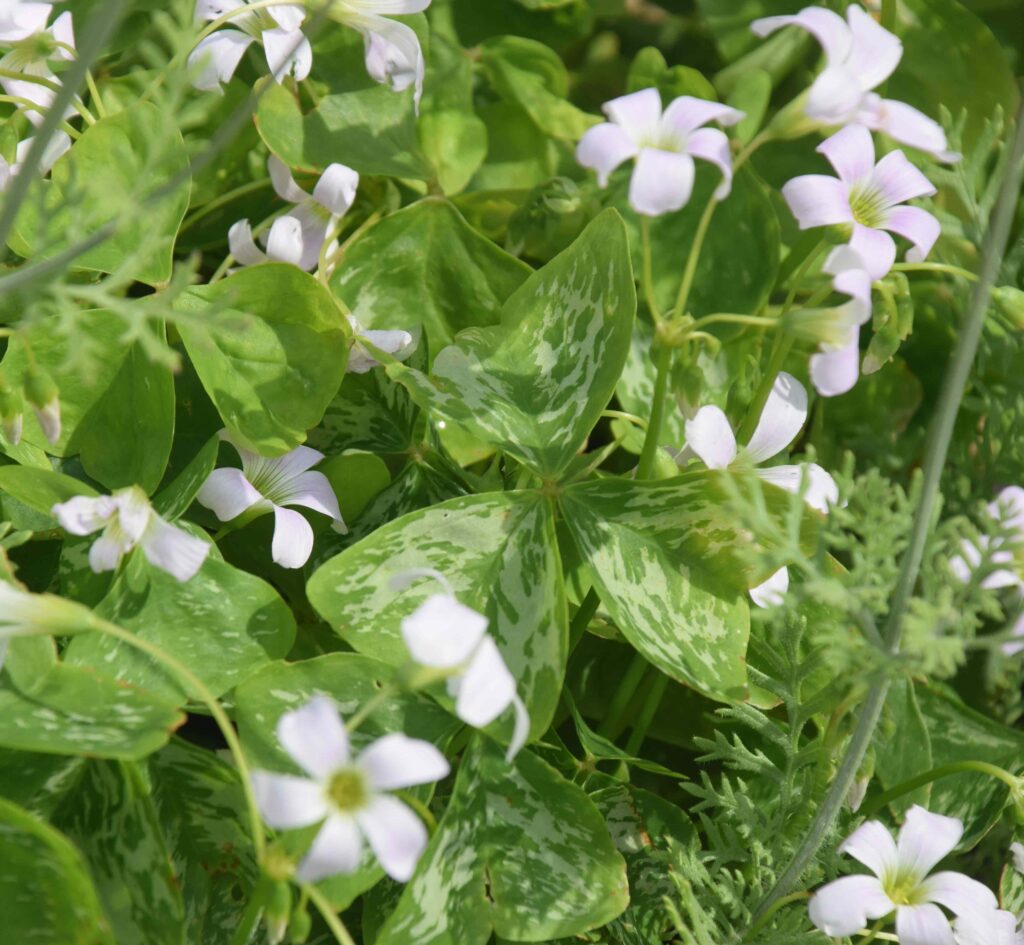
I grow on the young plants and plant them in pots for summer, putting them out in May, when frosts are over. In autumn I dig them up and dry them off as clumps and repot in March, having kept the tubers dry and free of frost in winter.
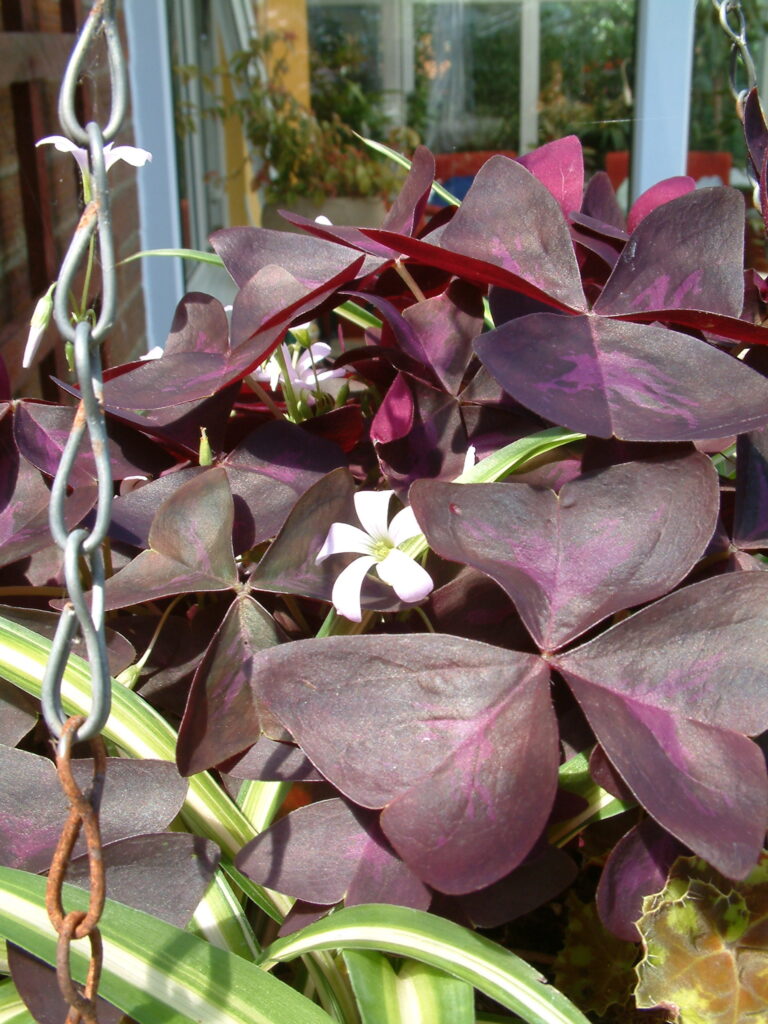
They are so easy to grow that they can be used all round the garden. They are useful to help fill hanging baskets too – with spider plants above. I also use them to edge flower beds in the garden and, unless the winter is harsh, they survive the winter and pop up again the next spring. This is a bit risky and I only do it now because I have so many tubers to experiment with. The purple foliage is attractive all summer and looks great with silver and grey foliage like rosemary and lavender.
If all this sounds too good to be true, there is, of course, one slight problem. Most oxalis are prone to a fungal disease called ‘oxalis rust’ which causes orange spots in the underside of the leaves. Later the leaves die off. It can affect this plant, especially in wet summers (rarely when it is grown as a houseplant). If it does strike, just cut off all the growth and the new leaves should be free from the problem.
If you see this purple-leaved plant for sale at Knights, snap it up! Few plants are easier to grow, so easy to propagate and are so useful for your garden and they are fantastic in patio pots.
Jobs for the week
Be on constant slug watch this month as the new shoots of hostas and delphiniums appear.
This is the time to sow most of your garden vegetables including carrots, lettuce and cabbages
Deadhead daffodils and tulips as soon as the flowers fade but leave the foliage to die back naturally
If you see any sign of blackspot on your roses, be ready to spray with a fungicide to prevent it getting worse
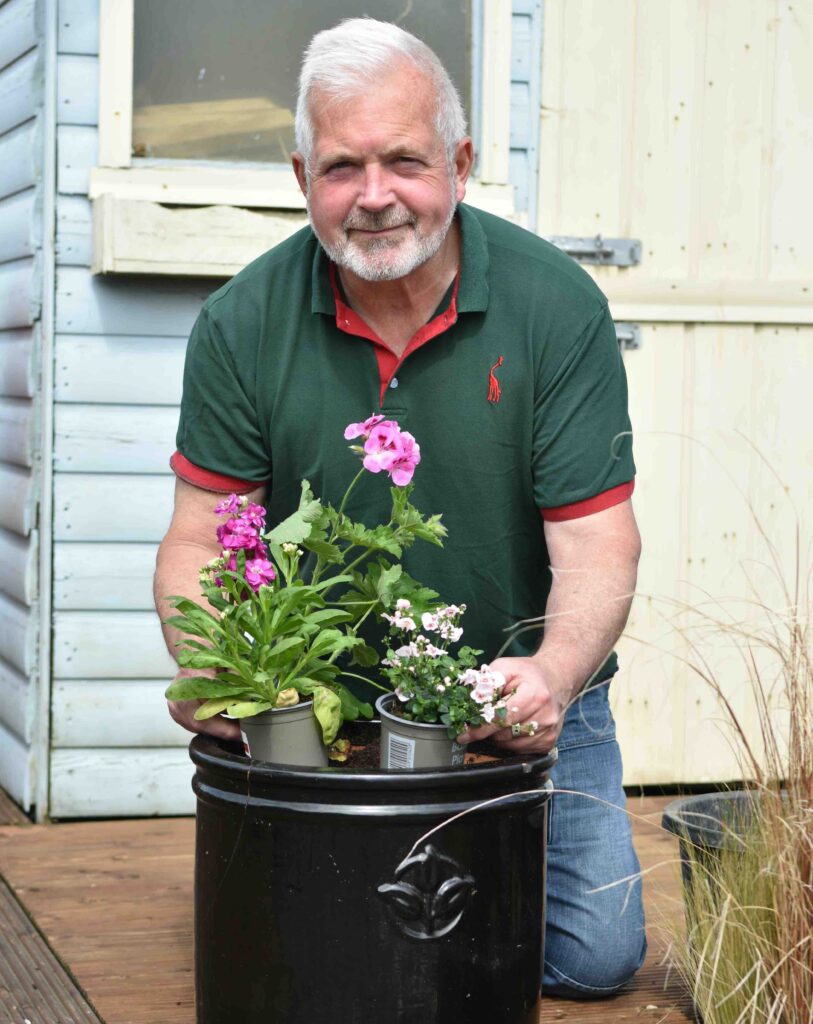
TALKS AT BETCHWORTH AND NAGS HALL
I am delighted to be back to give some talks on May 20th and ay 21st.
I will be talking about growing plants in containers on the patio. In the form of a demonstration I will cover what containers and compost to use, what plants you can grow in pots, how to feed them and how to keep them healthy. And there will be time to answer your own questions. All in an informal experience with tea and cake.
You will need to book and details are HERE.
https://www.knightsgardencentres.com/webshop/events/talks-workshops