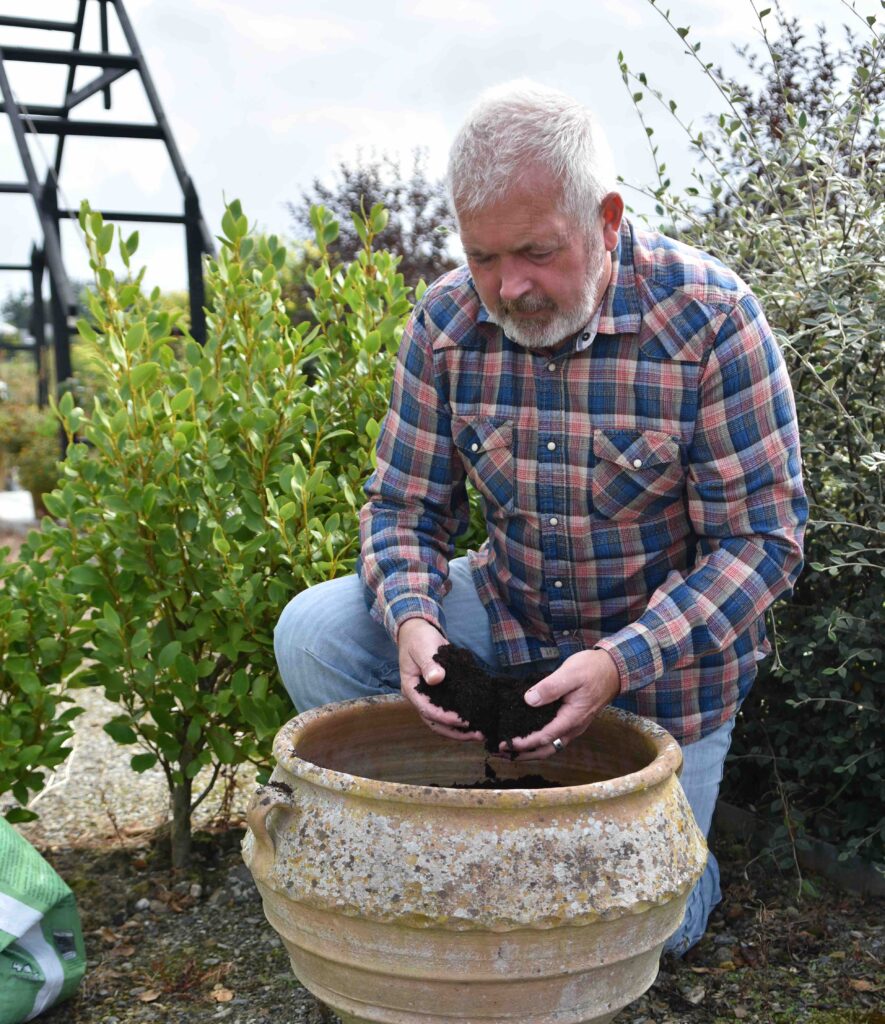
A few weeks ago I met some of you at Knights, talking about growing plants in containers. At the time I explained what compost to use in your patio pots. For the benefit of those not able to attend, this week I will cover some of the most important points because using the right compost is key to the best results from your plant in pots.
But first I need to make a distinction between bags of compost you will buy to fill your pots or seed trays and the stuff you make in your compost bin. In theory, your ‘garden compost’ could be used in patio pots but in practice you should not do this. Few of use manage to make the lovely crumbly stuff TV gardeners remove from their compost bins. We may not shred the woody material or mix it enough times to create the heat that will kill weeds and disease. We can’t be sure what nutrients are in the compost. A plant in a pot relies on us for all its water and nutrients so we have to carefully control what is in the compost. So I advise you to use your garden compost as a mulch and soil conditioner in the garden and to fill your pots with ‘bagged’ potting compost.
A little history
Before the 1930s every gardener had their own secret potting mix with various proportions of loam (decomposed turf), leaf mould, grit, well-rotted manure (often cow) and other strange ingredients. Then scientists at the John Innes Horticultural Institution in Norwich developed a compost that was standardised and suited a wide range of plants. Basically it comprises 7 parts sterilised loam (usually by steam), 3 parts peat and 2 parts sand (all by volume). To this is added various quantities of lime and fertiliser: least in John Innes No 1 and most in John Innes No 3. Note that this is a formula and not a ‘brand’ so various manufacturers make this compost.
With the recent reduction or stopping of peat in composts, modern John Innes composts usually now contain coir or a peat alternative.
The advantage of John Innes composts was that they were standardised and you knew what was in the bag and results were controlled. Then peat composts were developed which were also standardised. Peat is organic and acid with virtually no nutrients. Because of this it was easy to control feeding and plant growth. For decades peat composts were popular because they were easy to use, cheap, clean and light. Most multipurpose composts were based on peat.
The situation today.
As the use of peat composts has become less acceptable, for various reasons, the bags you buy now will be made from a variety of ‘peat alternatives’. Some are more effective than others. Each kind drains differently, contains different nutrients and suits some plants better than others. I suggest that you avoid the cheapest and if you find one that works for you, stick with it. Knights have a wide range of kinds.
In theory John Innes composts are a safe bet but because they are based on loam (soil) but that can vary in quality, and (I find) they are not quite as good as they used to be.
So what should you use for your plants?
Seeds and seedlings
John Innes compost (even the ‘Seed’ compost) can be heavy if the loam is ‘clay’. Use the best quality multipurpose you can get instead (except for perennials and shrub seeds sown in autumn). You will only be using small quantities so buy the best.
Young plants
For growing on seedlings a good multipurpose is best
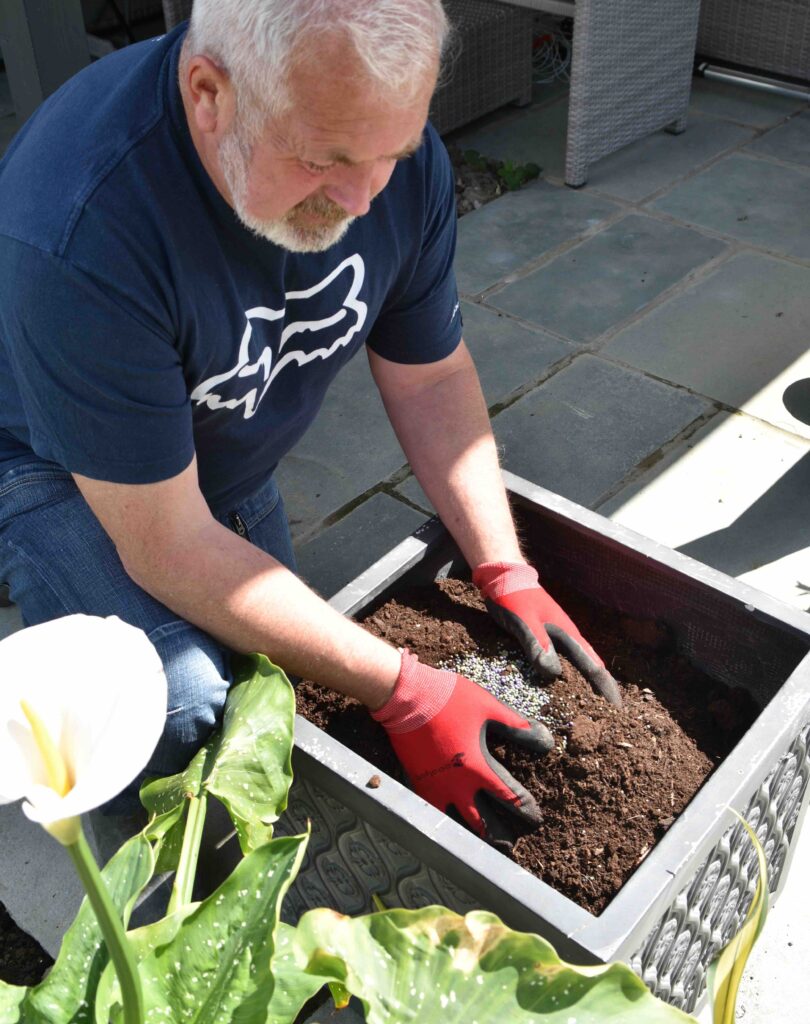
Summer flowers in patio pots
Multipurpose composts deteriorate in the pots as the compost decomposes. This makes it a bad choice for plants that will be in the pot for more than a year. But they are fine for bedding plants for summer.
Trees and shrubs in pots
You must use John Innes No 3 compost for these unless they are lime-haters (ericaceous)
Tomatoes and veg in pots
Multipurpose compost is fine for these.
There is no reason why you can’t mix some John Innes compost with your multipurpose compost – in fact some multipurpose composts boast that they ‘contain John Innes compost’. The loam in the John Innes compost contains nutrients and helps to stabilise the compost. I usually add 10% to 20% John Innes compost to multipurpose when potting summer plants.