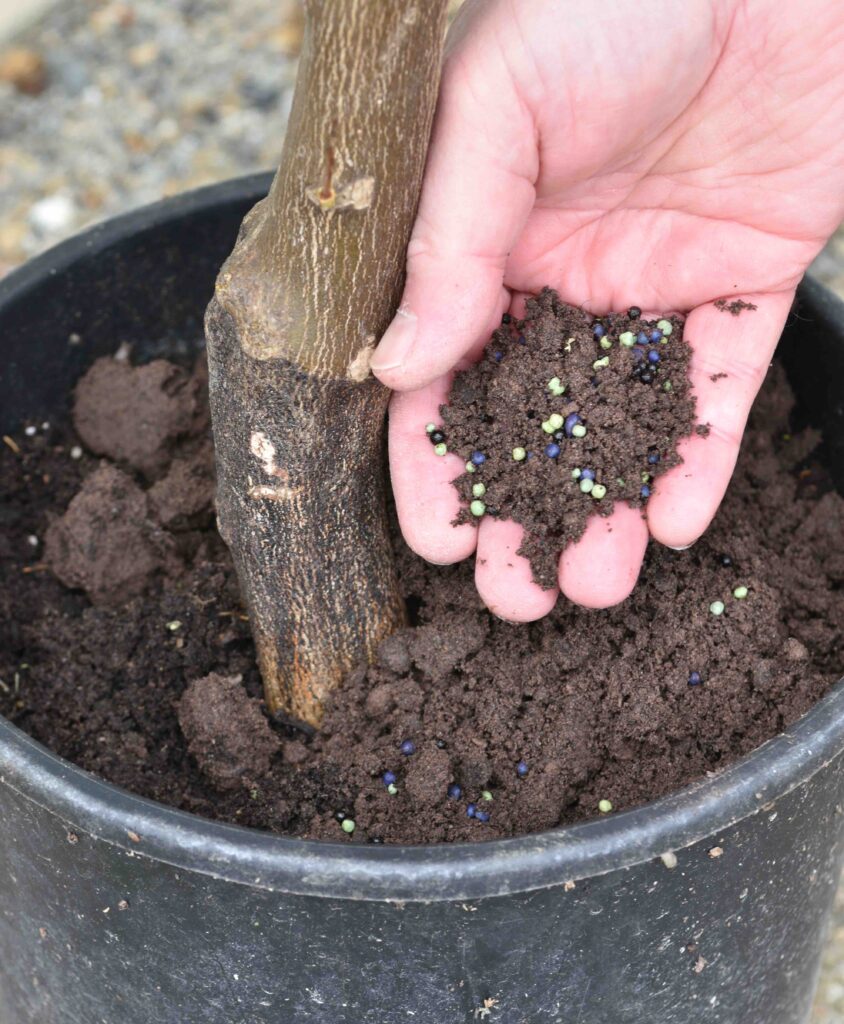
Continuing this short series of posts on some garden basics, after covering composts last week I am turning my attention to feeding plants this week. Feeding can seem rather complicated and there is a bewildering array of fertilisers for sale. But we can easily deal with the basics.
Fertilisers can be divided into granular types which include fish, blood and bone, rose fertiliser, and chicken pellets, which slowly release nutrients when wet and the liquid fertilisers which are either soluble powders or liquids which are diluted and that act quickly.
Granular fertilisers act slowly and you are never sure when the nutrients are being released or when they run out – they should last several months. Therefore they are best for garden borders and soil where they add extra nutrients to the soil which should already contain nutrients. They only release their nutrients when they are wet.
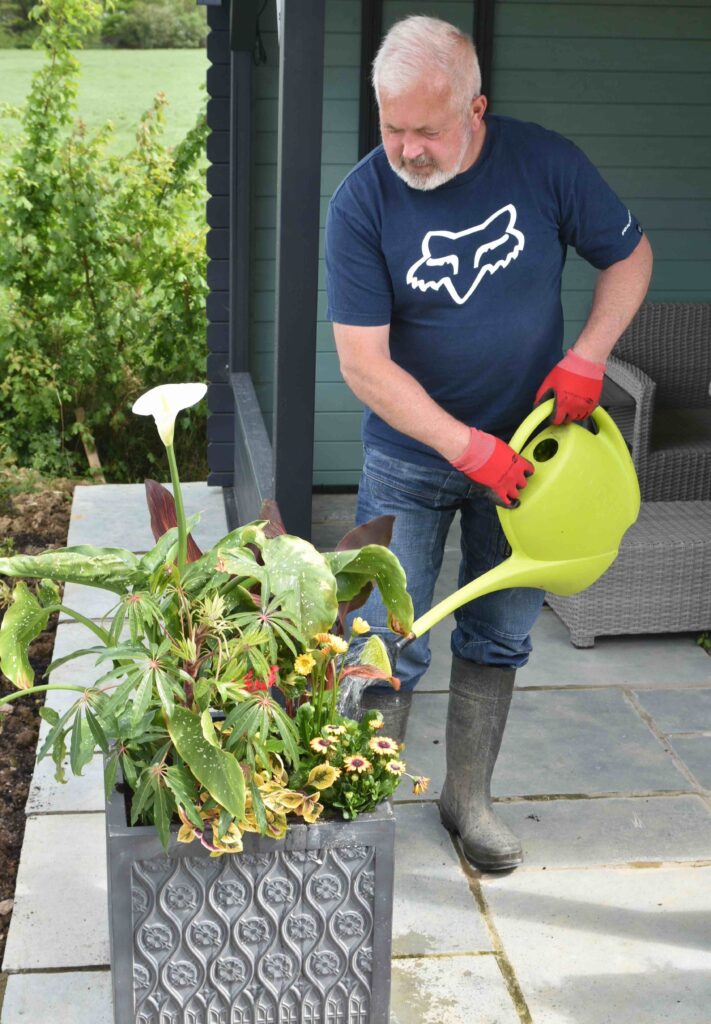
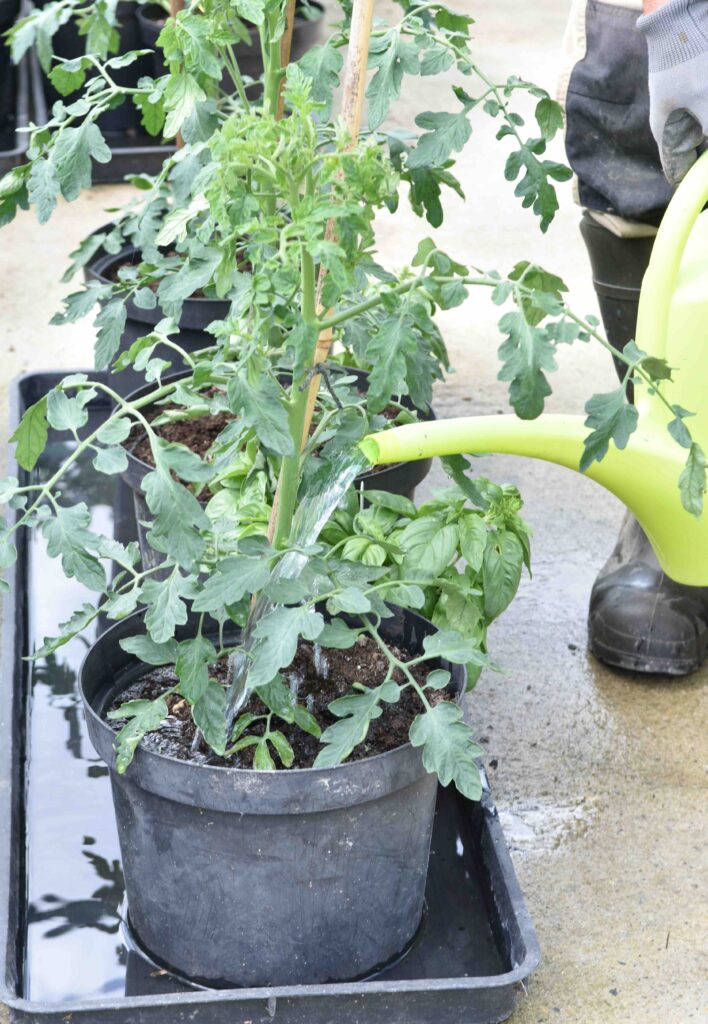
Liquid fertilisers are more controllable so they are ideal for pots where you need to be sure you are supplying all the nutrients the plants need. Liquid fertilisers supply the plants with nutrients in a very dilute form that is absorbed almost immediately but they do not last long so you should apply them frequently when the plants are growing, usually once a week.
Organic or not?
Organic fertilisers usually act more slowly than artificial fertilisers. The complex organic compounds have to be broken down by soil organisms into simple chemicals the plants can absorb. For this reason the plants may not necessarily benefit immediately from any advantage of an organic fertiliser. BUT. Organic fertilisers will contain a wide range of other nutrients the plants will benefit from AND an organic fertiliser will boost the microbiome in your soil. Organic fertilisers, in my opinion, have limited advantages when applied to plants growing in pots but they are advantageous when applied to the soil.
The big 3
Every bottle, pack or box of fertiliser must state, by law, the proportions of the three main plant nutrients. For example: Growmore is N:7, P:7, K:7. This means it has equal amounts of Nitrogen (N), Phosphorus (P) and Potassium (K).
Nitrogen is needed by plants for strong leaf and stem growth (it is a component of proteins). Phosphorus is needed for healthy root growth. Potassium is required to produce flowers and fruits. Therefore a fertiliser high in nitrogen will encourage leaf growth – such as most spring lawn fertilisers. Fertilisers for flowers and fruit (such as tomatoes) are high in potassium.
Seaweed
If the ‘fertiliser’ does not state the proportion of these three then it is not a fertiliser. This includes ‘growth stimulants’ and some seaweed extracts although there are also fertilisers with ‘added seaweed’. Seaweed itself does not contain much of the main plant nutrients but it does contain trace elements and other beneficial chemicals.
Controlled-release
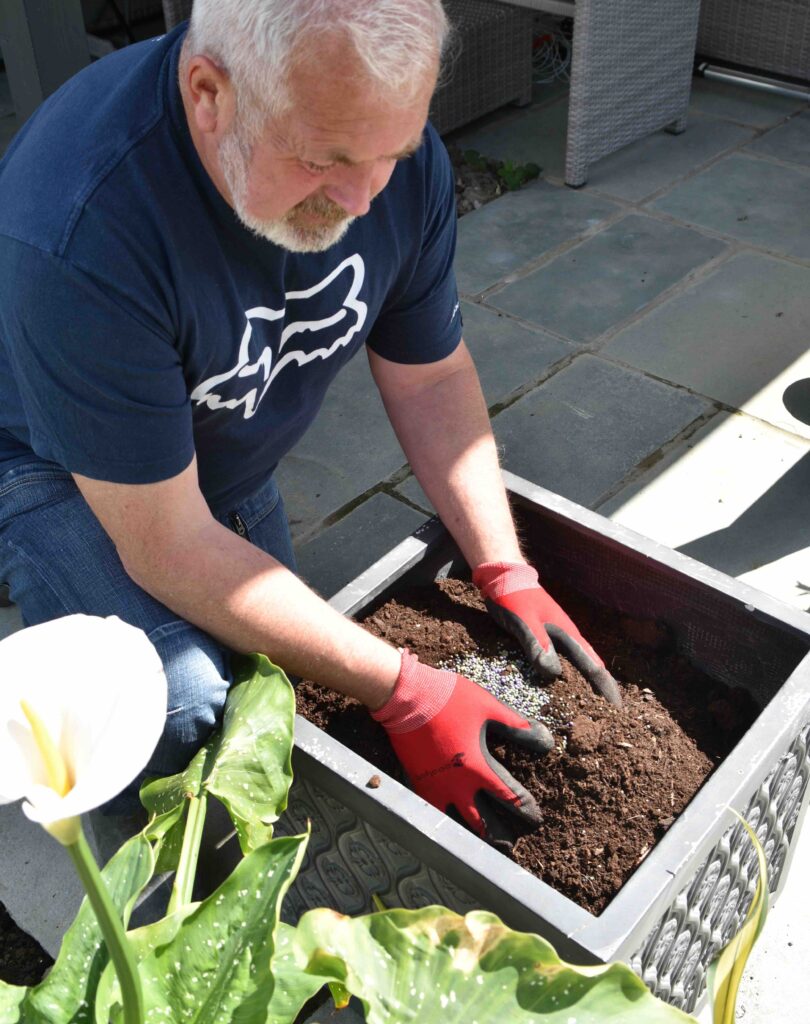
In addition to these you can buy controlled-release fertilisers, often just referred to as ‘slow release’ or ‘season long’. These are fertiliser coated in a resin that slowly releases the nutrients to the plants when the soil is moist and warm. They tend not to leach into the soil when watered. Add them to the pot when you plant and you will not need to feed for at least two months. BUT, remember that as the plants get bigger they will need more nutrients so I always start to give liquid feed to my pots (planted in late May) from August onwards.
Little and often
Plants should be fed the same way as us – little and often. You must never mix up the liquid fertiliser ‘stronger’ than on the pack. If you do you can damage the roots. AI (which is not to be trusted) has some lovely tips showing how you can revive plants by pouring sugar water on the soil. DON”T – it will kill your plants. The sugar molecule is too large to be absorbed by plant roots.
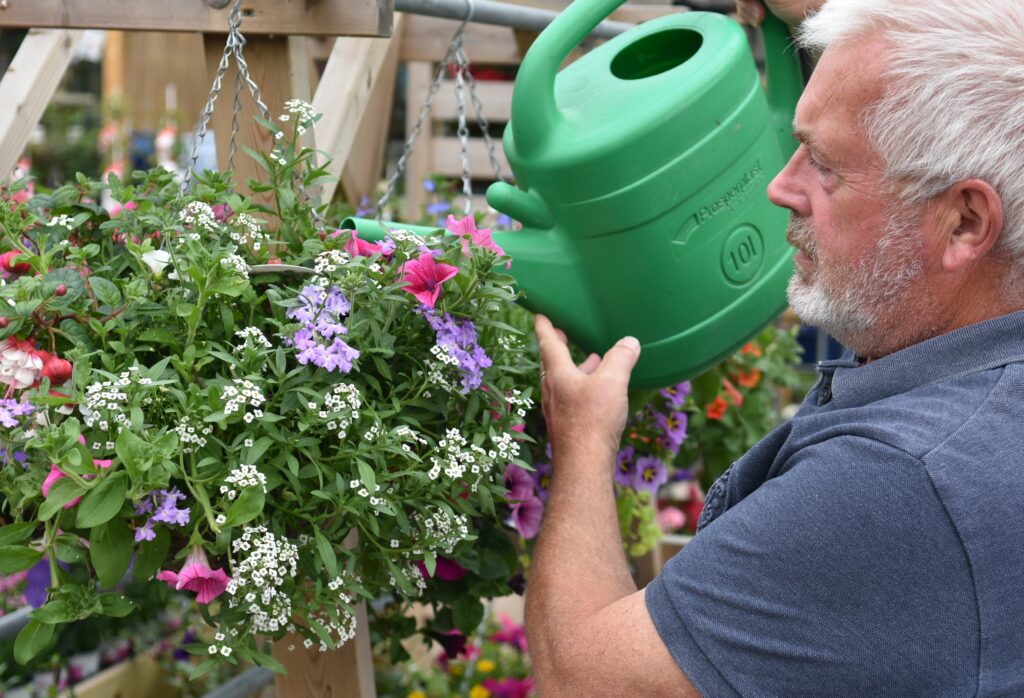
Apply fertiliser regularly for best results, perhaps once a week. And only feed when the plants are actively growing – there is no point feeding in winter when plants are not growing! And only apply liquid fertilisers to damp soil – not to dry soil.