Well that was quite a week. I have been moaning about a cool, sunless growing season and then spent the last week praying for cloud cover. It has been as tough for our plants as for us and around the garden some plants are showing signs of distress; hostas with scorched leaves and struggling bedding plants. Birds seemed to abandon the garden and even bees were notably absent. Only butterflies seemed to relish the heat. It seems to have pushed forward the flowering of many plants; my annual asters and rudbeckias are much more advanced than usual.
The biggest problem has been keeping the greenhouse and polytunnel cool so I have been splashing water on the floor to lower temperatures through evaporation. And, of course, all the patio pots have needed frequent watering.
And that brings us on to ‘deadheading’. Everywhere you are exhorted to deadhead your plants all around the garden. What is deadheading and why is it important? Or is it even important?
Deadheading is the removal of faded flowers from your plants. There are two main reasons to do it: to remove the dead flower, along with the potential seedpod so that plants do not make seeds, and to remove the old flowers so plants look tidy.
Preventing seed formation is important because it can result in the plant making more flowers – after all the main aim of a plant is to make seeds, not make our gardens lovely! If we remove old flowers and seedpods (while they are small) many plants will respond by making more flower buds.
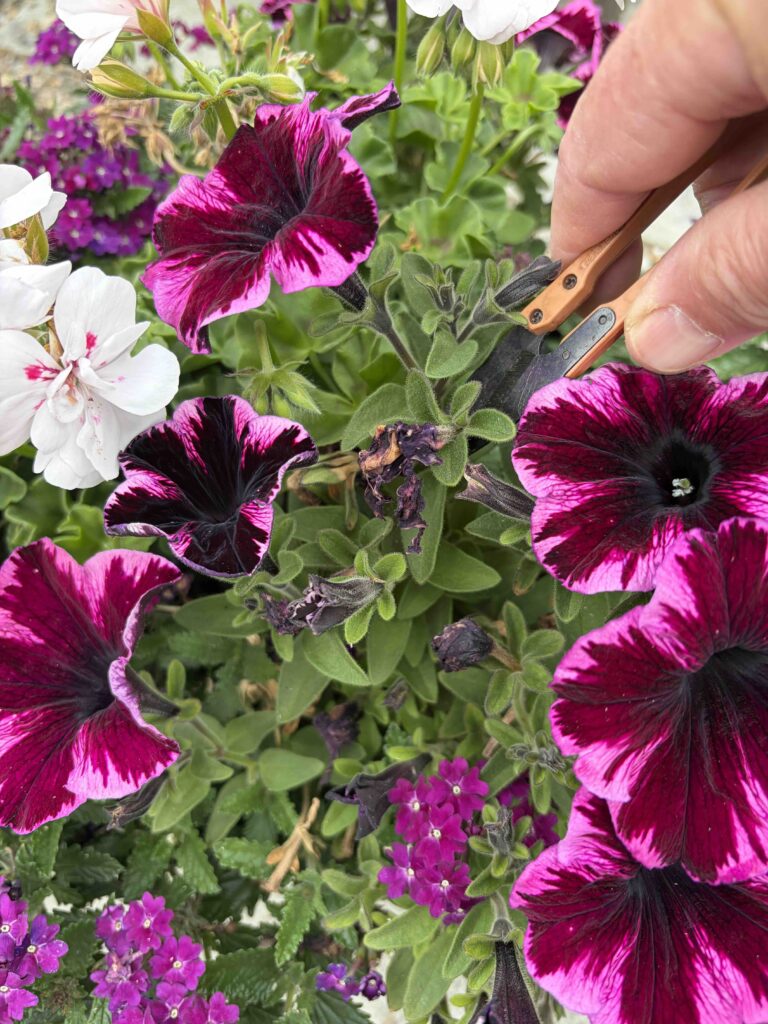
But things are not that simple in practice. When I started gardening all petunias were grown from seed and deadheading was essential. Now the majority of those you buy, like the one above, are grown from cuttings and do not set much seed (so the plant breeders can make more money and you can’t save your own seeds) and deadheading is not really essential. But old petunia flowers die disgracefully and deadheading, to keep your pots and baskets neat, is a good plan.
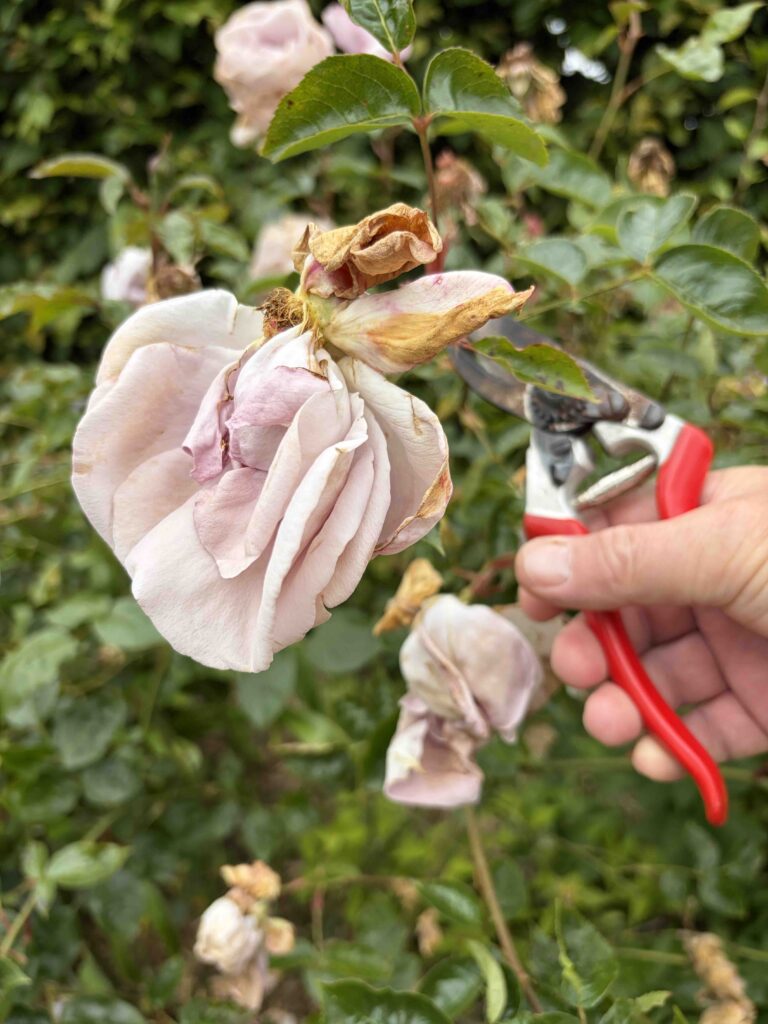
Roses need to be deadheaded. Cut off the faded flowers as the petals drop. Prune them back to a full-sized leaf, just above a leaf – do not just snap off the old flowers. This will then encourage more blooms and prevent rose ‘hips’ forming. It also keeps plants compact, prevents disease and makes the plants look good. As the first flowers fade and are removed it is time to feed the bushes to encourage the next flush of flowers.
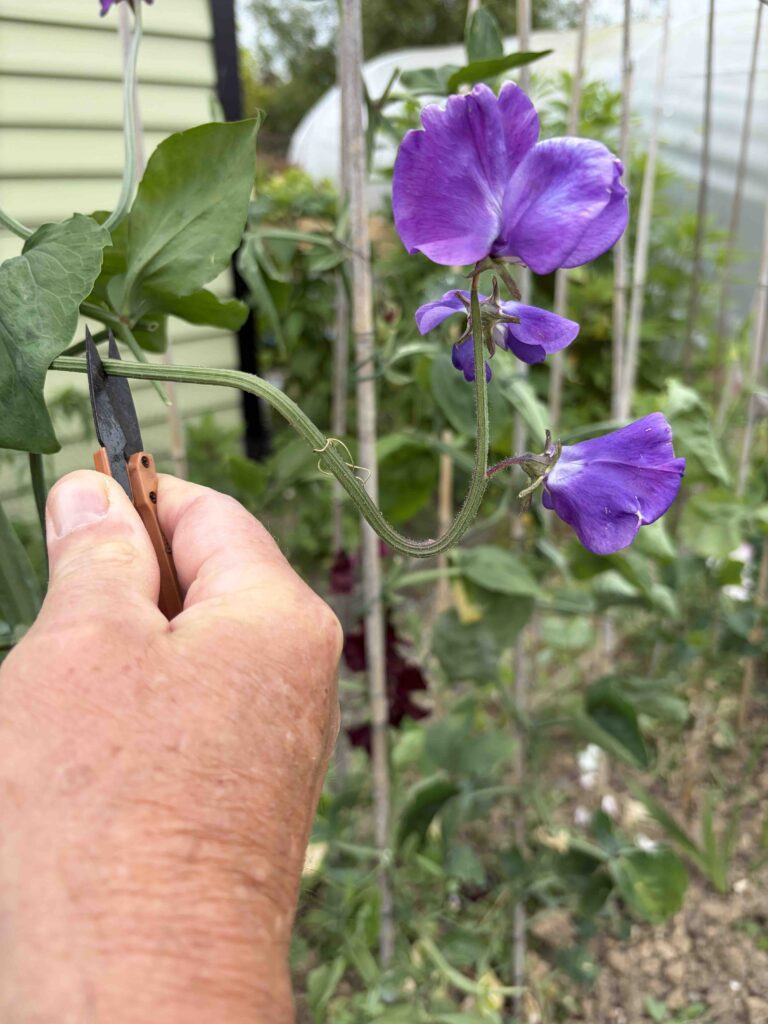
Few plants respond more dramatically to deadheading than sweet peas. If you let the petals drop and seed pods form the plants lose vigour and flowering is reduced – the plant has done its work! So don’t feel guilty about picking flowers for the home and go out and work over the plants every few days and cut off the faded blooms.
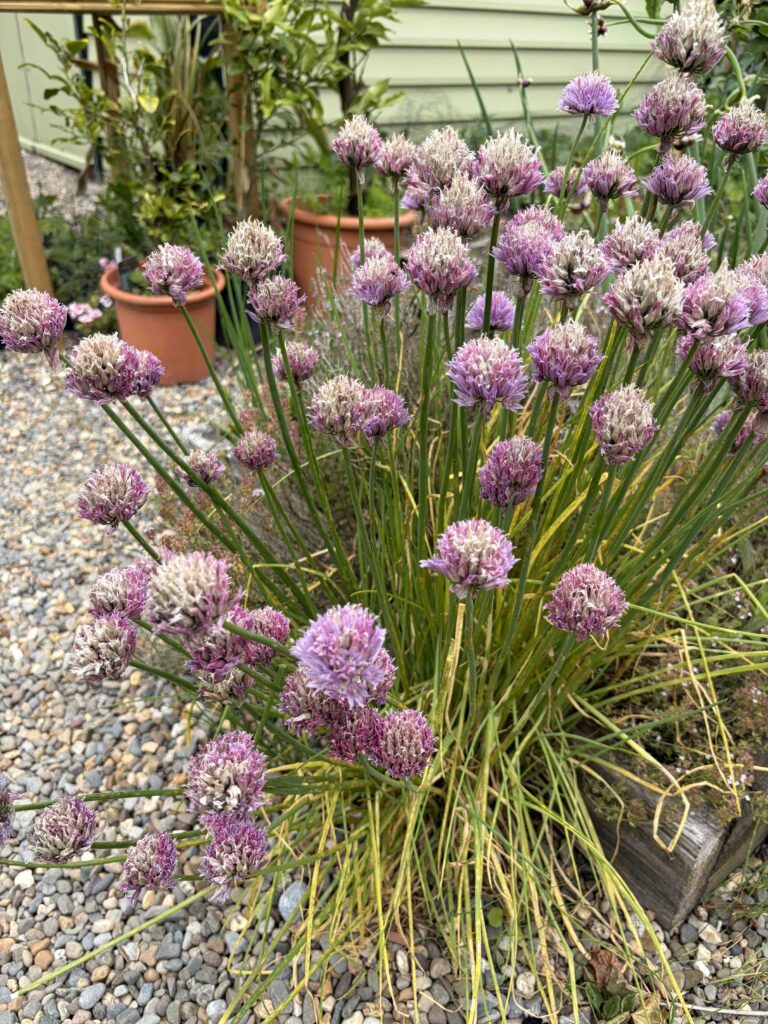
When it comes to herbs, lavender and sage needs to be cut back after flowering, not so much to prevent seed formation but to tidy the plants. Chives have bloomed now and they are looking scruffy. My chives also have onion rust so there is nothing to eat. The stems of flower stems are too tough to eat and if left, the flowers will spread lots of seeds around – my plant above is itself a seedling growing in the path. So shear the plants off just above the ground. It will prevent seeds spreading everywhere and encourage new, tender, growth.
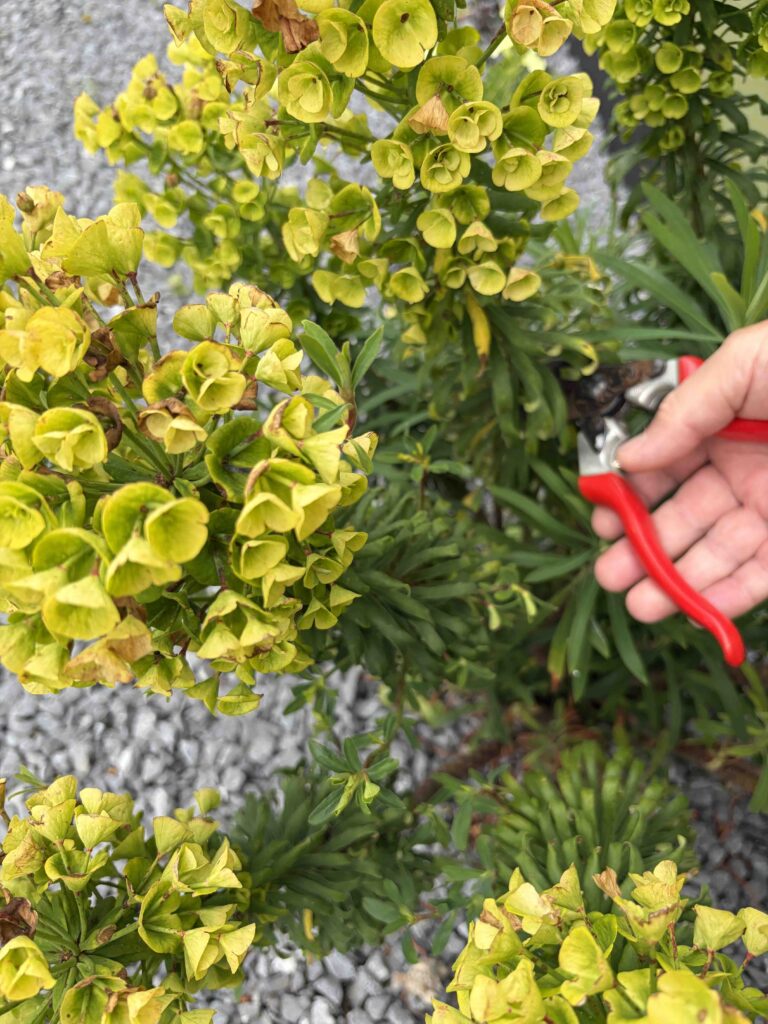
Shrubby euphorbias (E. characias) should have their flower stems cut off at the base. By now these are starting to turn brown and are often covered in aphids. Cut them out so that the new shoots from the base have room to grow – they will flower next spring. Take care not to get the sap into cuts or on sensitive skin – wear gloves.
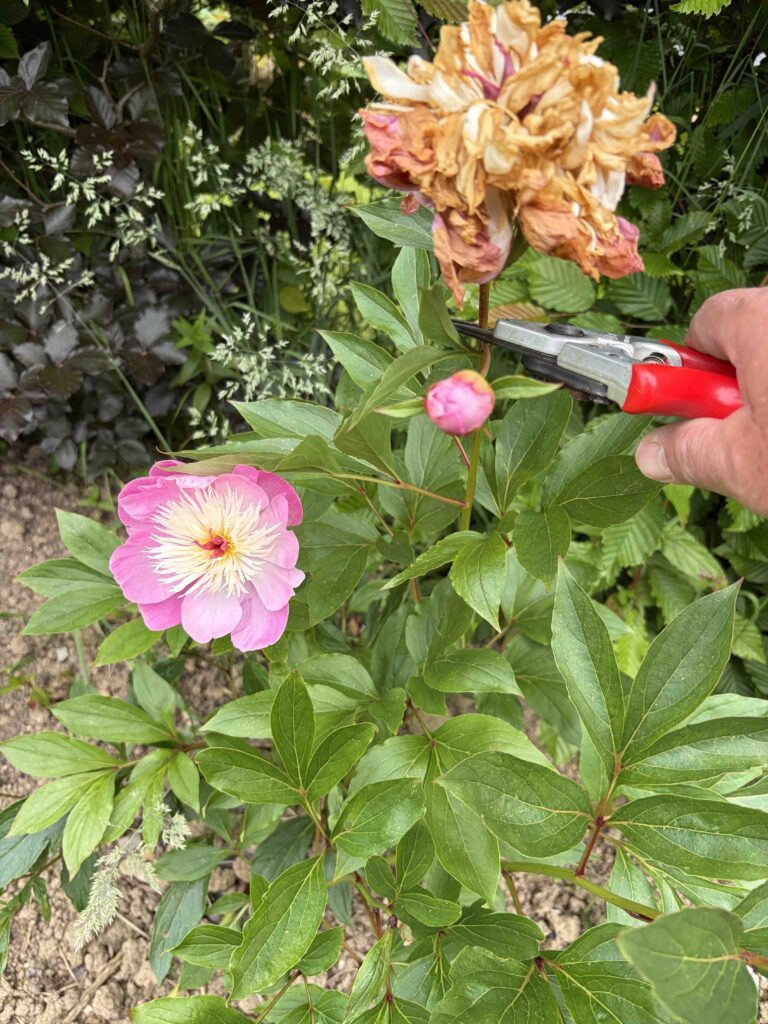
It is best to deadhead peonies. But this is just to tidy the plants – you will not get extra flowers – buds are all present at the moment. Taking off the dead flowers will make the plants look more tidy and will allow any later buds to open unencumbered by dead petals. Cut back to just above the top leaf – leaves are needed to nourish the plant. Deadheading will prevent unwanted seed production but most peonies in the garden will not make many seeds but the developing pods can be heavy and unsightly * – removing them will keep the plants neat and upright.
*I appreciate that some species peonies have attractive seed heads.
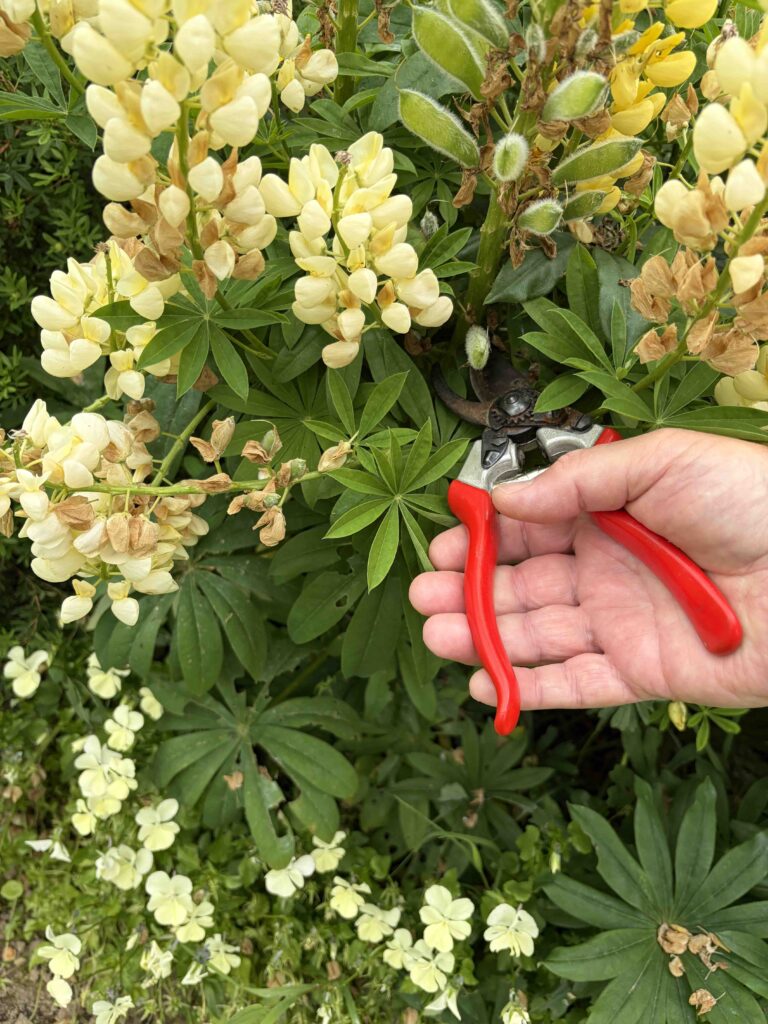
Lupins must have their spent flower stems removed. Otherwise they set masses of unwanted seeds and plants quickly look dreadful. You can deadhead them in two stages. Remove the first, main stems as the last flowers, at the top, fade and then you will get a second flush of smaller stems. When these fade, cut the plants down near the base. This will encourage a burst of new, neat growth and, if you are lucky, a few more blooms.
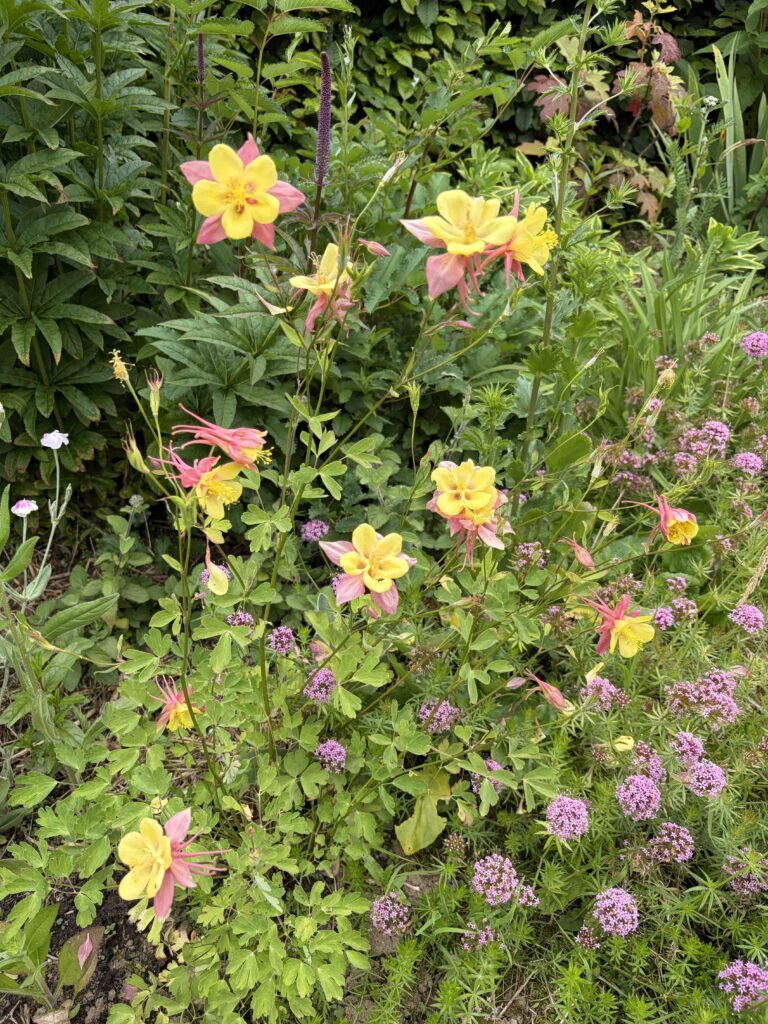
It is not always practical to deadhead everything in the garden – there are just not enough hours in the day. You may want some plants to set seed – like the aquilegias above. Removing individual flowers as they fade is not practical and it will not lead to more flowers being produced. So let them seed so you have lots of free plants and cut them back later.