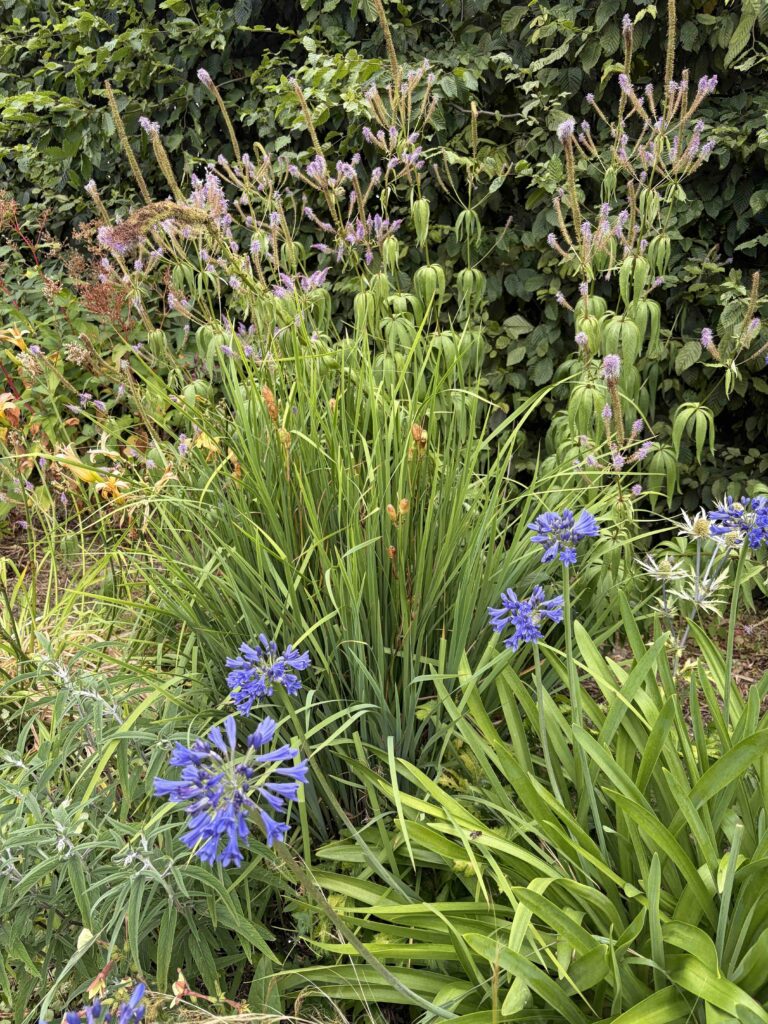
How is your garden looking? I am afraid that mine is suffering from the heat and lack of water. I have watered all I can, with an emphasis on edible crops and new plantings but even established shrubs are wilting and every day another one looks as if it is past the point of no return. I think there will be a lot of us buying replacements this autumn so I hope Knights get in plenty of stock! Remember that, although we are used to buying plants whenever we want, autumn is the best time to plant shrubs and herbaceous plants because it means the roots will be moist for many months without us needing to water them – I hope. So (and Knights won’t thank me for saying this) don’t rush and buy and plant replacements now – it will be too difficult to keep them alive. Wait till autumn when the soil is moist. Make a list, treat yourself to some plants for containers and a coffee or some new secateurs. But don’t plant a new, replacement rhododendron until it has rained, a lot.
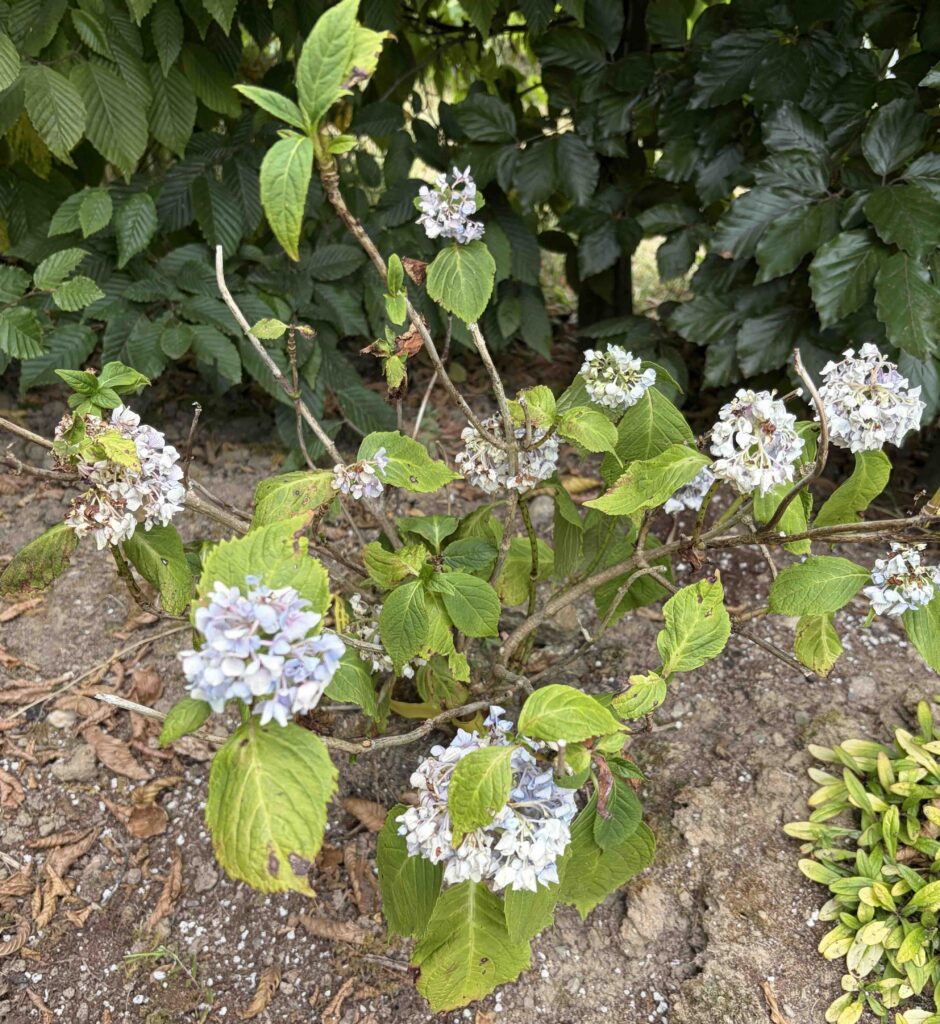
In my garden so many plants are looking sad and wilting. They will survive but their flowers were curtailed and many things bloomed very early. For some reason my garden is totally unsuitable for hydrangeas and although there are perfect specimens down the road they struggle here. So I made a bed especially for them and this year, now they have been in for two years, I put on hydrangea colourant so they would be a good blue. But despite drenching them with buckets of water they are very sad. One is dead and the best is – well – embarrassing. But it IS blue.
Of course, some things have liked the heat. I grew a lot of ‘everlasting flowers’ this year, especially helichrysum (bracteantha) and statice (limonium). The helichrysum have needed watering but they are producing lots of flowers. To dry them you must pick them before they are fully open because they continue to open as they dehydrate, but I leave plenty for the butterflies which adore the golden centres.
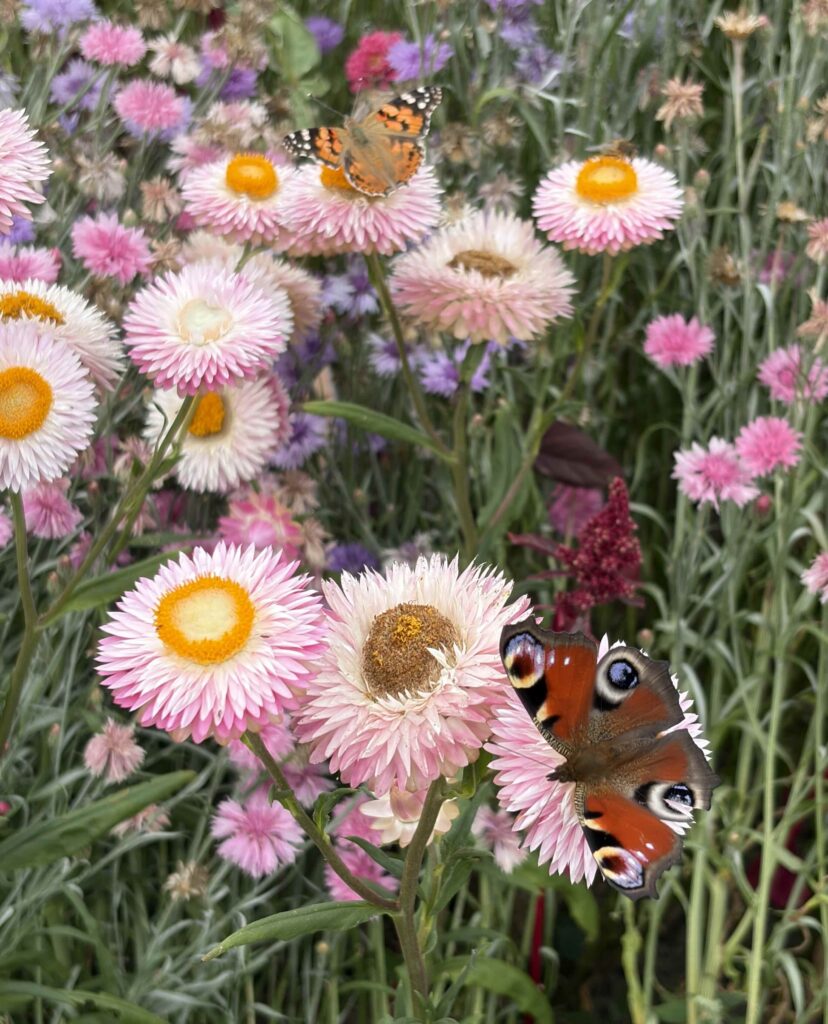
Helichrysum are easy to grow from seed, sown in late March in a greenhouse or on the windowsill.
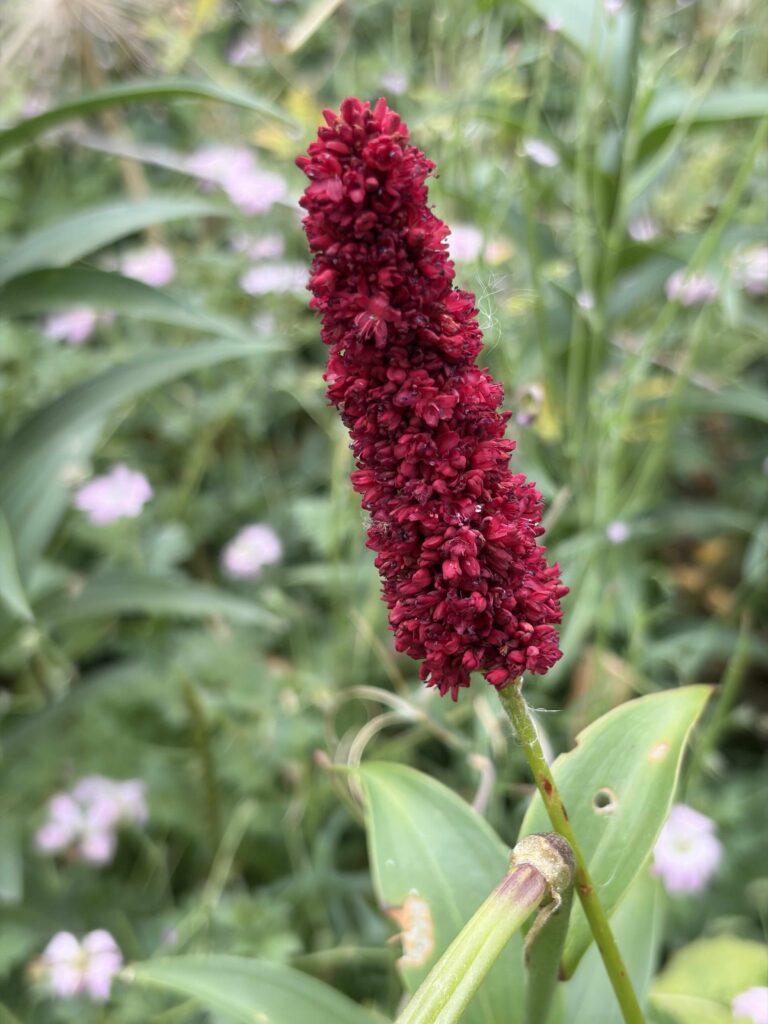
But onto persicaria. Specifically Persicaria amplexicaulis. I know some gardeners who will not allow any persicaras (also known as polygonum) into their borders and it is true that some are a bit invasive. In fact Persicaria amplexicaulis is second cousin to Japanese knotweed! But every family has its black sheep and that doesn’t mean the rest are bad!
So put aside any prejudice please. This persicaria is a clump-forming hardy perennial. It has thick, stocky rhizomes and narrow, dock-like leaves (it is distantly related to dock). It does not spread into thickets but slowly expands into a compact clump. I have about a dozen kinds and none are badly behaved.
What makes it so valuable is that the plants tolerate wet, heavy clays and also drought. My garden is wet in winter and, like you, has suffered from a hot, dry summer with no rain for more than a month. I confess that the plants do look water-stressed but they are still upright and covered in flowers.
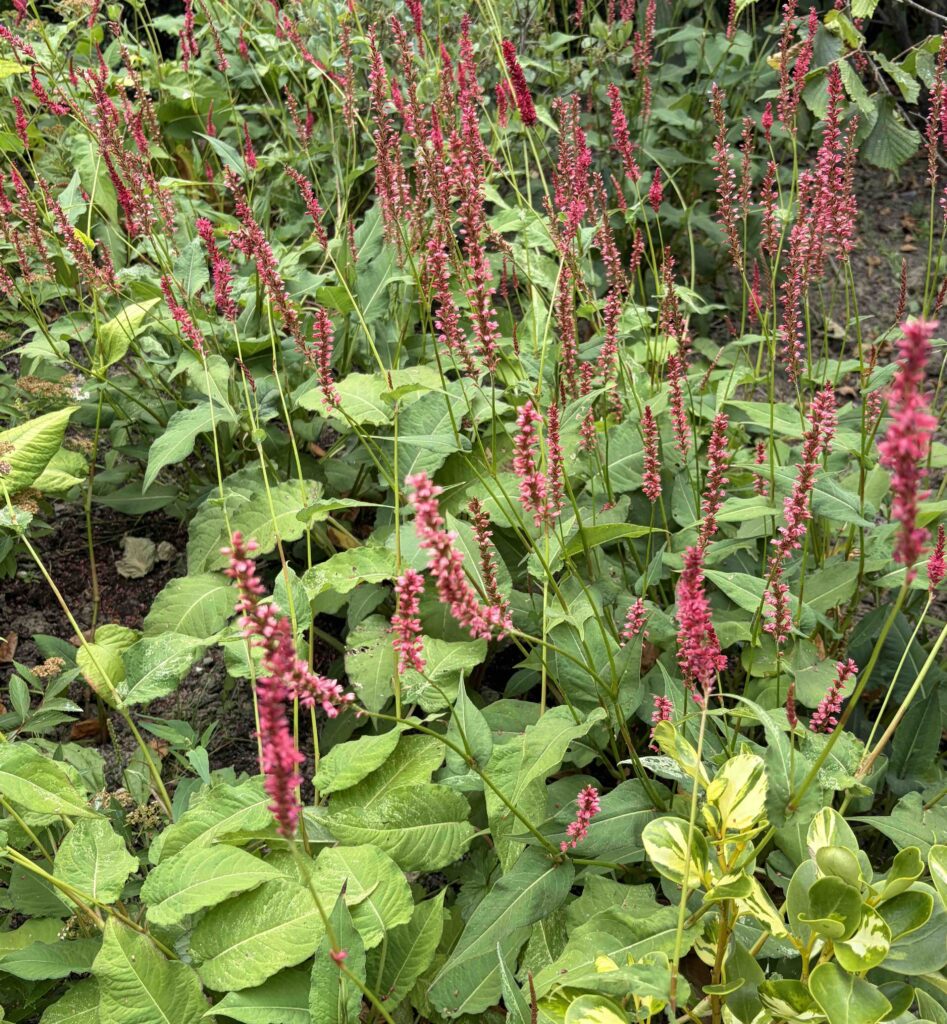
Now the flowers are small – in fact tiny. But they are held high above the leaves on spikes that keep on producing flowers for months. They are a bit late starting growth in spring and they usually do not flower till July but then they keep on blooming till the hard frosts of autumn. Better still, they do not need staking and are usually bushy and upright. They also seem resistant to slugs and snails. In fact I have never even seen aphids on them. So they are easy to grow and don’t seem to get any pests or diseases. They will grow in sun or part shade.
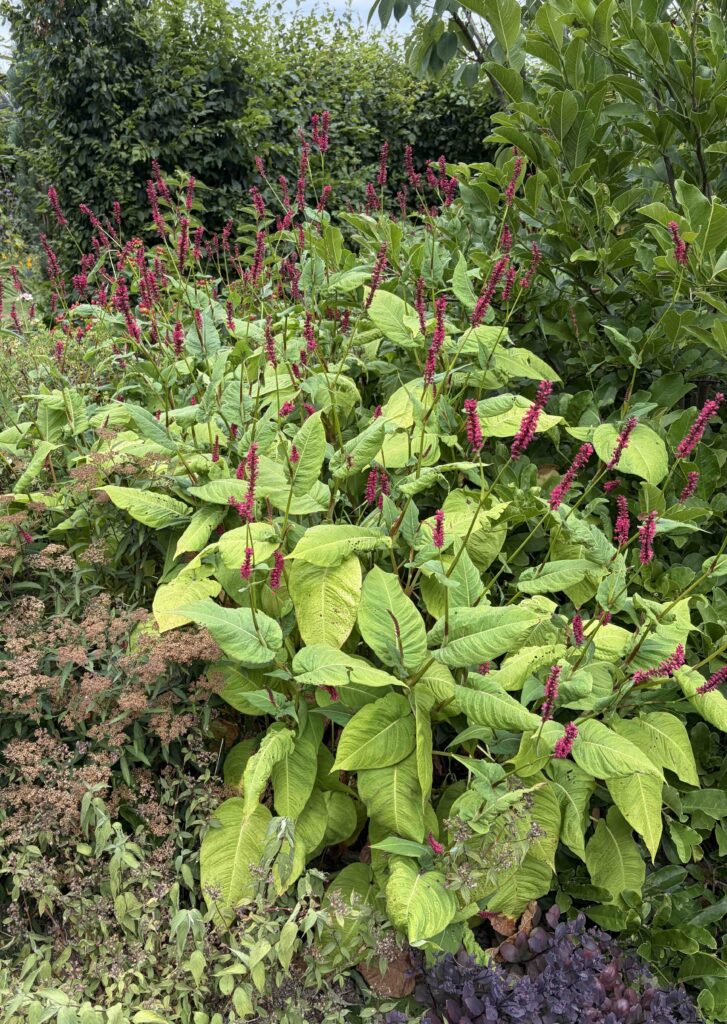
Even better, their dense foliage suppresses weeds and makes good ground cover. There is not a huge difference between the many varieties and flowers are usually crimson, dark red, pink or white. But flower size varies and there are a couple with yellow foliage. There is one variegated kind ‘Eastfield Variegated’, which I have, but it is not that distinctive really.
‘OrangeField’ is my favourite. The flowers are burnt orange and the plants bloom earlier and for longer than most. But all are great plants and I would suggest you try them if you want an easy, reliable, long-flowering hardy plant that really can cope with all the weather can throw that them, and increasingly variable climate.