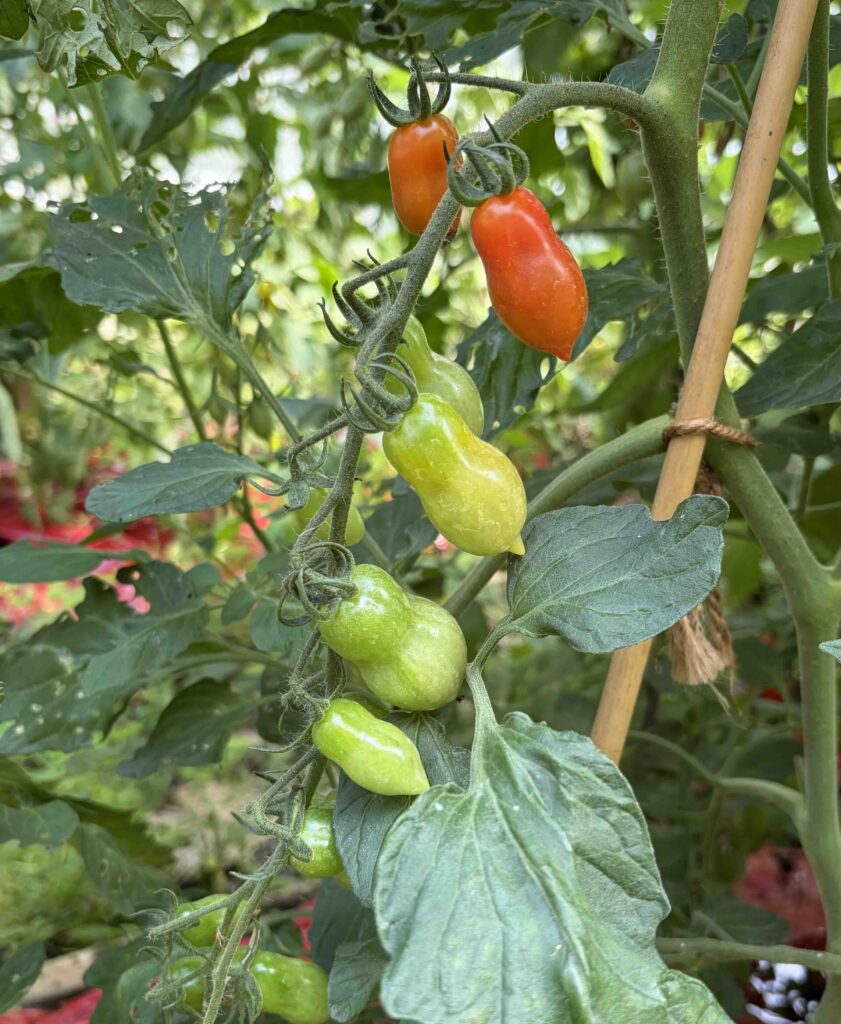
How are your tomatoes doing this year? Whether you have a glasshouse packed with plants or just a few on the patio, most gardeners grow a few tomatoes. Nothing beats the flavour of homegrown tomatoes, picked ripe from the plants and for the next few months there wan’t be many meals in our house that don’t include at least a few tomatoes (and courgettes of course). This is how I got on this year, so far.
I have about 40 plants in total. I grow some tomatoes in pots in the greenhouse and the rest are in beds in the polytunnel. There are advantages to both methods. If you grow in pots or growing bags you can be sure (if you use multipurpose compost) there are no soil diseases to affect your plants. There is the extra cost of the compost (or growing bags), of course, and you must feed and water the plants regularly.
In the heat of this summer the biggest problem has been to keep tomatoes well watered. I was recently asked about watering because someone had seen on TV that you should only water tomatoes twice a week. I am afraid this is nonsense. While there is evidence that if plants are a bit stressed the fruits will taste better than tomatoes that are liberally watered, you must never allow tomato plants to dry out to the stage where they wilt. This is not likely if the plants are grown in the soil but it will happen in pots. Some people prefer to grow plants in the ‘soil’ rather than in pots, thinking that the flavour is better. It does make some sense that if the plants are in ‘natural soil’ there are more varied nutrients and that may affect flavour but I think that ripening on the plant and choice of variety is probably more important.
But, allowing plants to dry out will damage the plants and cause flowers to drop and, most importantly, it will cause blossom-end rot.
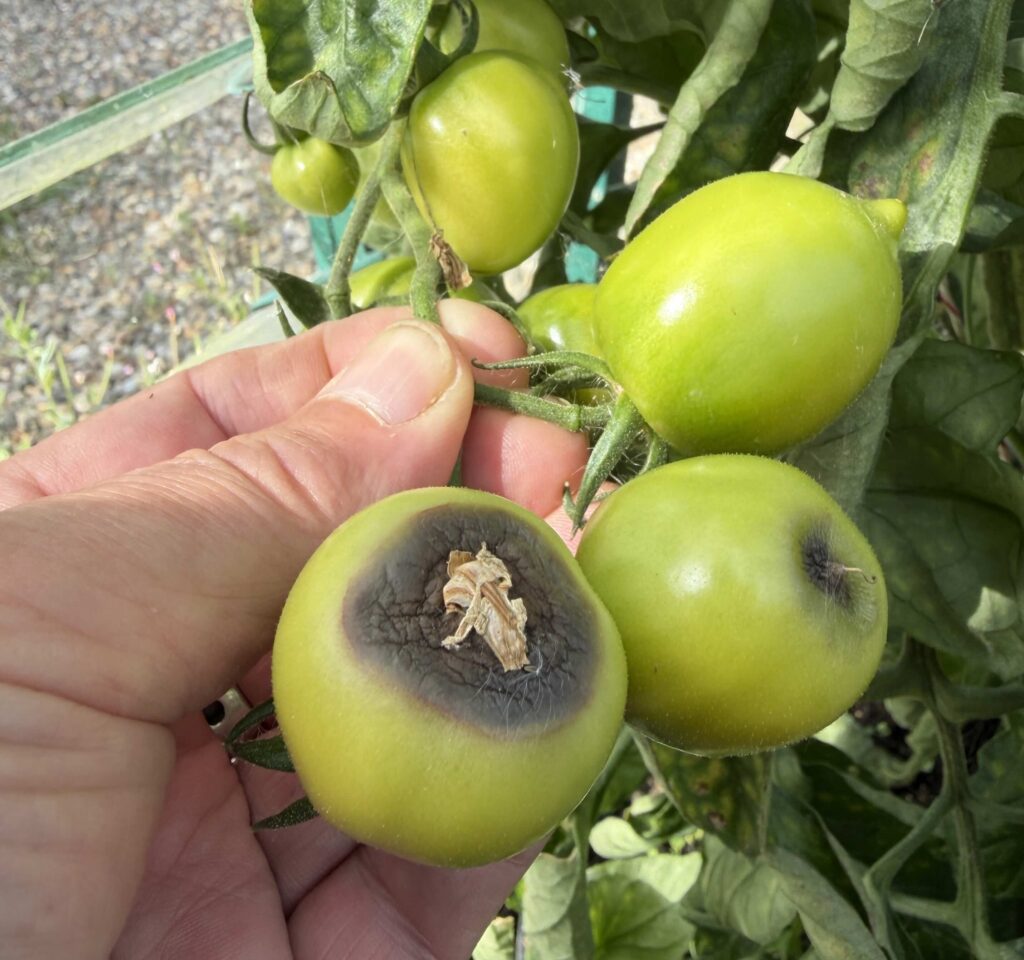
This is where the cells at the base of the fruit die and a sunken black patch develops. I watered assiduously this year but the greenhouse was baking hot some days. I added extra shade paint to the glass and ‘damped down’ and watered every two hours. But one, very leafy, plant was missed one time and the result of wilting, just once, was that a few fruits on one truss, have been affected. So if you have this on your plants do not panic, it is not a disease, just a reminder that you forgot to water – maybe just once!
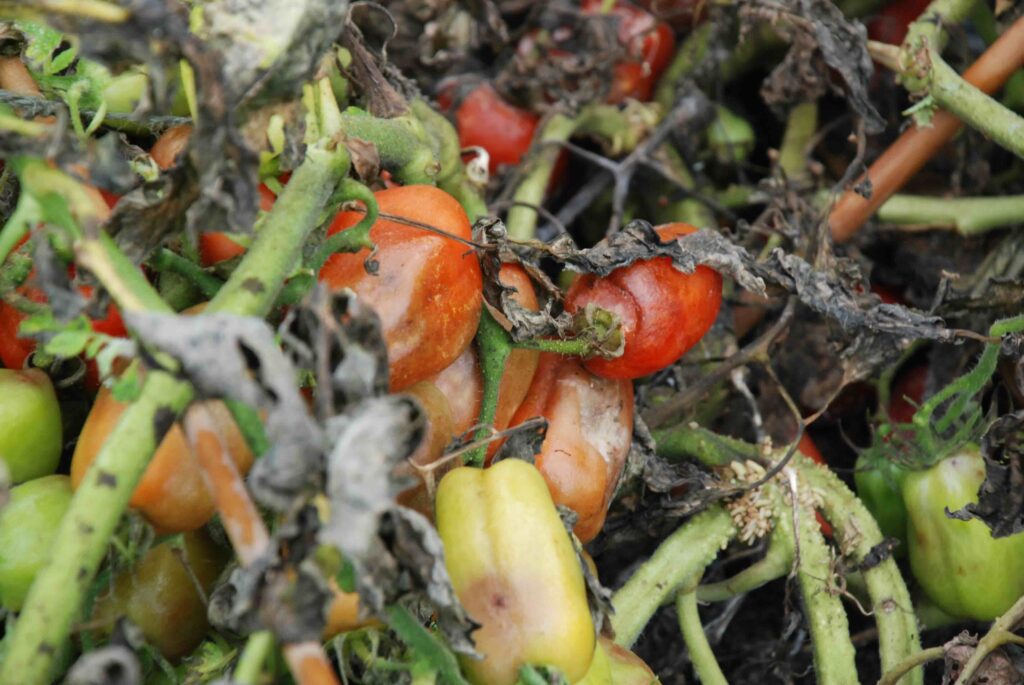
It is not blight! Blight will not affect your plants if they are grown under cover unless you soak the leaves at night. As we come into August, and there is a chance of storms and the leaves can remain wet for long periods, late blight, which affects tomatoes and potatoes can affect outdoor plants. It kills the foliage and will make the fruits rot (above, several years ago).
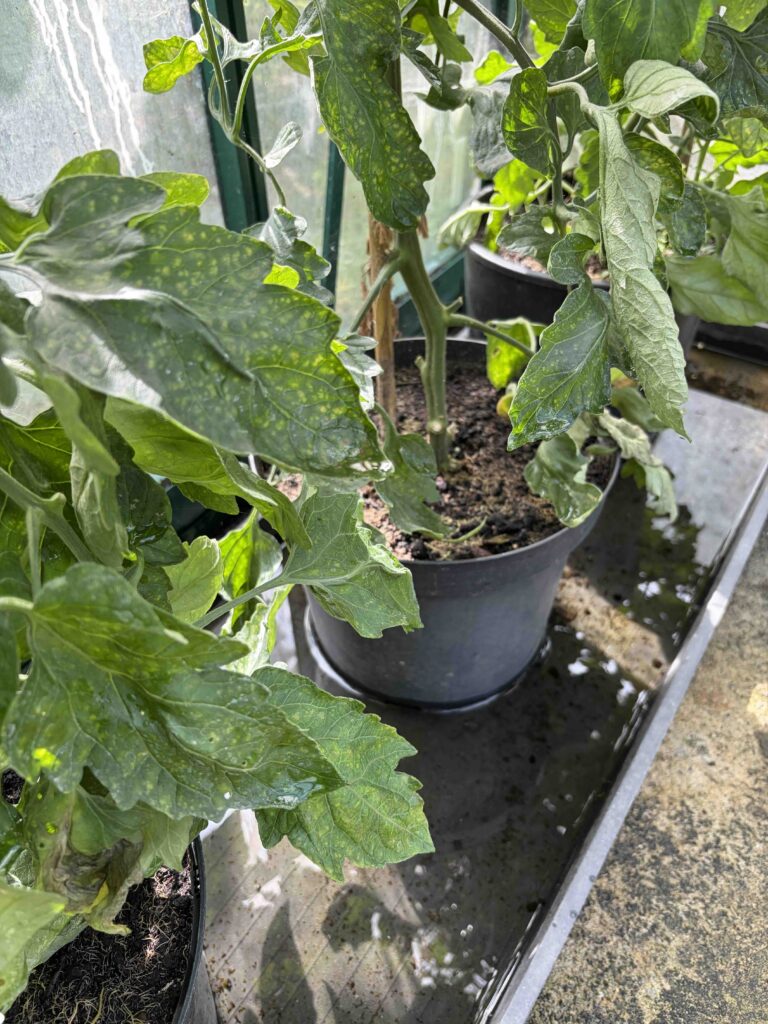
I stand my pots in trays so that I can water the pots and they stand in a little water for a few hours. It is not good if they are standing in water all the time but in the heat it will do no harm and will keep the compost moist for a few hours. And you will need to apply fertiliser at least once a week now.
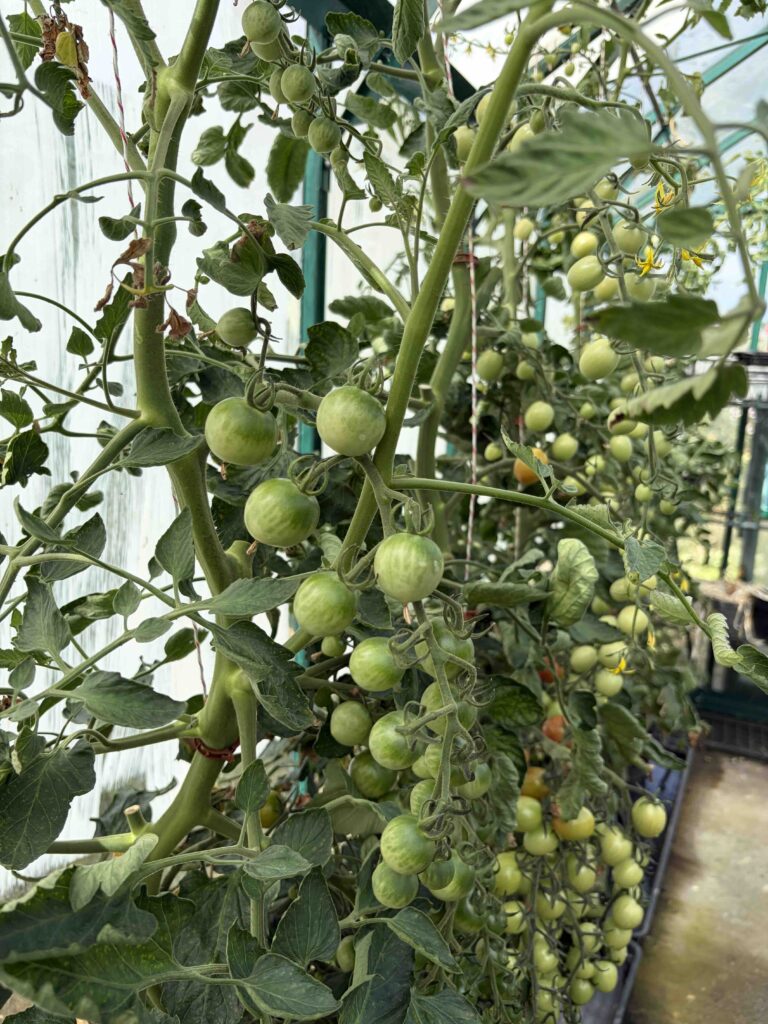
There are plenty of fruit to ripen and the plants still need some maintenance. As lower leaves turn yellow they should be removed but do not strip the plants of leaves to help ripen fruits by exposing them to sunlight. It is warmth and not direct sun that ripens fruits and exposure to hot sun can cause ‘greenback’ where the shoulder of the fruit remains green and crunchy.
You also need to keep removing side shoots – plants often produce a second from where you had removed one.
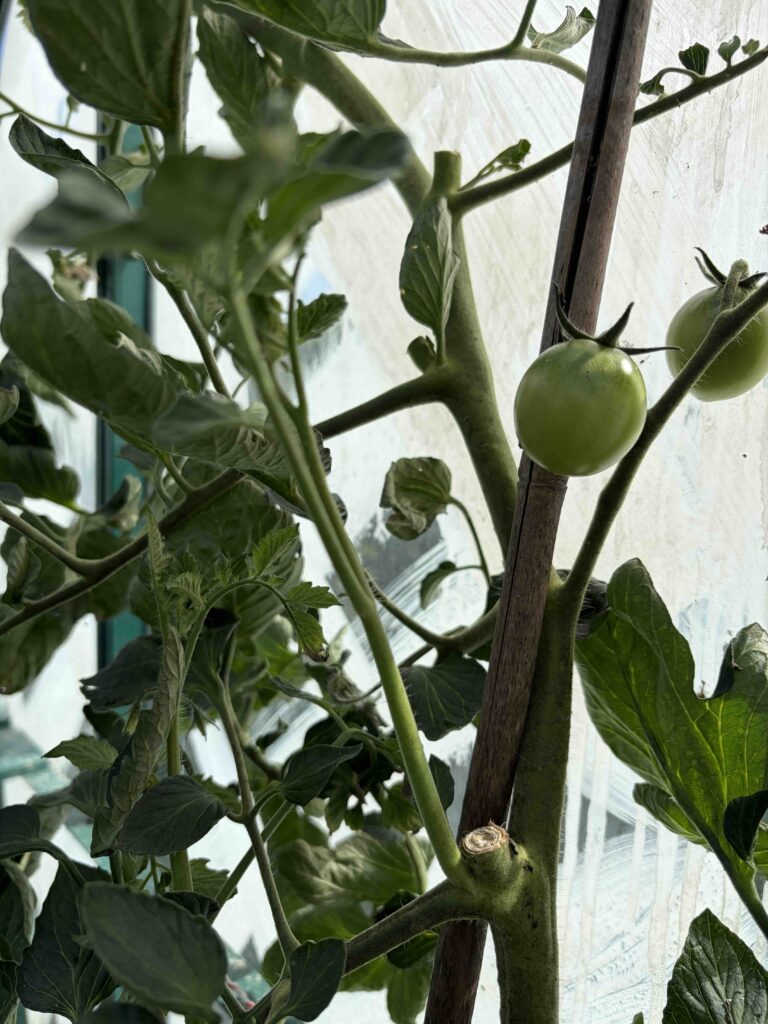
And take out the tops of the plants , after they have four to six trusses of fruits, so that all the effort of the plant is put into producing good fruit and so you don’t end up with lots of small green fruits in October.
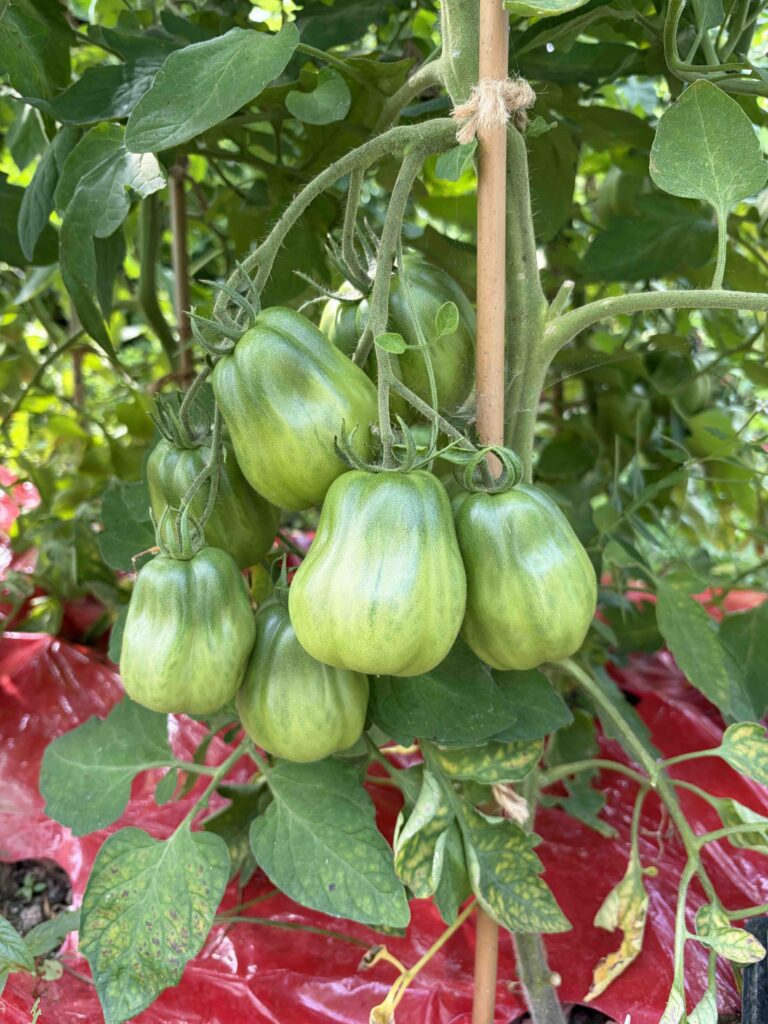
The advantage of growing tomatoes in the greenhouse (or polytunnel) border is that the roots are less confined and there is less chance of the plants wilting – though they still need lots of water. It also means I can grow these organically as I mix in lots of compost and manure in spring and I feed with fish, blood and bone. But there is the chance of a build up of soil diseases if I grow tomatoes in the soil every year. – which is why commercial tomato growers use bags on concrete floors. So I try to alternate crops in the beds, which is not always possible, and I do dig out and change the soil, to a depth of 30cm every three years.
This year I grew my tomatoes, in the polytunnel border, through a red plastic mulch which is claimed to improve growth. I cannot be sure of the advantage but the plants have certainly done well and it must have reduced moisture loss from the soil. It is always a challenge choosing what to grow and this year I am trying ‘Canestrino di Lucca’, an old, Tuscan variety that almost became extinct . Like most large and heritage tomatoes, they ripen later than the cherry types. But I am impressed with the crop so far and look forward to tasting them – the first are just starting to ripen.
The ‘Sungold’ problem
Every year I try a few new tomatoes but the problem I have is that as the new fruits ripen and we taste them, when we pick the first ‘Sungold’ tomatoes andI wonder why I grow anything else!
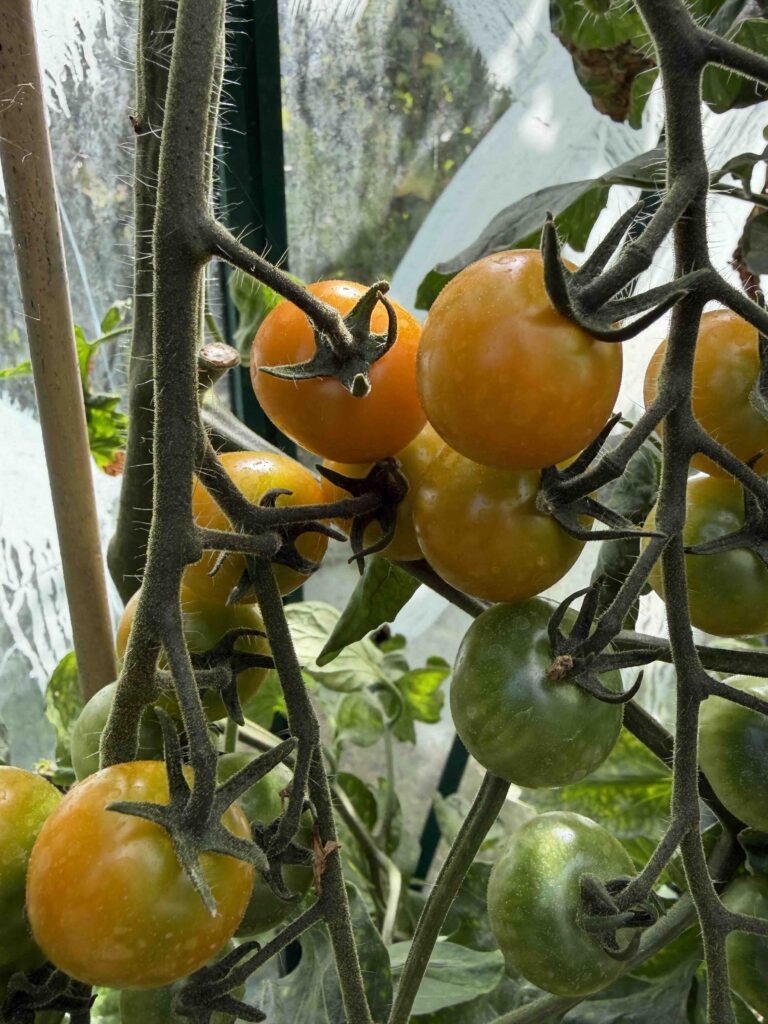
‘Sungold’ crops well, the plants are neat and the fruits ripen before most others. And they are so sweet! This year I am also growing ‘Sun Peach’ and ‘Sunchocola’ from the same breeder and also ‘Orange Sun’ and they are all nice but you can immediately tell when you eat a ‘Sungold’. The only problem is that the fruits can split when fully ripe.
I like to try something new every year and I want to be adventurous but I truly believe that ‘Sungold’ is the best tomato you can grow. What do you think?