We don’t know what the rest of the autumn will be like but so far it has been a relief after the hot, dry summer. Lots of plants have burst into growth after an enforced ‘shut down’ and I have honey berries, that are supposed to bloom in spring, coming into flower, and I have heard of magnolias and pear trees covered in bloom. But there are some autumn shrubs that are supposed to be in flower now and these are very useful to keep colour continuing while the weather is mild.
The best shrub for autumn interest, in my opinion, is Heptacodium miconioides, the finest shrub you have never heard of! This hardy, wonderful shrub, native of China, was discovered in 1907 but it was not introduced into cultivation in ‘the west’ until the 1980s. Heptacodium is a large shrub that can be pruned to create a small, spreading tree. It has lovely, peeling bark when mature and the large leaves are intriguingly curled so it is a generally attractive plant all year. This is the way to judge this shrub because it cannot compete with a moped hydrangea or rhododendron for colour. But it is a wonderful ‘all round’ shrub that will add a lot to your garden.
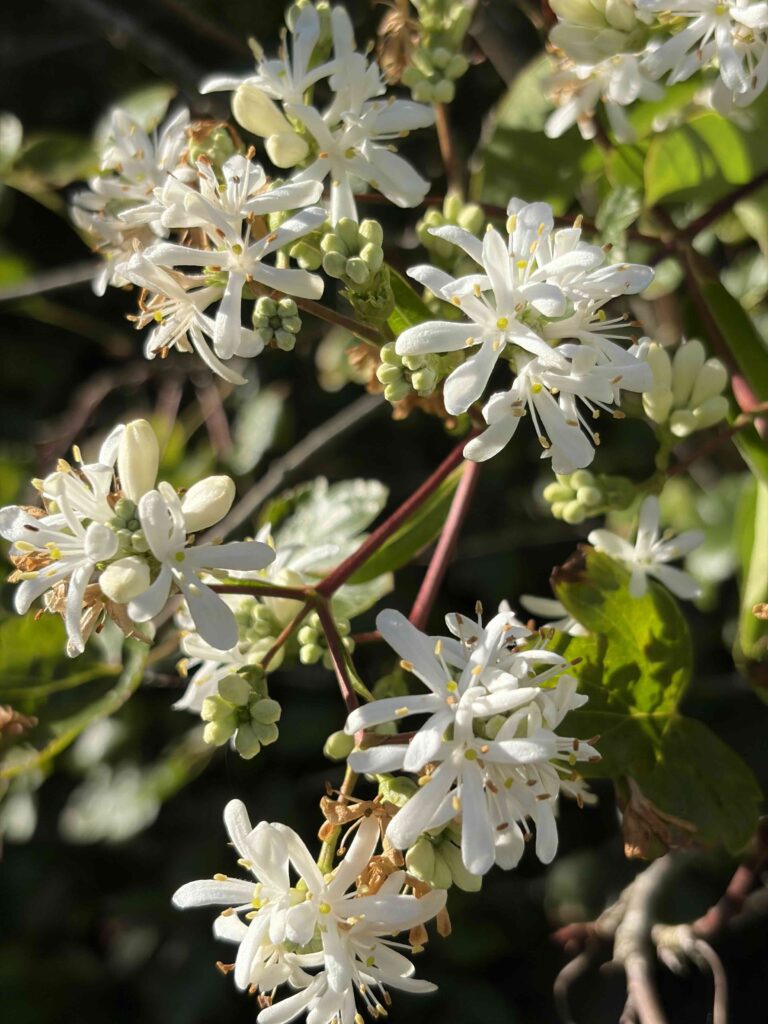
But that does not mean heptacodium is not showy when in flower. The buds slowly develop through late summer, at the end of the new shoots, and open in late August, into September and often lasting till October. The flowers are small and white but are held in clusters of six, surrounding a central ‘bud’ that will actually become more flowers. The common name is ‘seven son flower’ (and heptacodium also refers to the number 7). But this is actually wrong as the clusters actually contain six blooms! But this is not really important and the key is that the flowers are generously produced and they are fragrant. The scent is most noticeable on a warm day but they do smell nice. And bees and butterflies love the flowers – good for biodiversity.
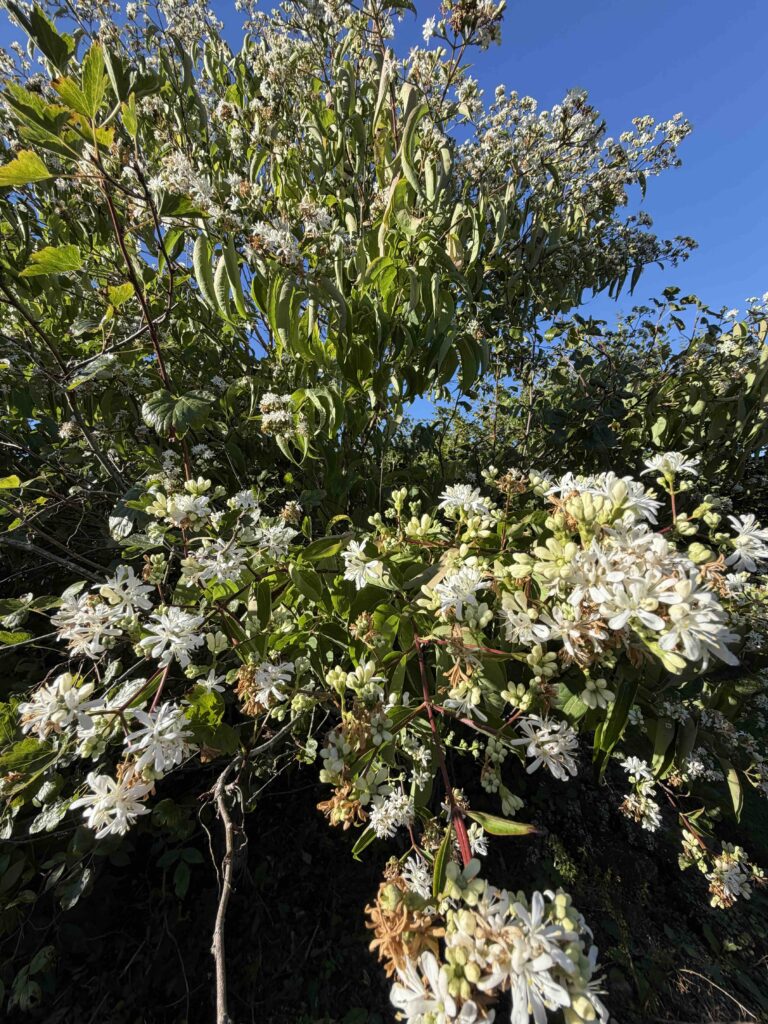
I have planted a heptacodium in both my last gardens and my present plant is now seven years old and about 3m high and the best thing in my garden at the moment. What is impressive is that it tolerated the heat and drought of summer well. I was concerned that, on one very hot day, some leaves were literally scorched on the south side but these have dropped and the plant now looks fine.
As if this was not enough, once the flowers have faded, the calyx, below each bloom, expands and turns red. This can give a fabulous display as nights cool, just before the frosts. In my own garden this display is rarely as good as it should be but in Surrey, with hotter summers, it should be reliable.
So should you plant one? Absolutely yes. If your garden is very small you should plant it and remove lower branches, as it grows, to train it into a small, spreading tree. It is not fussy about soil, does not get any pests or diseases, looks great all year and is a profusion of flowers and fragrance at the end of autumn. If you cannot find one at Knights, ask them to get some more in stock!
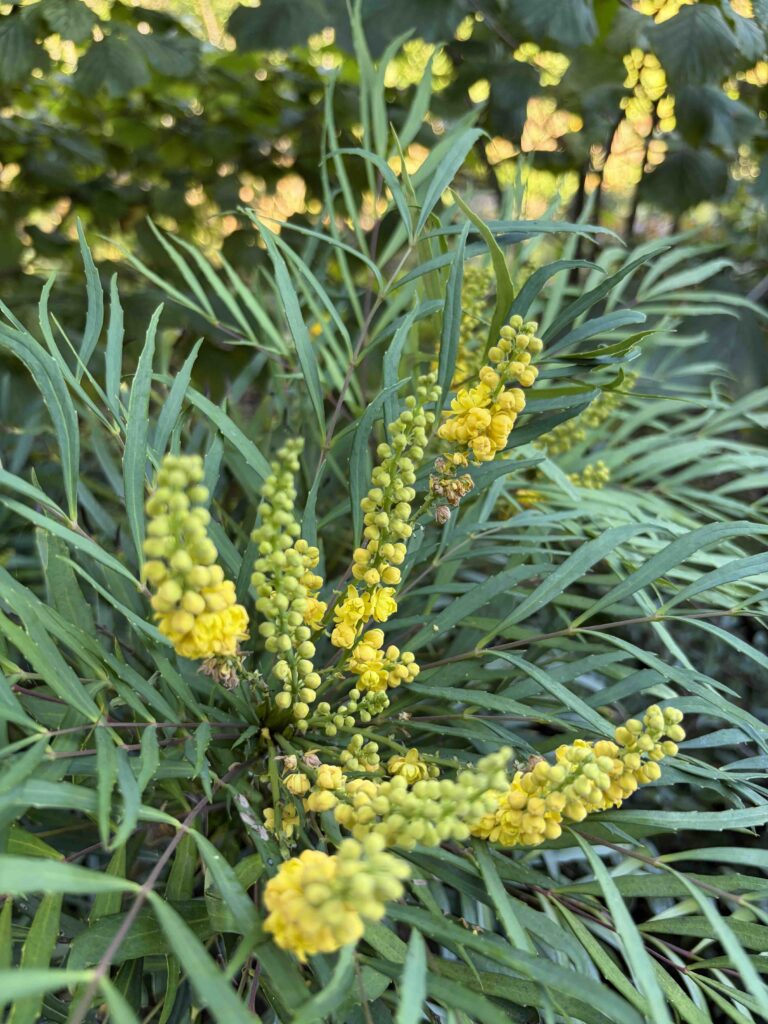
Another great shrub for autumn is Mahonia eurybracteata ‘Soft Caress’. Mahonias tend to be shrubs that you plant when you have to! They tolerate shade and have flowers from autumn to spring, according to the kind, which makes them useful. Their flowers are often fragrant but you risk a face full of prickles if you sniff them. ‘Charity’ is the go-to mahonia for most and it was one of the first shrubs I planted in my garden. But I confess that weeding around it is an unpleasant experience – worse than under a holly.
So ‘Soft Caress’ was a game changer when it was introduced and so important that it won the RHS Chelsea Flower Plant of the Year in 2013. My plant was put in six years ago in a challenging spot that is in shade from the house at all times except for a few hours in high summer. It has slowly grown into one of the nicest plants in the garden and, being beside the path, I can brush it as I pass even if I have never caressed it! The fine foliage is always attractive and right now the flowers are open. It is perfect for shade or part shade. My plant was not watered this summer. It would also make a lovely plant for a large pot, in shade, but make sure you use John Innes No 3 compost when planting.
Following on from the success of ‘Soft Caress’, plant breeders have been busy making new mahonias and there are many more in the pipeline. ‘Cabaret’ is interesting because the flowers are red and yellow, producing an orange effect but is not spineless. ‘Meteor’ is like ‘Soft Caress’ but has purple young foliage and ‘Volcano’ has soft foliage and orange blossom. You will easily be able to buy ‘Soft Caress’ at Knights but ask them to get the others in stock!
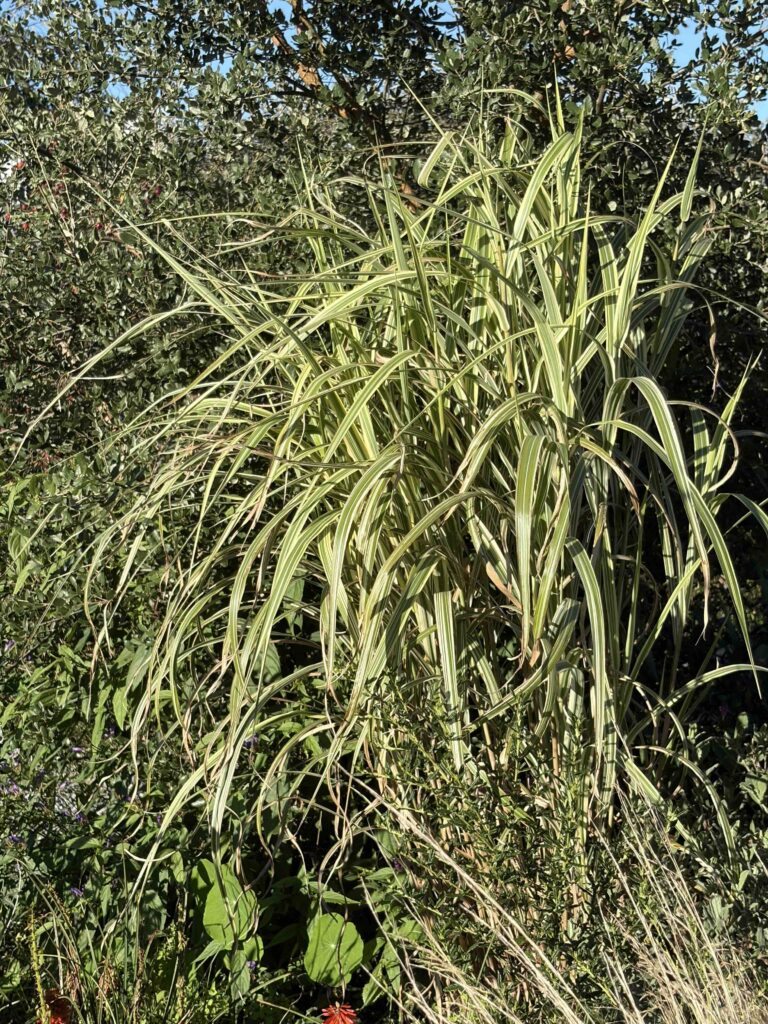
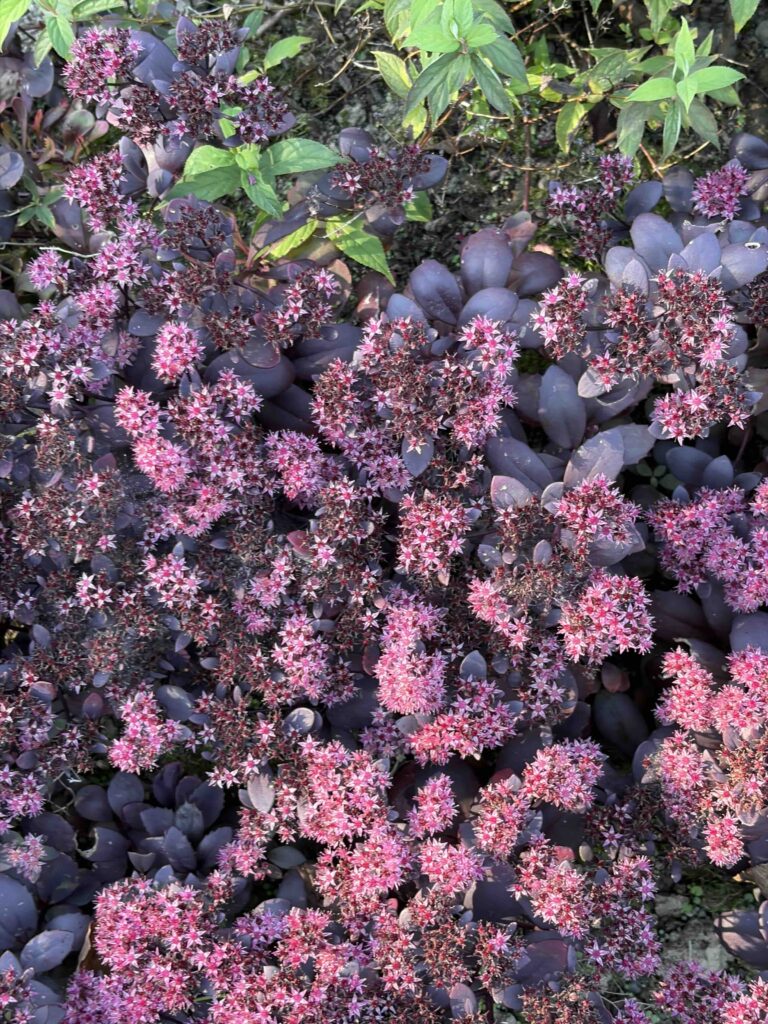
Lastly, this is the month for miscanthus grasses (above) and sedums (below). Both are easy and adaptable and will withstand hot, dry summers. You can plant these now.