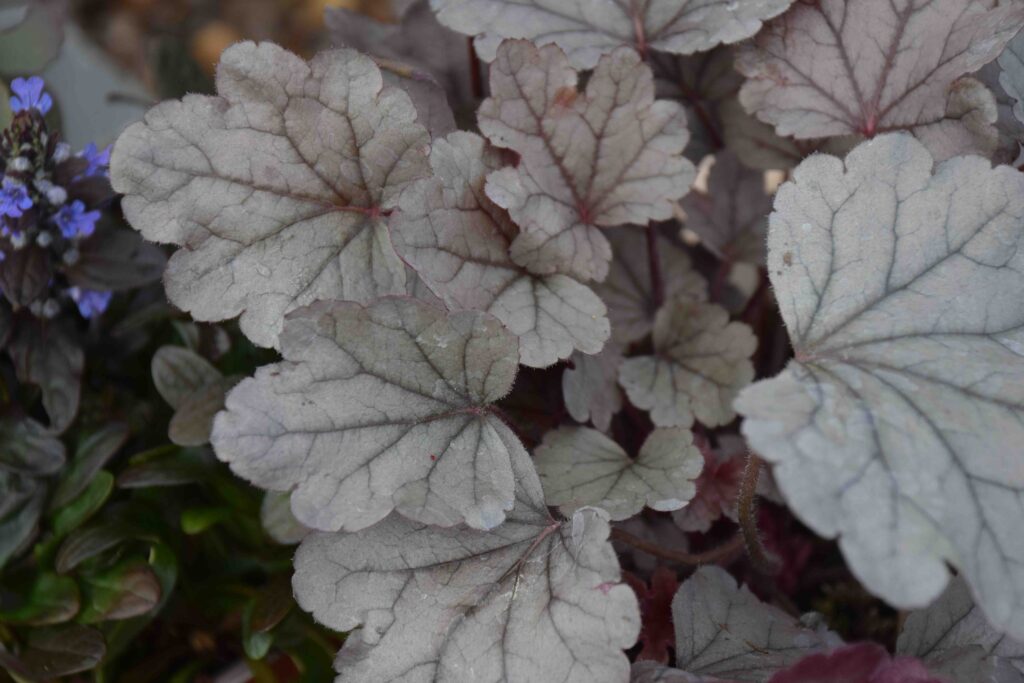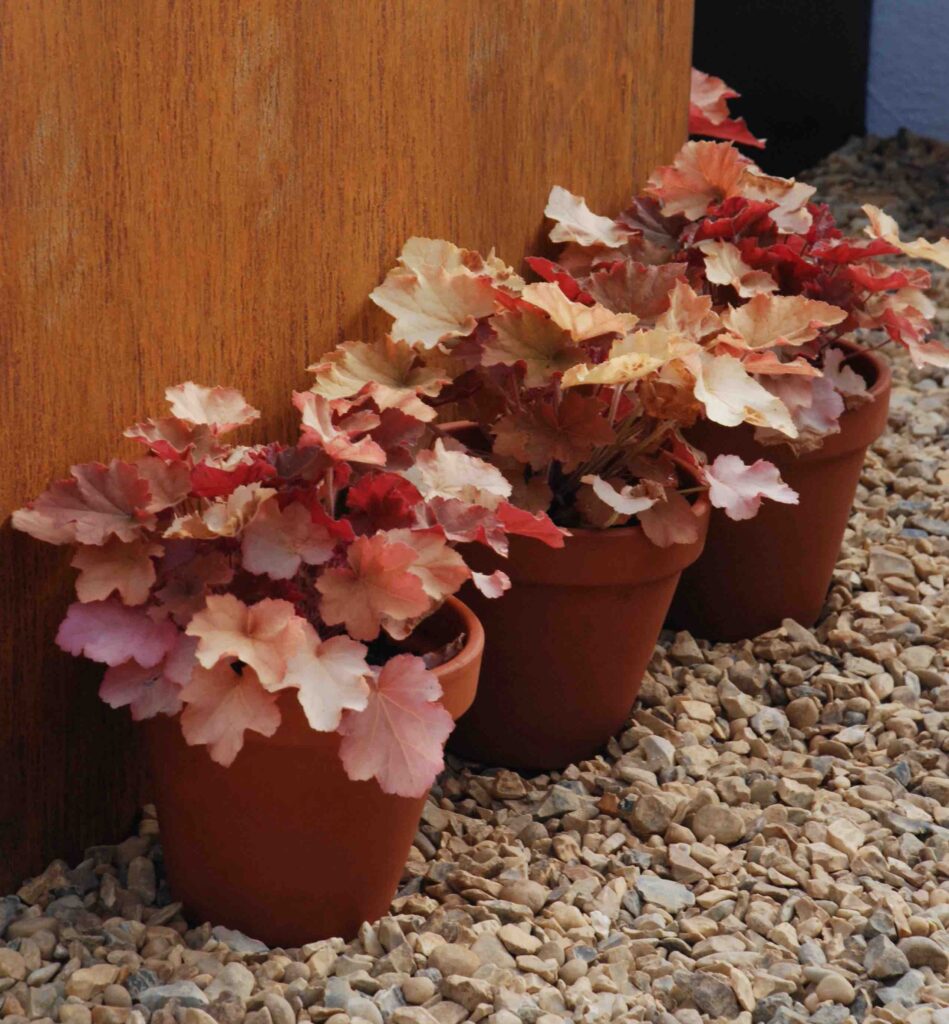
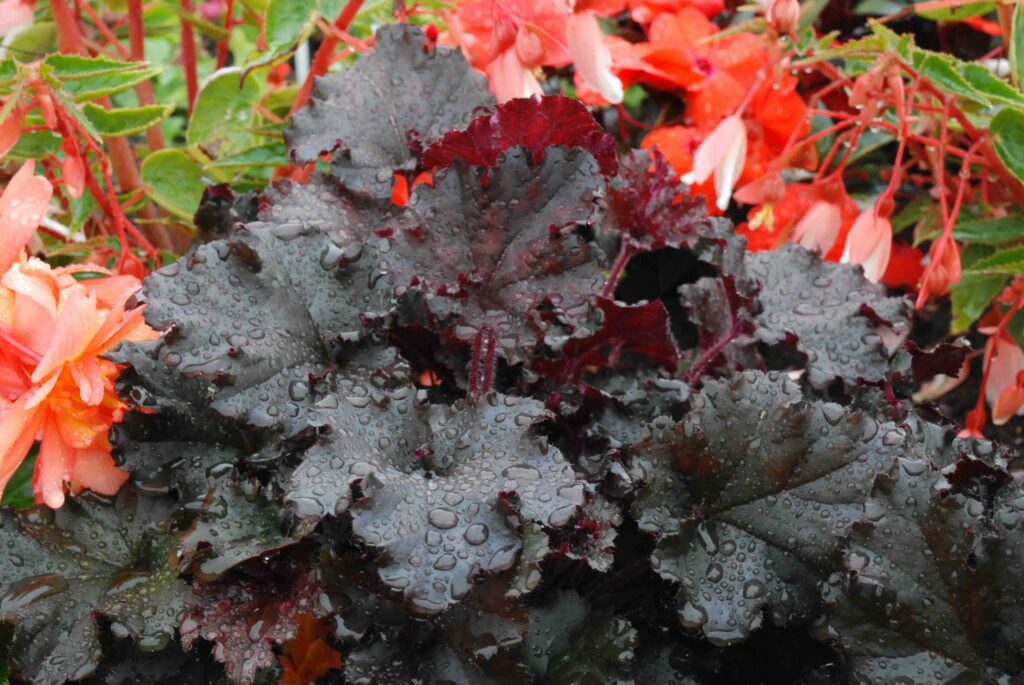
With our thoughts turning to autumn and spring (I try not to think too much about winter) heucheras are very firmly in mind. As a child I knew them as tough, evergreen herbaceous plants with red and pink flowers in summer, useful for cutting. But at the end of the last century they were transformed into fabulous foliage plants with the introduction of incredibly coloured new plants. I say ‘incredibly’ because the heucheras you can buy now have foliage in colours not seen in other hardy plants.
Heucheras, in the wild, are American plants that grow at the edge of woodland, in light shade and often on slopes. This gives us a clue as to what they prefer – sun or part shade, even full shade in the case of yellow and green-leaved types, and good drainage – they hate waterlogged soils! But they are quite resistant to drought, once established, which means planting in autumn. Most kinds are predominantly foliage plants and the flowers are small, but some do have colourful flowers. And no matter how big or small the flowers, bees love them!
Heucheras are evergreen although the foliage will shrink a bit in very cold weather. This makes them perfect for all parts of the garden and especially in pots. In fact, having grown heucheras for many decades, I do prefer them in pots and window boxes. They thrive in the luxurious compost in pots and they suit patios and an area near the house because the colours are almost too ‘bizarre’ for the open garden – but that is a matter of taste.
The commonest, and cheapest of all heucheras is ‘Palace Purple’ and it probably started the trend for coloured-foliage heucheras. It was discovered in the gardens at Kew Palace at RBG Kew.
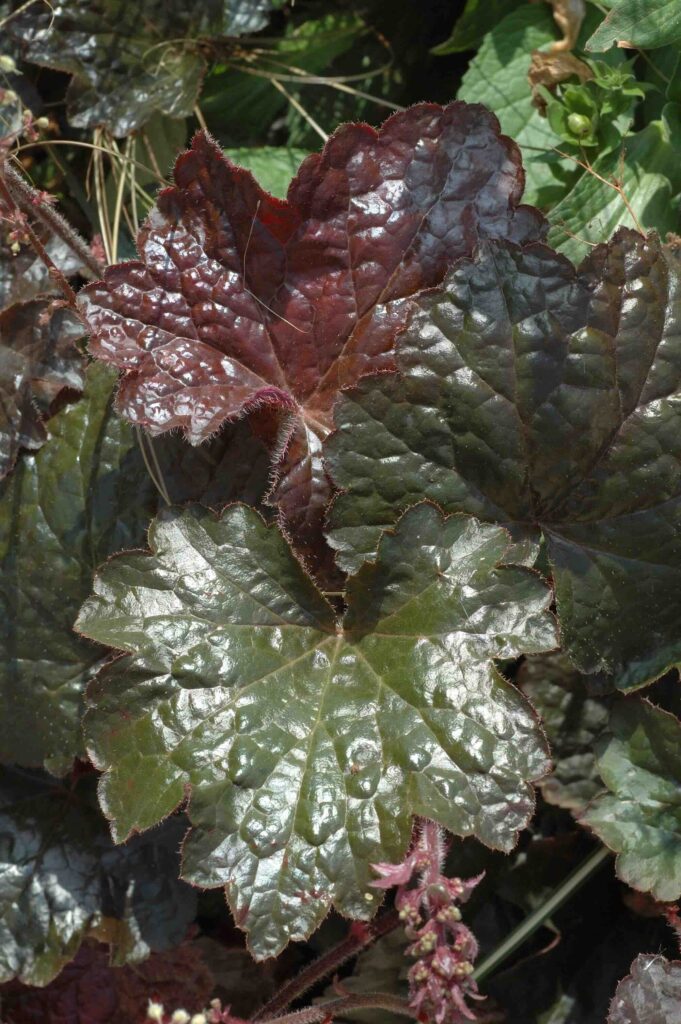
It is inexpensive because it is raised from seed and that is cheaper than the ‘micropropagation’ required for the others. It also means that the plants are variable, some darker than others. But it is perfect for the open garden and it can even self seed. I would use it in shady borders but I would spend a bit more on heucheras for my pots.
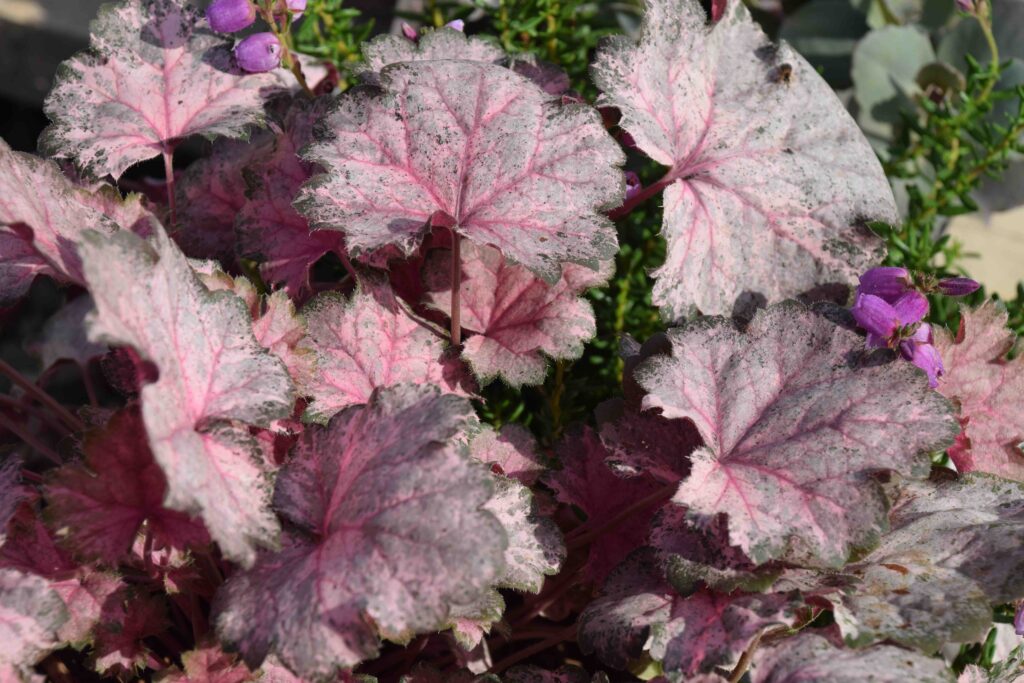
When it comes to foliage colour, the range is enormous, from silver, red, browns, purple, pink, orange, yellow, lime and green. Leaf size also varies and some have shiny foliage, some are ‘crispy’ and others flat. You won’t have any difficulty finding some you like – I always have trouble just picking a few!
In pots
If growing in pots I would give them a good compost. I always mix equal parts multipurpose compost and John Innes No 3. This provides a light, open compost with the additional nutrients of soil-based compost. If you plant them now, put some spring bulbs under and between them. Perhaps pop in a few violas too. The pot will then look good all winter, spring and summer into autumn. Because you have added some John Innes to the soil mix the plants will thrive and will be content in the pot for 18 months before they need to be removed. They will give you colour and interest for a long time. You can also pop in some seasonal summer plants as you wish.
Old plants
Over time, heucheras develop a woody stem and they can lose vigour. When this happens, dig them up, split them and replant the pieces, deeply, in refreshed soil – ideally in spring. With your potted plants, after the 18 months, lift them and split them and replant the pieces in the garden. You can then replant your pots with the latest new varieties!
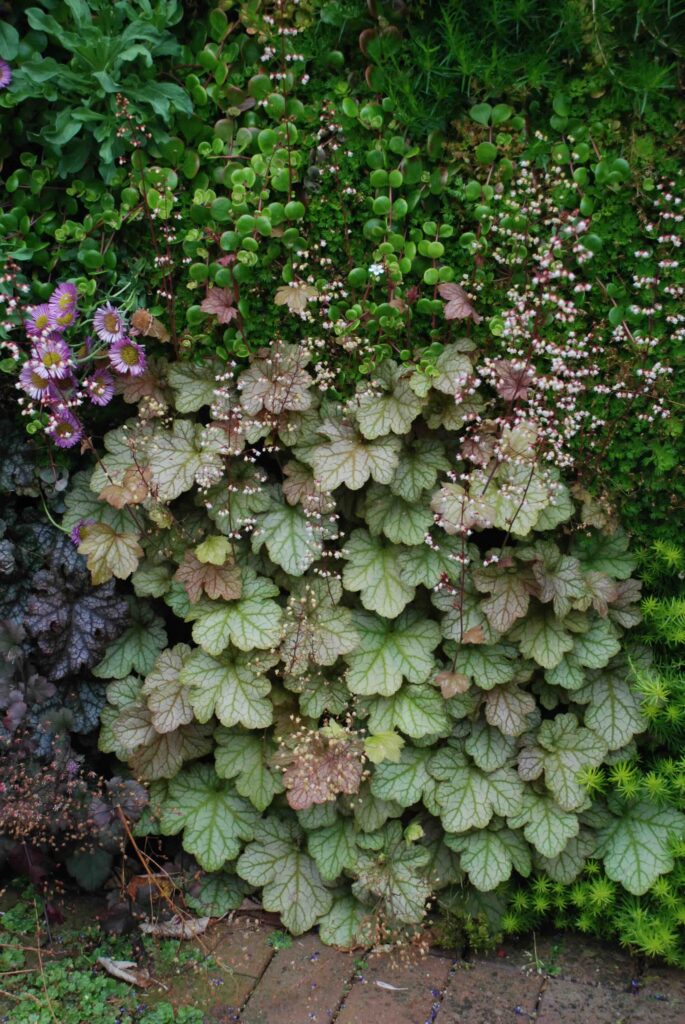
Heucheras are perfect plants to explore your creativity and they thrive in window boxes and hanging baskets. They are also a favourite for landscapers who plant vertical foliage ‘walls’ on corporate buildings.
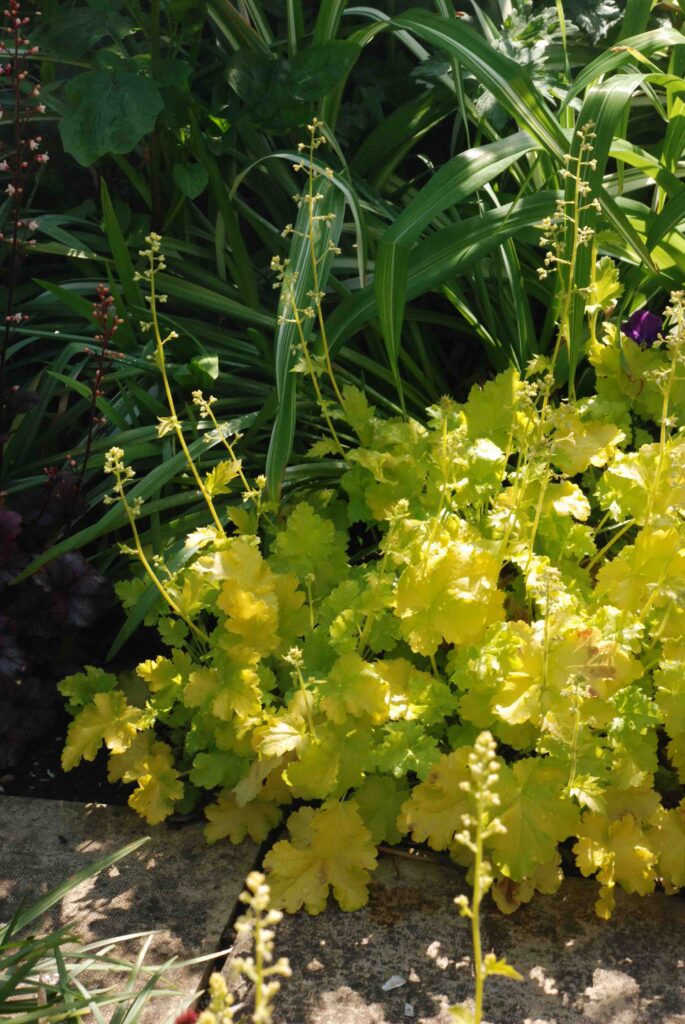
The variety of foliage colours means that they associate so well with so many other plants and flowers. I like them with hostas and ferns in shady beds. They are also good under shrubs and trees, underplanted with bulbs. If you have raised beds by the house heucheras are the perfect plants and will brighten the view from the kitchen window every day.
Go and have a look at the range of heucheras at Knights. I bet you won’t leave without one.