Autumn is not the season we usually think of to propagate plants. It is certainly not the time to sow most plants. But there are actually a lot of plants we can propagate at this time of year.
In fact it is a good time to sow some seeds. Most shrubs and many herbaceous plants (such as peonies and hellebores) need a cold period, after sowing, to ‘break’ their dormancy. They should be sown, in a loam-based compost, and covered in grit, to reduce moss growth, and left outside to be ‘weathered’, before they germinate in spring. It is not something I would recommend for the beginner because mice and snails can eat the seeds and seedlings and you need to make sure they are constantly moist.
But most herbaceous plants (with the exception of grasses and agapanthus, (which should be left till spring) can be dug up, divided and replanted now. It is often easier, and more pleasant to do this now than in March, the other good time, when the soil can be wet and cold.
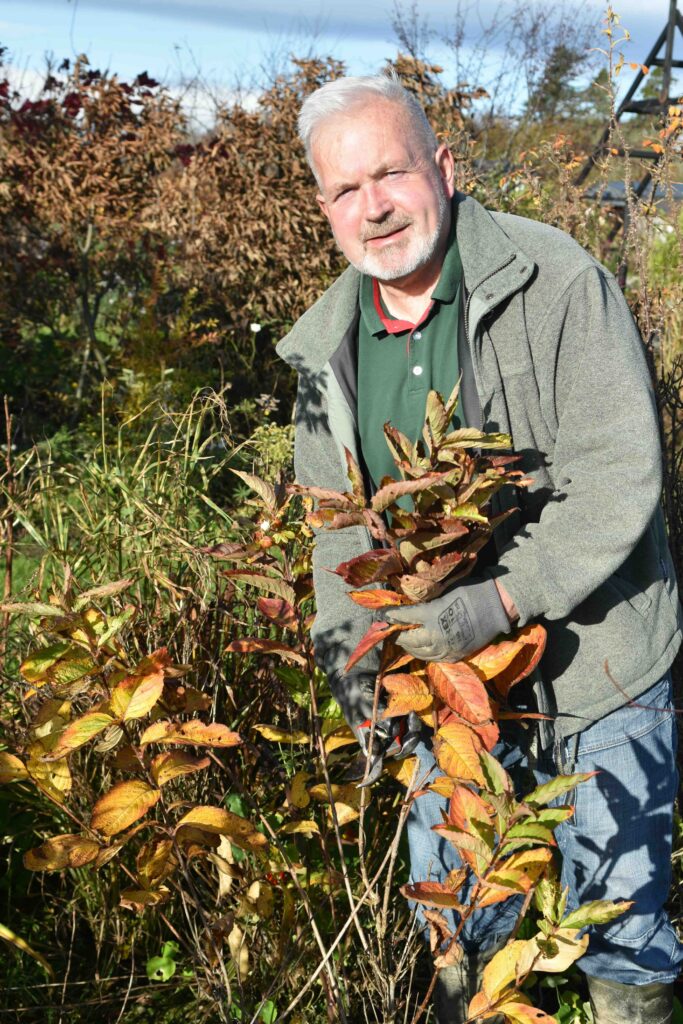
Other plants you can propagate now include many shrubs and they are propagated by hardwood cuttings. Hardwood cuttings are straight new growths that were produced this summer. You should not use old, weak growths. Ideally the cuttings will be about 30cm long and books will say ‘the thickness of a pencil’ but this will vary with the plant and the vigour of the shoot.
Hardwood cuttings
The good thing about hardwood cuttings is that they are easy to take and they can be rooted in a bed outside or in a deep pot (about two thirds of the cutting needs to be buried). Not all shrubs can be propagated this way and it is most often used for ribes (ornamental and edible currants), deciduous viburnums, cornus, forsythia, weigela and deutzia and philadelphus but you can try with other shrubs.
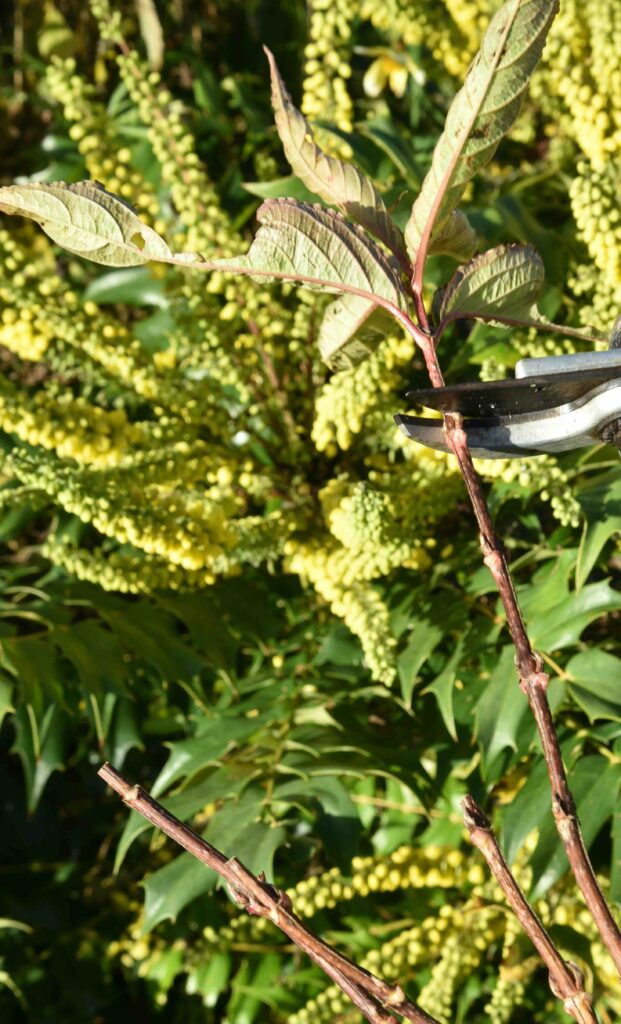
First collect your stems to use as cuttings. Your finished cutting needs to be about 30cm long. Trim off the top, which may still have leaves, just above a bud or pair of buds. The tip will be soft and will probably wilt anyway. The base of the cutting should be trimmed just below a bud or pair of buds.
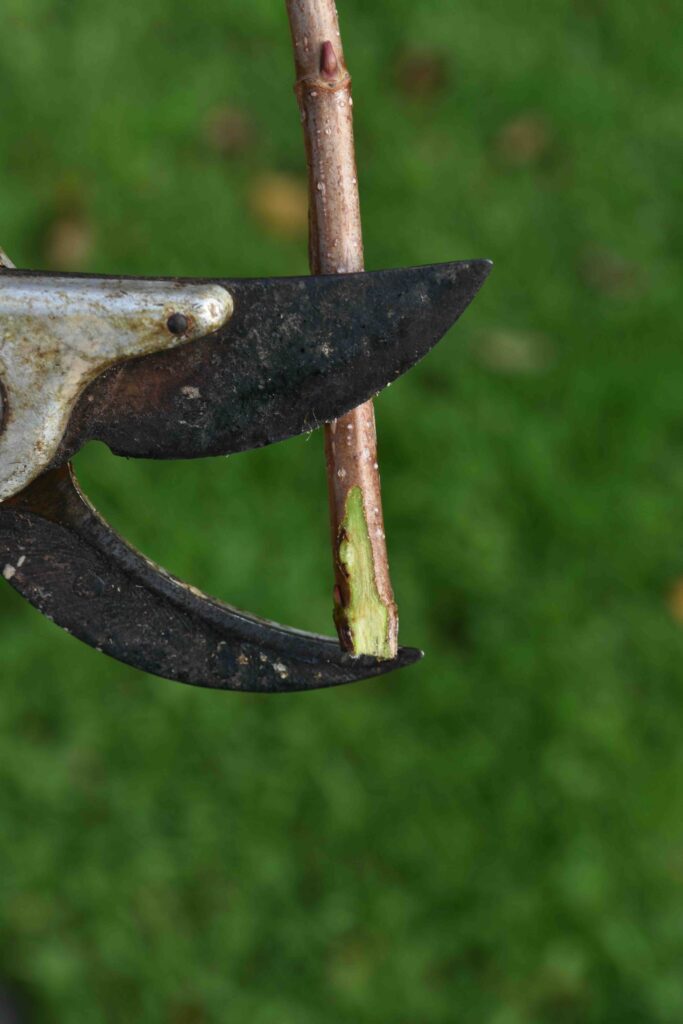
To stimulate root development it is a good idea to ‘wound’ the cutting. Use a knife or your secateurs to slice off a sliver of bark at the base of the cutting. Now your cutting is ready to root.
Prepare your bed by digging in some sand, grit and compost so it is well drained and ‘light’. Now it is light and well forked over you can just push in the cuttings so they are more than half buried. There is no need to water. There is nothing more to do for now.
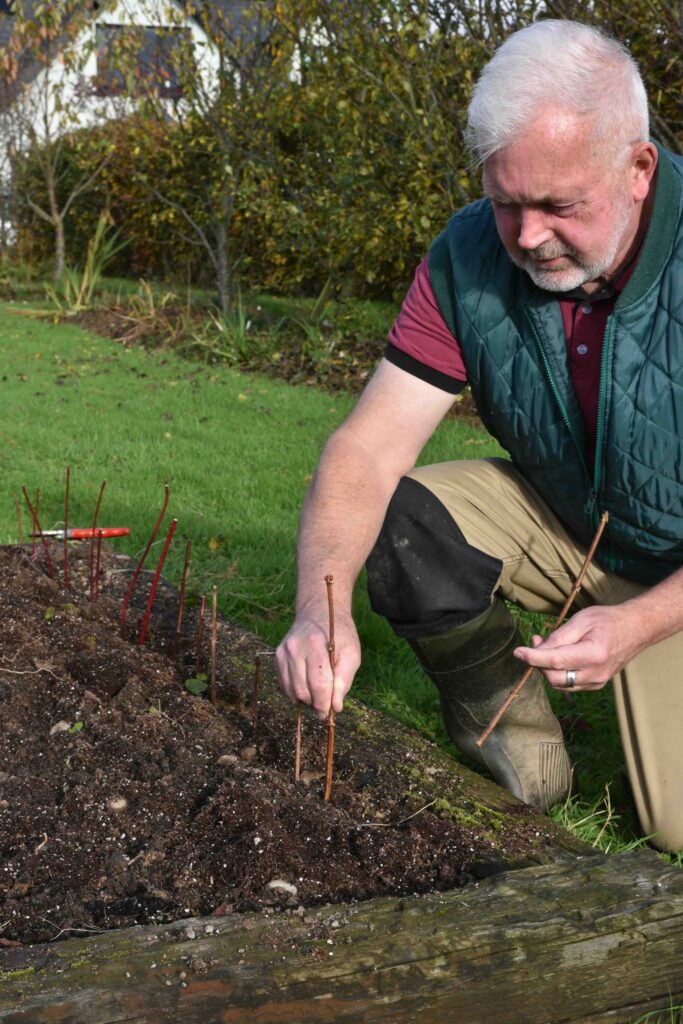
In spring there should be new growth and the cuttings will slowly root. And now the difficult part! You have to wait until next autumn, when the plants are dormant, before you dig them up and replant them in the garden. If you root them in pots you also need to wait until the following autumn before you separate them and put them in the garden.
So although this is a slow process, it is very easy and you can easily make dozens of plants.