The Great Butterfly Count started on Friday. You can click the link to go to the website and take part. Adult butterflies like warmth and sun and the past few weeks have certainly suited them.
So what plants can you add to your garden to bring in the butterflies?
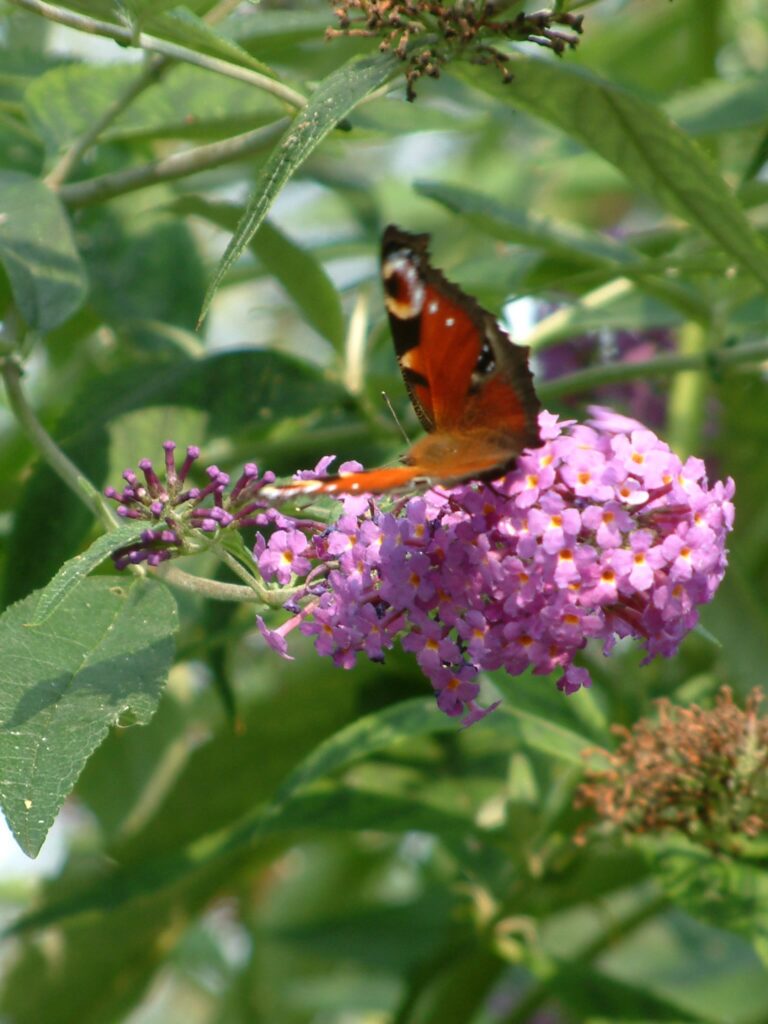
Of course, the classic is Buddleja davidii is so popular with butterflies that it is commonly known as the butterfly bush. With long spikes of flowers in reds, purples, mauve and white, it is a common plant in gardens but can be unwieldy after a few years. Annual, spring pruning can keep it neat and there are now smaller kinds. It is a good choice for many reasons but it can self seed and plants can appear in all sorts of places and in some areas it is a weed.
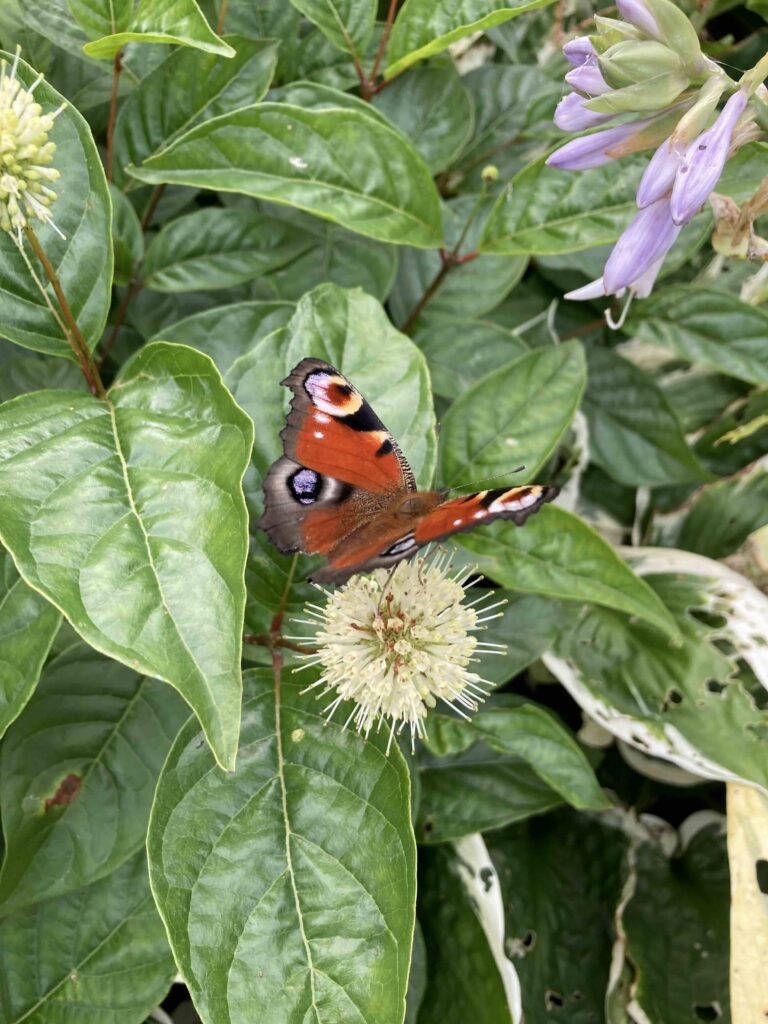
An uncommon but good choice is Cephalanthus, often called the button bush. Common buddleia prefers dry soil but button bush tolerates and even prefers a rather wet spot. Mine has taken a few years to settle in to a rather heavy, wet site that is a problem to plant effectively but is now making a neat, rounded shrub. It is an attractive rather than spectacular shrub. The spherical heads of small, tubular flowers are loved by butterflies. In the wild, ducks are said to eat the round fruit clusters but, so far, my plant has not produced them. It is blooming earlier this year than usual, because of the heat, so perhaps I might get fruits, though I do not have ducks – yet!
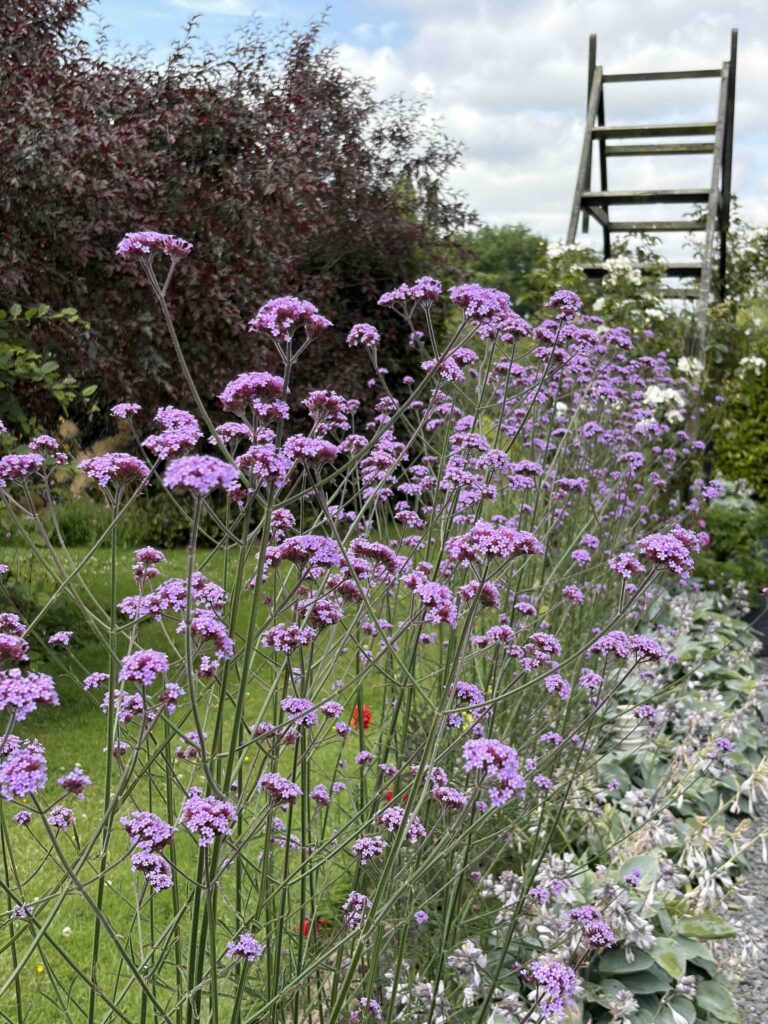
Butterflies tend to like small, tubular flowers and purple seems to be their favourite colour. This year I planted plenty of Verbena bonariense. This is a plant that everyone really should grow. You can buy plants in flower now and they are usually perennial and often self seed. Wherever they pop up they are so useful. They are stiffly upright and tall but they are so slender and ‘see through’ that they can even be allowed to grow near the front of the border. I planted a row in a narrow border next to a row of hostas and they form a drift of colour and yet I can see the garden beyond. Bees and butterflies love the thousands of tiny flowers and they keep going for many months.
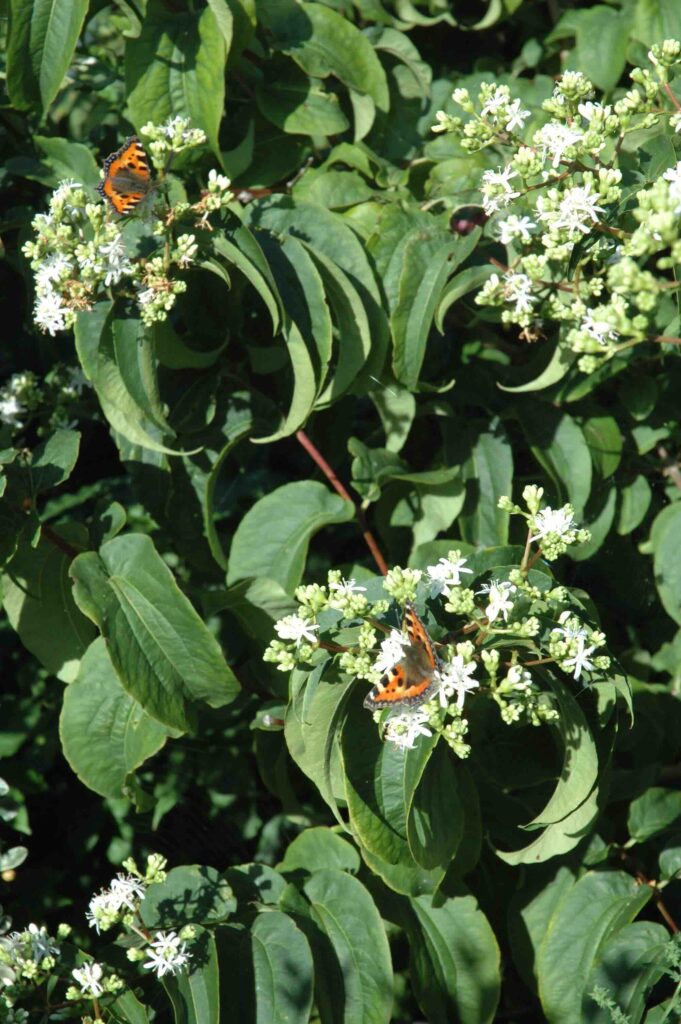
One of my favourite of all shrubs – I have planted one in every garden I have owned – is Heptacodium. It is a large shrub but has so many good features. It has attractive bark and, when it reaches 3m high you can prune out the lower branches to create a small tree with bark that is worth seeing all year round. The leaves are interesting too but it is in August and September that it really proves its place in the garden when the masses of small, fragrant flowers open. These are a magnet for all types of butterflies. After that the calyx of each flower expands and turns red, providing another season of interest before the leaves finally drop.
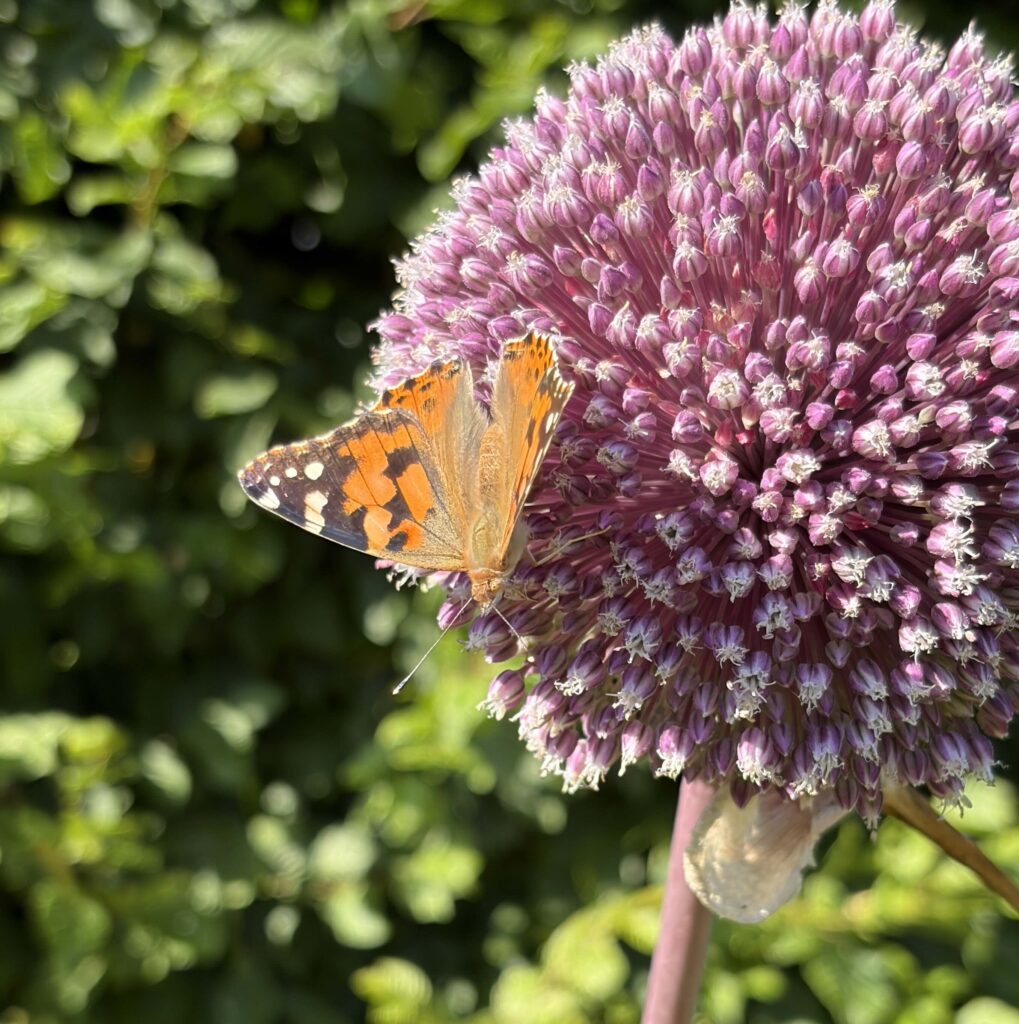
Bees love all alliums (ornamental onions) but the later alliums tend to have smaller, tubular blooms and at the moment mine are covered in insects of all kinds. ‘Summer Drummer‘ (above) is a much lauded allium because it flowers later than most and is tall. But I think it is rather ugly and the leaves are a mess at flowering time, looking like a compost heap! But it does feed the butterflies. But, as a garden plant, I would suggest Allium sphaerocephalon. It is shorter but a good purple red colour and you can buy 20 of these for the price of one ‘Summer Drummer’. Add it to you shopping list of bulbs this autumn.
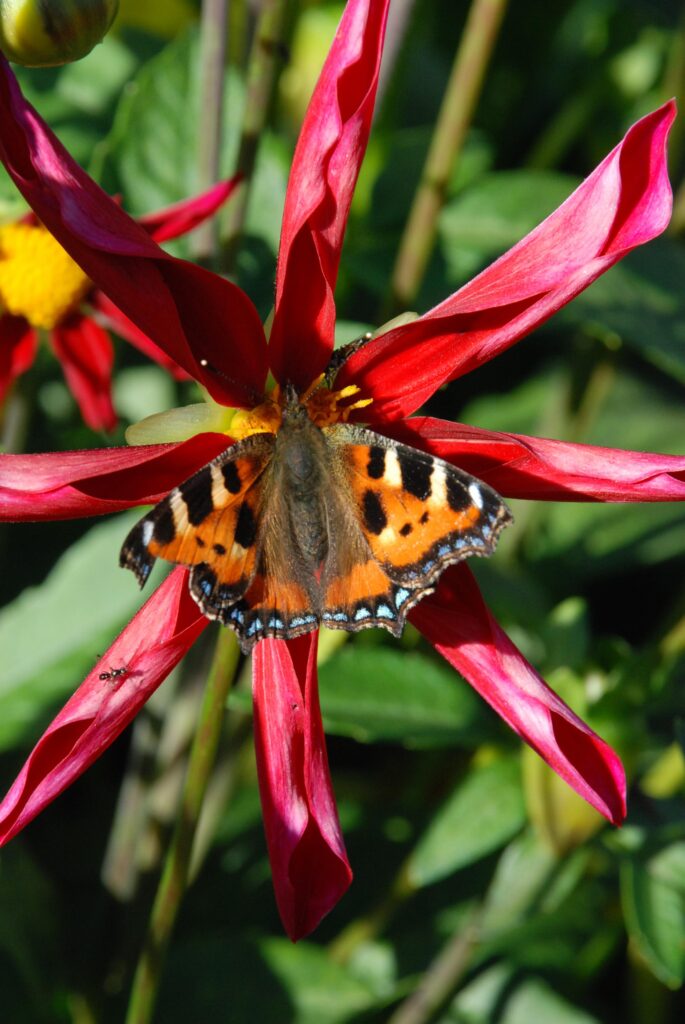
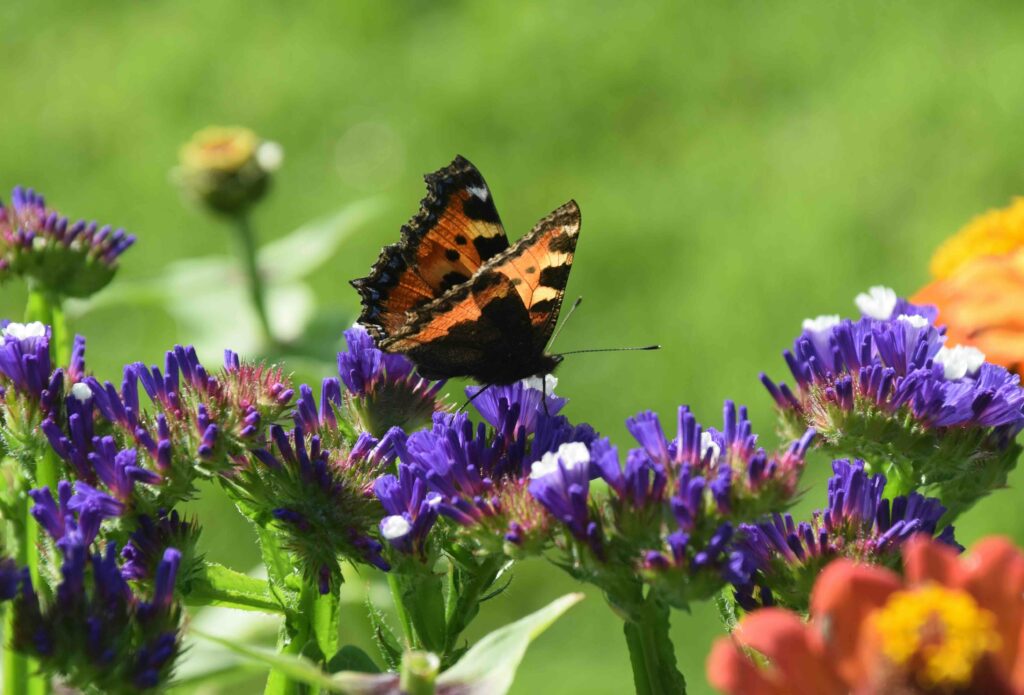
Summer garden flowers offer butterflies lots of food too. Single dahlias are much better than the large doubles but even these offer nectar as the flowers open fully just before the petals drop. All marigolds are good and zinnias are fantastic as the centres open. Statice, easily grown from seed and which I grow for cutting, is also loved by butterflies (below) and purple heliotrope which I grow for the amazing scent, is always covered in butterflies.
Remember that butterflies are just the end of the life cycle of these amazing insects and they also need food for their caterpillars. A clump of nettles or brambles will provide food for the larvae of many, and a patch of long grass, that is left all summer, will provide food for many moths and butterflies. Later generations of peacock and tortoiseshell butterflies and others, need somewhere to hibernate in winter so put up a bug hotel with vertical slits to provide a safe shelter over the winter too.
The heat goes on!
With drought conditions looking like they will last for at least another week watering is becoming a chore. Now is a good time to look at where you can add another water butt for when the rain finally comes. ‘Grey water’ from the bath or washing machine is suitable for watering garden plants in the soil but avoid using it in patio pots. Avoid using water from ‘washing up’ because of the high levels of detergent and fats but any water used other wash veg should be poured into the garden around vulnerable shrubs.