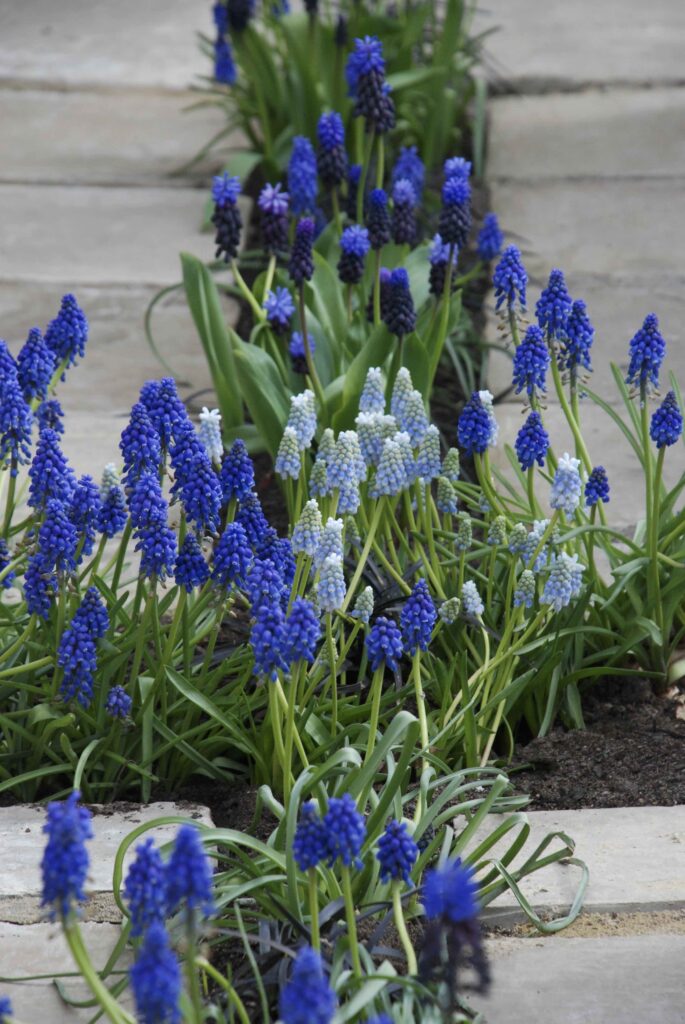
Muscari are better known as grape hyacinths, and they are among the easiest of all spring bulbs to grow. In fact, the common Muscari armeniacum is so eager to grow and spread, by seeds and by bulblets, that it can become a weed in some gardens. It has a habit of sprouting leaves in autumn, long before the flowers appear. In fact it is so notorious that some people would steer clear of buying and planting any muscari in their own gardens. But that is a shame because most muscari are well behaved and lovely garden plants. The bulbs are easy to please and are perennial and reliable in a sunny spot.
They bloom after most dwarf spring bulbs, in April, and although most are blue or white, there are lots of different shades. There is also a pink kind (‘Pink Sunrise’ or ‘Pink Surprise’) but it is very expensive because it is new and it is a rather disappointing colour – stick with the blues!
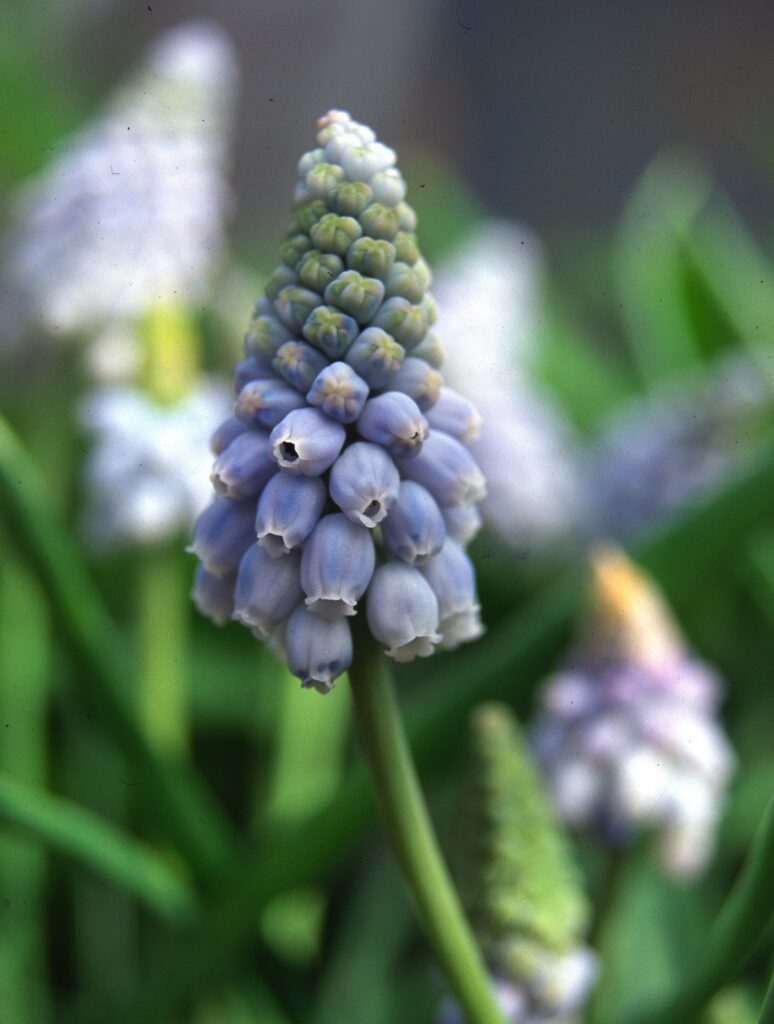
Muscari are ideal for planting with early and dwarf tulips as well as small daffodils. They prefer light soils and full sun but they will tolerate heavy soils provided they are not wet in winter. Of course, the bulbs you buy will be of flowering size so they will bloom next spring but if planted in shade they will slowly decrease in vigour.
They can be planted in borders, in grass (in sun) and in pots, window boxes and hanging baskets. In fact I usually buy them to plant in pots and other containers and then move them, in May, into the garden.
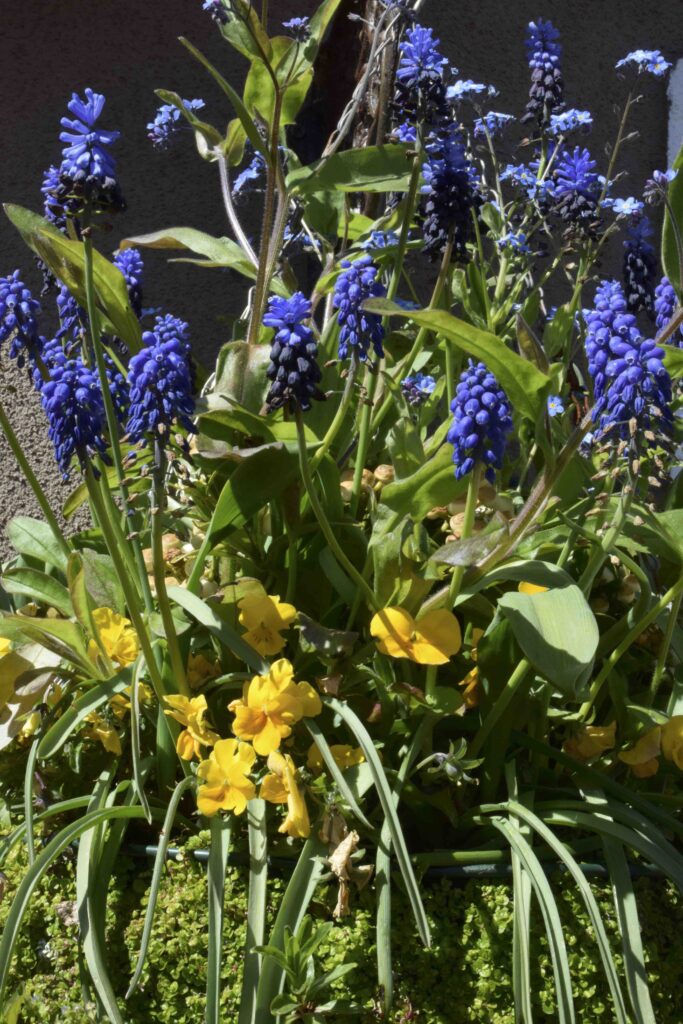
Because they are so inexpensive you can be generous and a mass of flowers always looks best unless you are treating yourself to something new and unusual. I like to fill a pot with them for a dazzling display and now and then I will experiment and plant a cone made of chicken wire lined with moss.
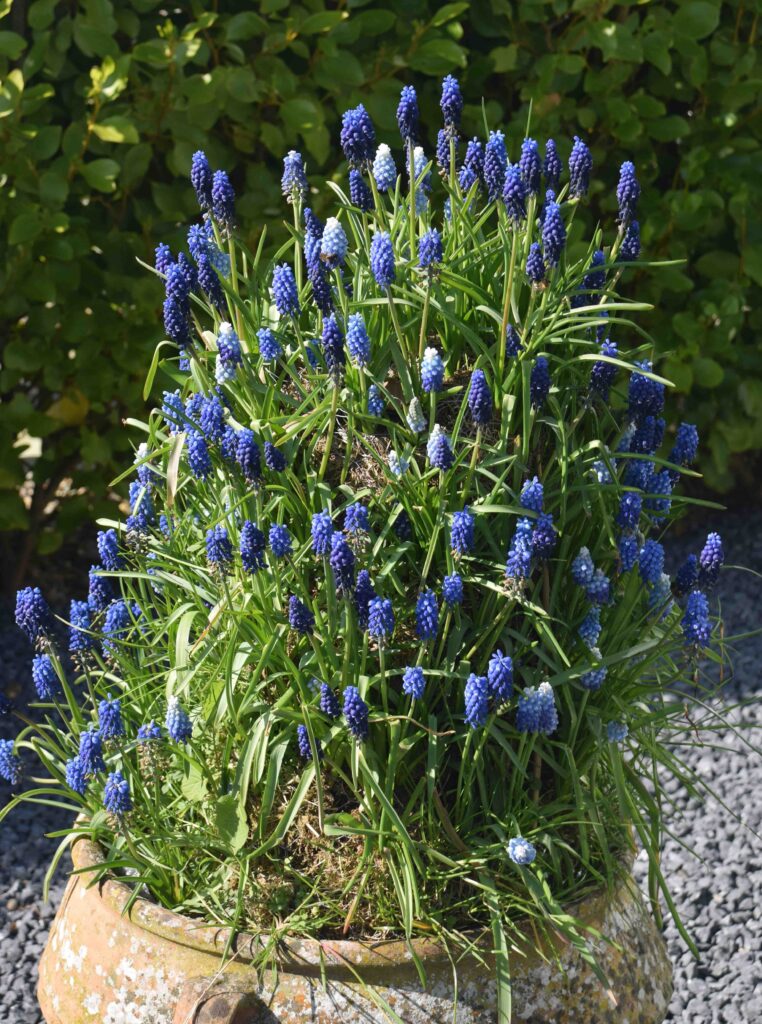
Like all the small bulbs, they are best planted as soon as possible. Plant them with the tops of the bulbs about 5cm below the soil surface in generous groups.
Jobs for the week
Sow sweet peas in the greenhouse for strong plants to set out in spring
Lift gladioli and save the new corms
Plant hippeastrum (amaryllis) for winter blooms
Dig up and divide overcrowded hostas
Plant sweet Williams